Part Three The Involvement of Walter Adams in Church Affairs
Chapter 11
The Establishment of the Catholic Church
And the Convent of the Sisters of St. Joseph
escribing the Co-operative Works of Father Constantine Rossolini, Walter Adams and the Sisters of Saint Joseph.
When the Adams family arrived in Sydney, N.S.W., on the Victoria in 1849 its religion was recorded as being Church of England. Walter subsequently became a Catholic, no doubt influenced, in no small measure, by his wife Mary (nee Shannon) from County Clare. Walter married Mary in the then frontier town of Gayndah in 1854. (Appendix A2) Prior to this he spent a brief period as a young man in the Maitland area of N.S.W. with his family, where he is said to have worked for The Australian Agricultural Company.
Walter and Mary soon moved to Maryborough where he had a business as a blacksmith and later as a contractor. He also was an alderman of the town and Chairman of the Council’s Works Committee. The experience gained in these positions was to prove invaluable when, after seventeen years, the family moved to the Bundaberg district. While in Maryborough Walter and Mary had eight children George Manus, Matilda Jane, Mary Ann, James Walter, Sarah Margaret, Maria Emily, Susanna and Ellen Elizabeth. Susanna died in 1869.
Having recognized the new challenges to the north, Walter purchased three allotments in the infant town of Bundaberg, at an auction in Maryborough on 28th January 1871. He subsequently resigned his positions on the council, sold his Maryborough property holdings and divested himself of his local business interests. The family moved to the Bundaberg district in February 1872. Walter’s departure from Maryborough was marked by the presentation of an Illuminated Address as a gift of appreciation by prominent Maryborough citizens. (Appendix A12)
In March 1872 Walter selected a block of 240 acres near the mouth of the Burnett River on the edge of the Woongarra Scrub and on 14th July 1872 a conditional purchase lease was granted under the Crown Lands Alienation Act of 1868. This selection became Sommerville Plantation.
Walter’s understanding of the value of education was soon evidenced by his assistance to the fledgling town in its attempt to establish a Bundaberg Primary Public School. In 1875, at the third attempt, sufficient funds were obtained by public subscription for the school construction. However there was no Government official in the town authorized or available to supervise the building. This difficulty was overcome by the appointment of Walter Adams, John Cathcart and Mr. Beard (of the Lands Office) as voluntarily supervisors of the work. Walter was also responsible for promoting the establishment of a Provisional School, which became the Burnett Heads State School. This school was in close proximity to Walter’s Sommerville Plantation and it was established in 1877.
When entering into a description of Walter’s involvement with the church – and its attendant schooling – affairs in early Bundaberg it may be helpful to more recent residents to give abbreviated details of the various church properties in the central Bundaberg area. Some descriptions are based on recollections of older residents and are therefore subject to the possibility of error. In addition some acquisitions and/or relocations that are described below occurred subsequent to Walter’s time – however an overview of more recent happenings can be helpful in placing historical events in their perspective.
Before a Catholic Church was constructed in Bundaberg the small number of local Catholics was served by the visits of Father O’Brien from the older settlement of Maryborough where Father O’Brien was assistant to Dean Tissot, who was soon to retire. A rather large oil painting of Dean Tissot was hung on the wall of the family home at 116 George Street; probably relocated from the original 118 George Street residence. The portrait would almost certainly have been given to Walter, by the Dean, during his years in Maryborough. I understand that this portrait was donated to the Maryborough Historical Society by my aunt Mrs Hall in the mid 1970’s, as was the Maryborough Illuminated Address. The family routinely referred to the portrait’s subject as Father (not Dean) Tissot, which may suggest that it was from an early period. I do not know the name of the artist who painted the portrait. A possible candidate for the artist is Jacques Joseph Tissot, a French artist who depicted French society in the 1860’s, and English society - including many dockside scenes - in the 1870’s. He later returned to Paris in the 1880’s and, following a religious conversion, was successful as a painter of religious subjects.
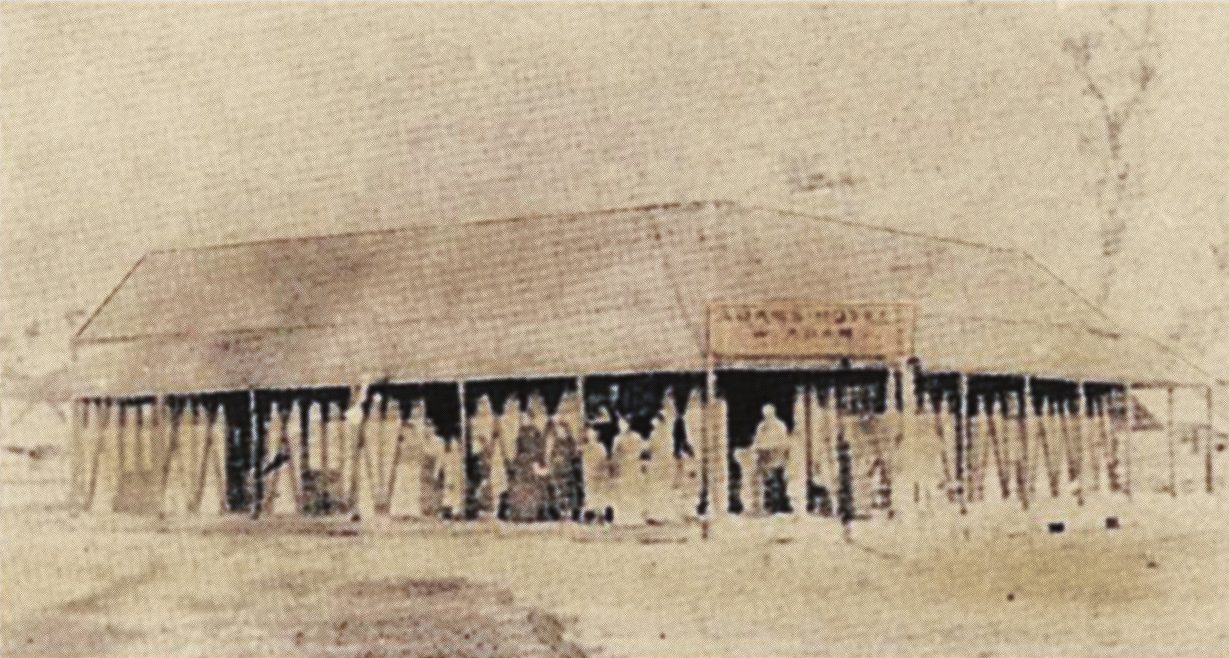
From 1873 to 1875 the first Bundaberg masses were held in the original, wooden, single story Adams Hotel in Bourbong Street, which was to be renamed the Metropolitan Hotel in 1879 – (Note 1). The wooden altar, kneeler, crucifix and Eucharistic vessels used at this time were retained in the Adams’ residences at 118 and later 116 George Street – (Notes 2 & 3) – until the mid-1970’s at which time they were donated to the parish.
The town was to acquire its own permanent priest, Father Constantine Rossolini. This capable and energetic pastor came from Italy and initially had responsibility for the Gayndah and Mount Perry areas. On first arriving in Bundaberg he boarded in the Adams Hotel. No doubt the Bundaberg appointment was a relief to the pioneer priest who previously had responsibility for an area where the ‘roads’ would more appropriately be described as, often impassable, bush tracks.
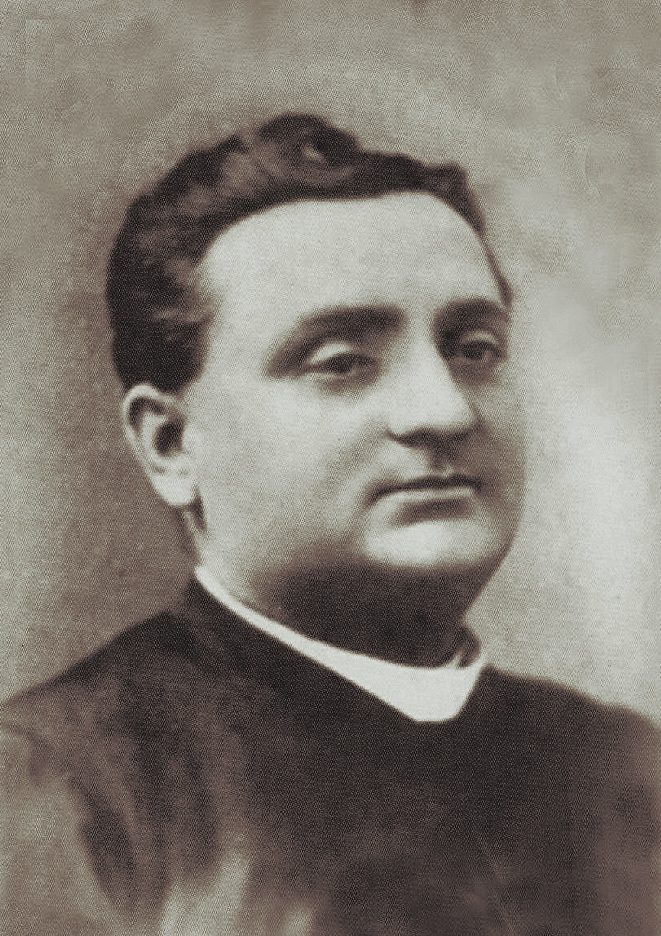
As the parish priest of Gayndah and Mount Perry Father Rossolini soon became a close friend of the Adams, and of the related by marriage, Bertheau families. He subsequently collaborated with Walter on church, school and other affairs in the Bundaberg area. (Appendix B7)
In 1873 a Church Building Fund had been established. Three one rood allotments intended for the construction of Saint Mary’s of the Holy Rosary, now the Holy Rosary, Church, at the corner of Barolin and Woongarra Streets were purchased at Government auction, for £2 per allotment, on the 2nd March 1874, with Walter Adams C. Rossolini and James Drinan as “Trustees for the Roman Catholic Church”, under Walter’s signature. Mr. Drinan, an early settler, sugar-cane pioneer and winemaker of Electra, was appointed Police Magistrate in 1876. The Adams family (in their internal discussions) had always maintained that Walter donated the funds for this purchase. While quite possible, it seems more likely that Walter, Father Rossolini and possibly Mr. Drinan were the major contributors to the Building Fund.
It is notable that Lots 1, 2 and 3 of Section 8, those allotments chosen for the church and residence, were the first to be offered at the auction and received no competing bids. Once the church lots had been acquired normal bidding took place for the remaining forty-six lots. Though an effective public relations campaign no doubt preceded the auction, the results speak highly of the co-operative and constructive nature of the citizens at that time. Appendix B3a details the church land locality plan and Appendix B3b details the relevant section of the land allotment auction list.
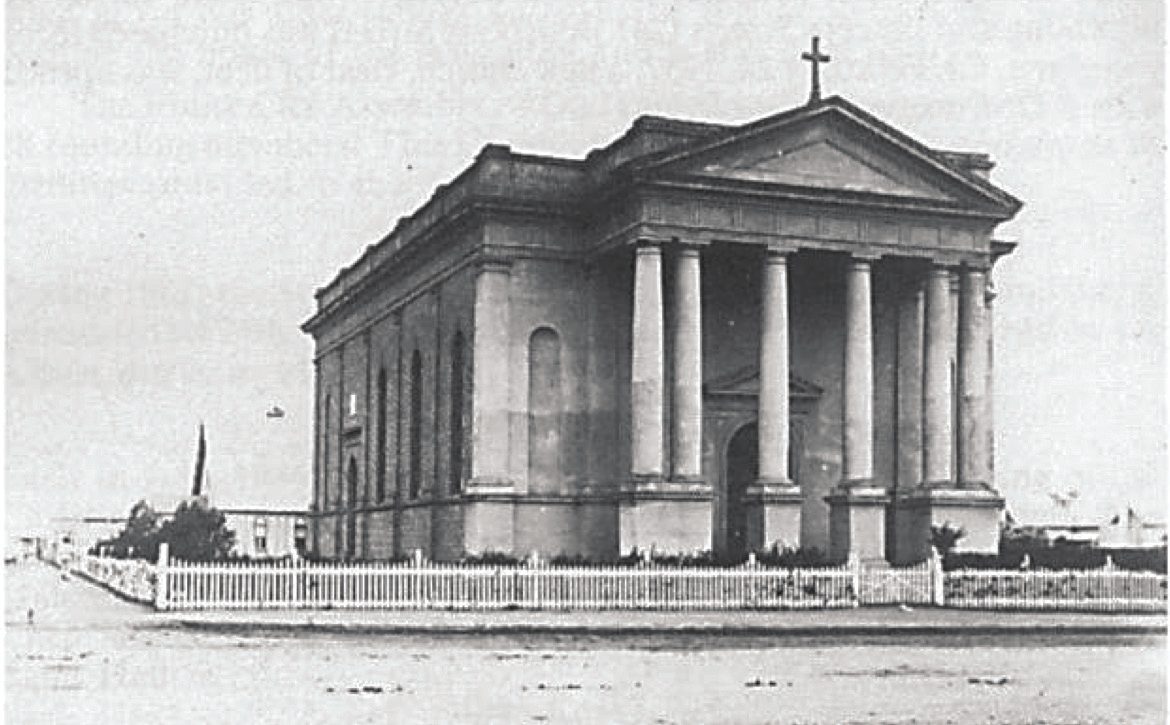
By October 1875 a small wooden structure was constructed on the site and opened by the Rev. Father O’Brien, the first priest to be ordained in Queensland. The church was dedicated as St. Mary’s Church of the Holy Rosary and was soon to be replaced by a new 48 foot by 24 foot structure at a cost of £300 (as described by J. Y. Walker) built on the same site. It was about this time that Father Rossolini was appointed as Bundaberg’s first parish priest. Unfortunately Father O’Brien died in June 1887 in the house of Father Rossolini while on a visit to Bundaberg and was buried in the church grounds. He was later reburied in Maryborough.
The small wooden church was inadequate in size almost from the day of its completion. In 1886 the Rev. Dr. Dunne, Bishop of Brisbane, laid the foundation stone for a much larger Romanesque church to be designed by the very competent colonial architect Frances Stanley. Constructed by a local contractor, Mr. E. Boyle at a cost of £3,600, the new church was completed in 1888 and held its opening mass in May of that year. Visible contributions to the church by the Adams family were the ornate carved wooden pulpit (now removed), and a stained glass window. The church was enlarged in 1926 with some parishioners regretting the disappearance of the, “beautiful timber roof supports” now covered by the new ceiling.
The first Bundaberg general cemetery was located on the town ‘fringes’ diagonally opposite the present Church of England in Woongarra Street. It soon became apparent to Walter that this cemetery site was inappropriate both as to location and size and, largely due to his efforts, the much larger existing site, removed from the central town area, was selected and gazetted on 5th September 1873.
Older Adams family members recounted the story of a worker, helping with the cemetery relocation, who inadvertently pierced the lid of a coffin with the point of his pick. The resultant release of compressed gasses made quite a noise and the worker emerged from the hole like a shot from a gun. He was observed running at full speed from the site shouting to all and sundry, “They’re after us; they’re after us” which had the predictable effect of leaving many startled and puzzled citizens in his wake. At a time so far removed from the event myth and history become interwoven but, given the nature of the times, it could easily have been an account of an actual event, though probably with the normal embellishments.
In 1885 a decision was made to have a separate Catholic cemetery. Walter and Mary together with some of their children and grandchildren are buried in this cemetery fronting the present Fitzgerald Street. This cemetery was established on the east corner of Portion 33. Some early burials were of Walter’s son George Manus, who died of pneumonia at age 33 years and who was buried there in 1888, and of George’s baby daughter Mary Elizabeth who was buried there two years earlier, in 1886.
Michael Gahan (Appendix B2) applied for the lease of Portion 33 on 15th March 1881 with the payment of a survey fee of ₤6-0-0, and a further payment of ₤6-0-0, being an advance of the first year’s rent. (Portion 33 being 120 acres of first class pastoral land – Register No. 814). Michael certified that he had lived on this land for the previous 12 months. Conversion of the lease to a Deed of Grant was conditional upon the payment of a further nine annual payments of ₤6-0-0 and the installation of certain improvements. Approval of the lease was received on the 16th November 1881 following the cancellation of an earlier approval on the 13th October by the Undersecretary of Lands to this and eight other leases. On the 8th March 1884 Michael submitted a Certificate of Fulfilment of Conditions by Selector under The Crown Lands Alienation Act . Particulars included living within fifteen miles of the lease (on Selection No. 558 Parish of Takalvan) and the installation of a hut valued at ₤45-0-0, 80 rods of split fencing at ₤20-0-0 and the felling of 4 acres of forest at ₤10-0-0. Previously, on 11th February 1884, Walter and George Manus Adams had attested to his meeting of residence conditions, the construction of 80 rods of fencing, the clearing of 2½ acres and the construction of a hut. Having paid the balance of the ten years rent together with fees and having fulfilled the conditions of the lease a Deed of Grant was passed on the 1 st July 1884. A description of the land was, commencing at the west corner of Portion 26 on the N.W. by a line bearing 245º, 35 chains 0 links, on the S.W. by a line bearing 148º, 36 chains 67 links, on the S.E. by a line bearing 58º, 34 chains 70 links, and on the N.E.
by Portion 26 bearing 328º, 32 chains 50 links .
(Appendix B4)
It is of interest that some ten years later, on the 9th February 1894, the Bundaberg Public Lands Office asked to be informed by the Under Secretary of Lands when the Deed of Grant had been issued to Michael Gahan – as, “The matter is of importance to the Catholic Church here.” On the 14th February 1894 the Office received the answer “in July 1884”. It is significant that the query related to the Deed of Grant over the 120 acres of Portion 33 and not to the 40 acres of the subdivision described below, which is occupied in part by the cemetery. It may be relevant that by 1894 Walter, George Manus and Father Rossolini were all deceased. (Appendix 3 – Plan of Section 33)
The forty acres of land subdivided from the eastern corner of Michael Gahan’s Portion 33 (Subdivision 1) had as registered proprietors Constantine Rossolini, Walter Adams and Michael Gahan. (Appendix B5) These proprietors, in consideration of the sum of ten shillings now paid to us by Robert Dunne, Andrew Horan, Denis Byrne, James Patrick Maria Connolly and James Benedict Breen do hereby transfer all our estate or interest in the said land above described , to the trustees in the preceding list. The transfer took place on the 16th November 1889 for, the erection and maintenance thereon of a Roman Catholic Church, School and Priest’s residence or for any other Roman Catholic Educational or other institution and generally for the support and maintenance of the Roman Catholic Church .
Many years were to pass before this, “Roman Catholic Educational or other institution” was to be constructed. (Appendix B5 – Details of the Nomination of Trustees)
The description of this land was, Subdivision one of Portion thirty three commencing at the East corner of the portion and bounded thence on the North East by the Racecourse Reserve bearing 328º sixteen chains bounded thence on the North West by a line bearing 238º twenty five chains bounden thence on the South West by a line bearing 148º sixteen chains bounded thence on the South East by a line bearing 58º twenty five chains to the point of commencement .
As the Catholic cemetery was established on the subdivision in 1885 it is likely that Sub 1 was excised from Portion 33 in late 1884 or early 1885 with Michael being compensated for the loss of one third of his land by Walter Adams and Father Rossolini. (Appendix B6 – Layout plan)
Subsequent to Walter’s time the original Wintergarden Theatre, a very substantial two/ three story wooden structure was replaced by the existing brickwork building. The wooden structure was moved to the site at the corner of Barolin and Woondooma Streets and was renamed the Austral Hall. This move occurred in the late 1920’s and the building was subsequently used for parish social events including school concerts and debutante balls, for which it had an excellent stage and a magnificent dance floor. The hall also housed meetings of the Hibernian Australasian Catholic Benefit Society. This organization was opened in Bundaberg by Father Rossolini and Walter Adams on 3rd June 1886, and was the prior owner of the site. Leslie Joseph Adams, my uncle and a grandson of Walter and Mary on his mother’s side, was a very active member of the Bundaberg branch of the society until his death in 1962 as was my wife’s grandfather William Meikle.
A Hibernian Society’s rival, the Caledonian Friendly Society owned the adjacent allotment in Barolin Street. The block’s other Barolin Street corner was occupied by a tea – later boarding – house which was demolished to construct the Church of Christ opposite the Holy Rosary Church.
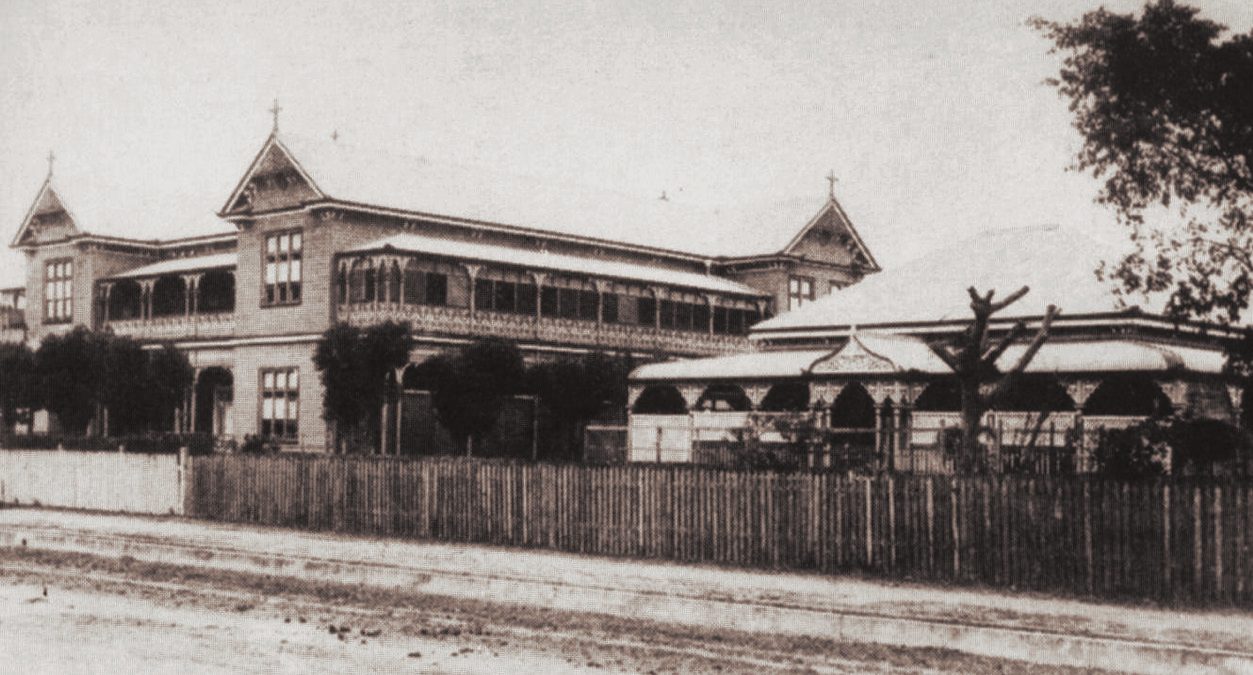
The original Catholic convent was a day school and was set up on the south side of Woongarra Street near its intersection with Tantitha Street in the direction of Saint Mary’s Church. Two residences lay between the convent and Tantitha Street and a Japanese laundry occupied the corner allotment. A blacksmith’s workshop was located opposite the convent and the Salvation Army Citadel was later constructed around the corner from the laundry in Tantitha Street. An ex pupil of the convent, Mrs. Jean Kelly (nee Meikle) provided this local information.
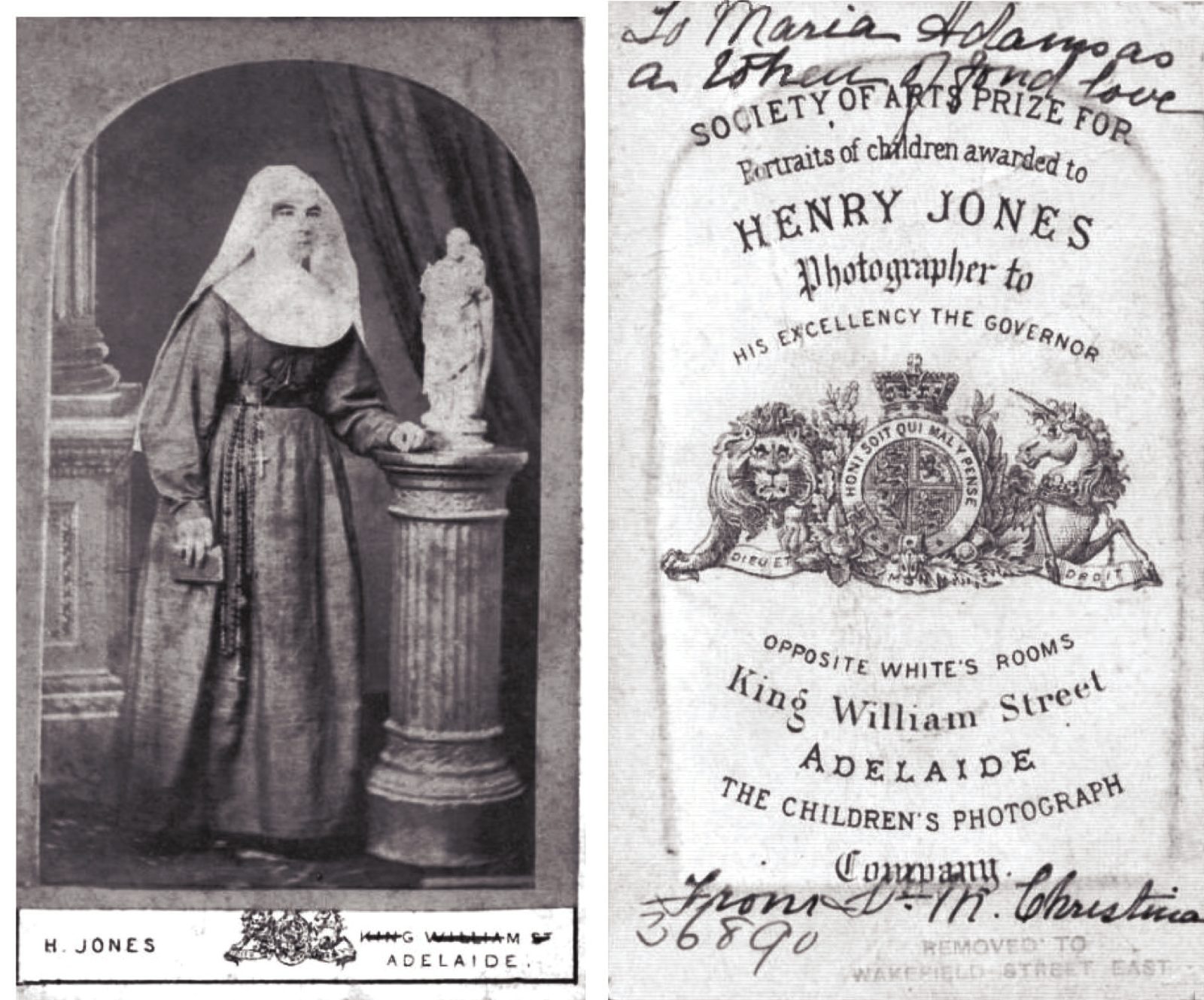
The Sisters of Saint Joseph whose foundress was Sister Mary McKillop arrived in Bundaberg in 1876 and much endeared themselves to the locals with their very valuable teaching, which was first conducted in the wooden church structure. Unfortunately relations between Bishop James Quinn of Brisbane and Sister Mary broke down, due to unmet expectations, and the Sisters of Saint Joseph under Sister Mary McKillop were withdrawn from Queensland, leaving Bundaberg in 1880, to be replaced by Sisters (of St Joseph) who were under the jurisdiction of Bishop Quinn, and later, from 1882, of Bishop Robert Dunne. This was despite the very strong representations by Father Rossolini and his close friend Walter Adams, who along with the other local parishioners were greatly disappointed, if not appalled, by the turn of events. While the replacement Sisters continued with the work in a creditable fashion and the convent continued to flourish, the feelings engendered by the loss to the parish of the pioneering Sisters of Saint Joseph carried on over several generations. However it is an ill wind that blows no one any good and the Josephite Sisters, under Sister Mary McKillop, were relocated to New South Wales where they received a very warm welcome from Archbishop Vaughan to serve in his Diocese. Walter made the philosophical observation that, under the prevailing circumstances, it was probably for the best.
On 11th July 1880 Walter Adams read an address of appreciation to the Sisters, who departed Bundaberg the following day. The address read:
To Sister THERESA and other Sisters of the Order of St. Joseph.
Dear Sisters, We the members of the congregation of St. Mary’s Bundaberg, having learned with regret that you are about to leave the Colony, take this opportunity of expressing our sincere sorrow for your removal from amongst us. During the last four and a half years you have laboured hard in the good combined causes of education and religion, and we feel deeply the loss we shall sustain by your removal; but be assured, dear Sisters, that we find consolation in two things: the first being that, before, ALMIGHTY GOD, we shall be held blameless for your departure from where you were so much needed, such departure being neither the fault nor the wish of the congregation; and the second, that you are about to go to a colony where your zeal, piety, and good works will be appreciated by all from the highest Ecclesiastic to the lowest of the laity. Dear Sisters, the loss will be ours and that of our families, and we feel it tenfold; yet we pray ALMIGHTY GOD to spare you all to prosecute the good work for which you have left the world, for like Mary of old you have chosen the ‘better part.’ We, therefore, beg you will accept the accompanying gift, and we wish you all a speedy and pleasant journey to your new home. Signed on behalf of the congregation,
Walter Adams, and others.
The ‘accompanying gift’ was a donation of £37 (local report) or of 40 sovereigns (the Sisters’ records), an amount of considerable value at that time.
Walter’s sense of loss at the Sisters’ departure can be well understood when his demonstrated commitment to education, both religious and secular, is taken into account. His recognition of the value of a basic education may well have its origin, and would certainly have been reinforced, by the inability of his wife (who migrated to Australia as a young Irish immigrant during the potato famine) to either read or write. Walter’s very strong feelings as to the injustice inflicted on the Sisters, that necessitated their departure, were shared by many others in the Brisbane Diocese, especially those in the Bundaberg and Brisbane areas, whose dealings with the Sisters had been both productive and harmonious.
Following the departure Walter maintained contact with the Sisters, possibly encouraged by his daughter Maria. (Appendix B8) There can be no doubt that Maria was an enthusiastic ex-pupil and admirer of the Sisters.
A copy of Walter’s letter to Sister Teresa (Maginnes) follows:
Dear Sister Teresa, August 17, 1880
I expected to here from you before now but you may not have had time to write even a few lines to one of the humblest of the Bundaberg people, myself.
You had not gone from here more than a fortnight before His Lordship sent two Sisters of St Joseph up to take your place. Now I would like to know what Sisters they are. I know they are not under the same rules as yourselves and his Lordship knew that they would not be received as you were, and he sent Father O’Riley up with them - and a message arived to call Father Rossolini to Brisbane. I supose while he,Father O’Riley, makes peace and collects funds to pay for new furniture. His success was not so great as he expected - he after two weeks hard fighting collected about £25. He thinks I ought to be excommunicated because I gave him nothing and will not make so free with the little strangers. But I want to know more about them.
They say that Sister Francis - De Sales that first came to Maryborough with Sister Alexanna that came here once from Gladstone is about to return to Queensland under Bishop Quinn. Is this likely? Father O’Riley wanted to make it appear that many that left Queensland wish again to return again under the Bishop. This I cannot believe. However, Father Rossolini will be back in a few days and I shall know more about it.
I should have written to Mother Mary but do not know her address. In fact I do not know yours and you may never get this. If you allow me to tell you that henceforth and forever the rising generation are to be ladyes and gentlemen, no common education like you could impart. But music by the real they will teach, therefore the future of Queensland will be great and musical. The people will be to proud to work and when they get hungry they will go to the pianno for a musical feest (if they have one.) This may stay the stomach and elevate the mind but never kill hunger. But we must leave all this for time to work out or you return to Bundaberg for O’Hagan says he will countenance none but you.
I hope this will find you and all the Sisters well as this leaves us at presant. The whole of the family joins in sending kindest regards to you and all the Sisters which please convey to them, and believe me
Yours sincearly
Walter Adams
The two replacement Sisters were Sister Joseph (Margaret Wynne) and Sister Julian (Jane Brown). These Sisters were to leave the convent in early 1881. The above letter was followed in short order by another letter, to Mother Mary herself, probably following the receipt of the Sisters’ then current postal address from Sister Teresa:
Bundaberg, September 12, 1880
My dear Mother Mary,
I duly received your very kind note and was very glad to here that you were well.
The people of Bundaberg and myself received your regrets for the removal of the Sisters from here sincearly and if you received the two papers with the Testimonial we presented the Sisters with before leaveing you would there see that we blame no one for their removal, yet we assured the Sisters that we, the people of Bundaberg, would be held blameless before Almighty God for their removal, and I trust the same Almighty Being will forgive those that were. Poor Father Rossolini felt it much and he is little better now that the Sisters of St Joseph is returned.
But, dear Mother, they are a Branch, they have no Body Ecclesiastical, they have no roots, they are not the florishing tree but to my mind a decayed Branch blown from the parent tree by adverse winds; but God help us, they may be good, yet I cannot make free with them and have never paid them a visit yet. I am still awaiting yourself, Sister Teresa, Srs Collumbus and Francisca’s return. Mother, you must send them back if their is ever a change in the ministry.
Those - or rather one of those Sisters, a Dublener, was heard to say that Sister Mary De-Sales and Sister Aleanna - my first Maryborough Sister and the Gladstone one was coming back to Queensland. If such be the case, kindly let me know as I never like to doubt a religious. If such is the case, I may see you sooner than I thought, and then not the old buggy but a new one is at your servise.
I now, Dear Mother, conclude, beging a short prayer for my religious wellfare and the whole of my family joins in wishing you every happiness both here and hereafter.
With kind regards to the Sisters, I beg to remain
Faithfully yours in C
Walter Adams
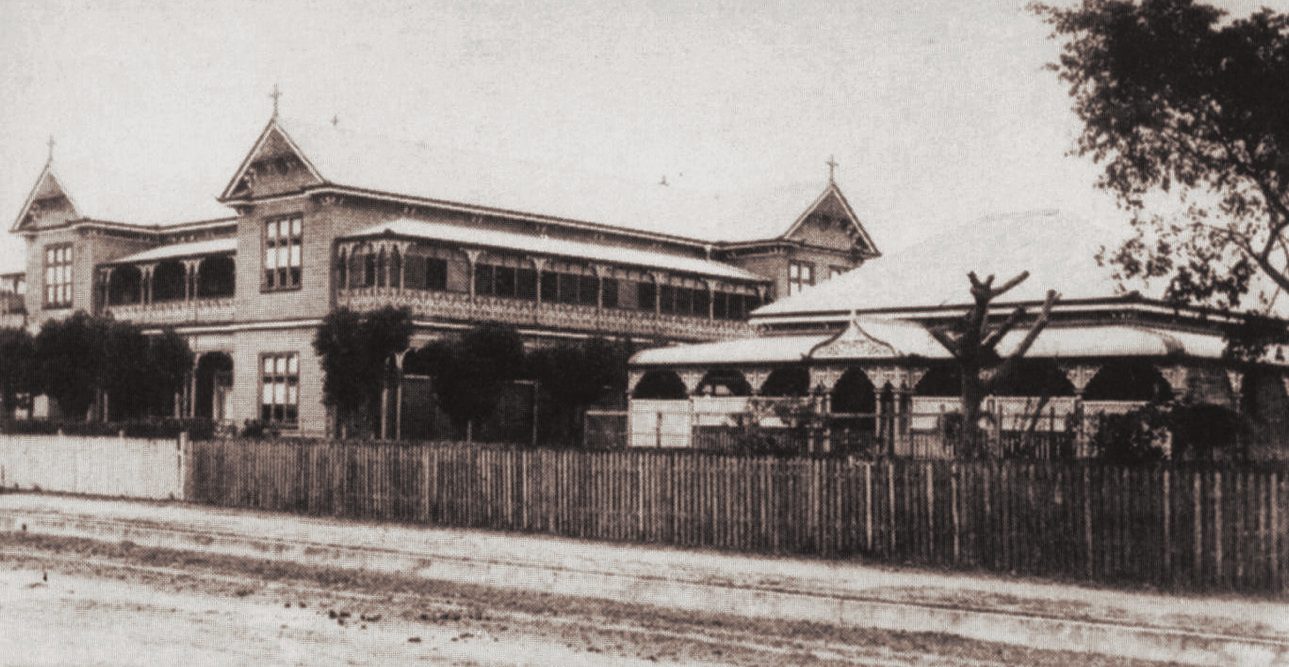
The Sisters of St. Joseph, now answering to Bishop Dunne, were later replaced by The Sisters of Mercy in 1897. In subsequent years the convent was relocated to the Bourbong Street site, west of the railway line. Usage of the new site was enhanced by the provision of boarding facilities and by the provision of a secondary school education to girls of the town and of the outlying areas of the parish. A later activity again was the relocation of the convent’s day school to a building on the Barolin Street site, adjacent to the Saint Mary of the Holy Rosary Church. This occurred in the 1910’s on a site previously occupied in part by the Myrtle Villa boarding house.
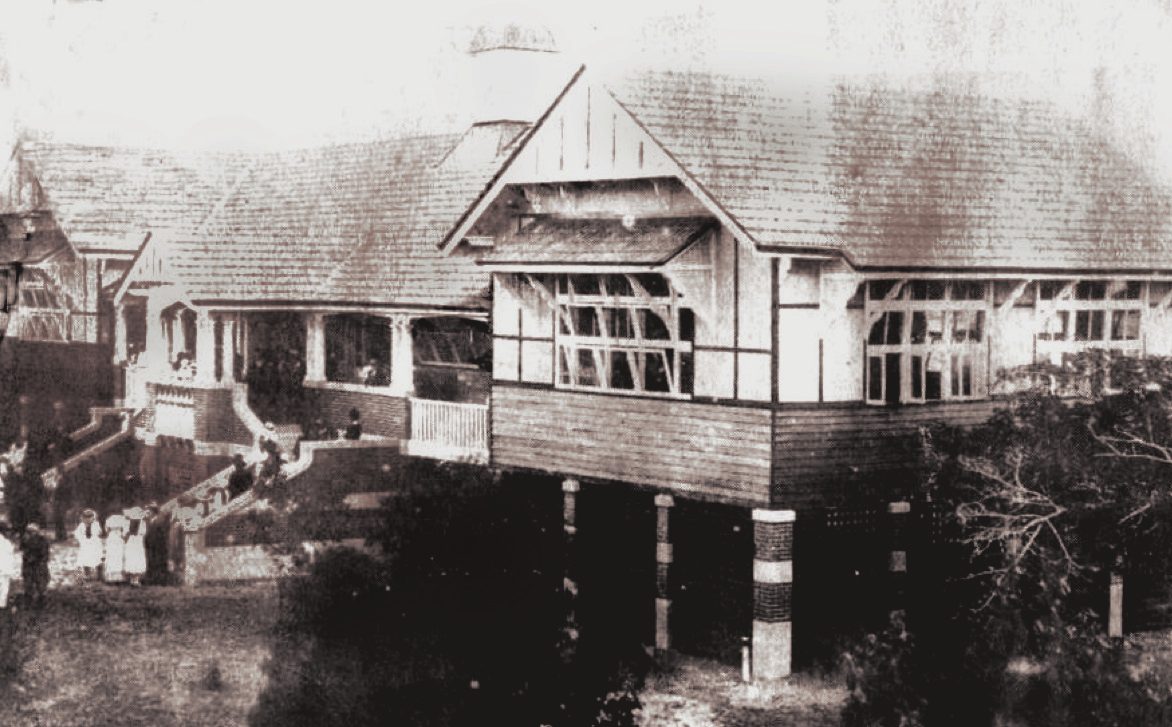
The Christian Brothers were relative late comers, establishing their school and residence on a site adjacent to the Wintergarden Theatre on the site previously occupied by the Grammar School. An ant bed tennis court separated the school buildings from the theatre and swampy land on the Woondooma Street frontage was reclaimed to construct a swimming pool for the use of students. This pool produced many competent swimmers.
In more recent times again the Christian Brothers School has moved to Fitzgerald Street, and is now merged with the Convent, producing the co-educational school, Shalom. With the opening in 1984, a “Roman Catholic Educational or other institution” was finally installed on the land acquired for this purpose 100 years before.
The above is a very brief overview of Walter’s association with both the Catholic Church and with its representatives that lasted from his family’s arrival in the Bundaberg area in 1871 to his death on 15th May 1892. Sad to relate Father Rossolini himself died a year later in 1893. Both were relatively young men. While much detail of the association between the two has been lost over the years, the degree of co-operation and level of mutual respect between the two must have been very high. Walter and Mary constructed their last residence on George Street land, adjacent to allotments owned by Father Constantine Rossolini. The family subsequently acquired these allotments and they were to become the land on which Walter’s daughter Ellen and her husband Walter built their residence “Newnham” at 116 George Street. It would be interesting to know in which area Father Rossolini invested the capital raised from the sale; it most probably went to his beloved church. Up to seventy years – and beyond – after Father Rossolini’s untimely death, descendants of Walter and Mary, who would never have met Constantine, still spoke of the good Father with much affection. This affection also extended to the memory of the Sisters of Saint Joseph whose impact on the lives of the citizens of Bundaberg greatly exceeded the brevity of their stay in the early township.
NOTES:
Note 1. The original Adams Hotel constructed in 1872-3 on the corner of Barolin and Bourbong Streets, was a one story wooden structure with verandah and stables. It was renamed the Metropolitan Hotel in 1879 and in October 1885 was demolished to make way for the present two story brick building which was completed in April 1886. In 1887 the three Bourbong Street shop fronts were added, and a billiard room was also constructed.
Note 2. 116 George Street (Newnham) now demolished, was the residence of Walter’s daughter Ellen Elizabeth and her husband, and cousin, Richard Walter Adams who came from Singleton N.S.W., and who was the manager of the Bundaberg Foundry for many years.
Note 3. Walter and Mary’s residence (Summerville) at 118 George Street was still standing (as at December 2001). It had been turned into flats and the, verandas, the cast-iron railings and the kitchen/pantry/maid-room annex with its attendant connecting walkway had all disappeared. The well, duck pond and stables having outlived their usefulness were removed in earlier times.
BIBLIOGRAPHY
Sources consulted include the following:–
Pugh’s Almanac and Queensland Directory , Pugh, T. P., Gordon and Gotch, 1887
The History of Bundaberg - a Typical Queensland Agricultural Settlement , Walker, J. Y., W. C. Aitken, (Bundaberg), Gordon and Gotch, (Brisbane, Sydney, Melbourne, and London) 1890
Constantine Rossolini – Pioneer Priest of the Burnett (1845-1893) , Tynan, P. J., Church Archivists Press, 2002
Letter copies from the Sisters of Saint Joseph Archives – North Sydney
Material from the Queensland State Government Archives; and
Personal recollections and those of family members, not the least being my aunt-in law Jean Kelly – now deceased – an old Bundaberg ‘convent girl’.
APPENDIX B1
ARRIVAL OF THE BODY IN BUNDABERG
(Copied from the Bundaberg and Mount Perry Mail – May 23, 1892)
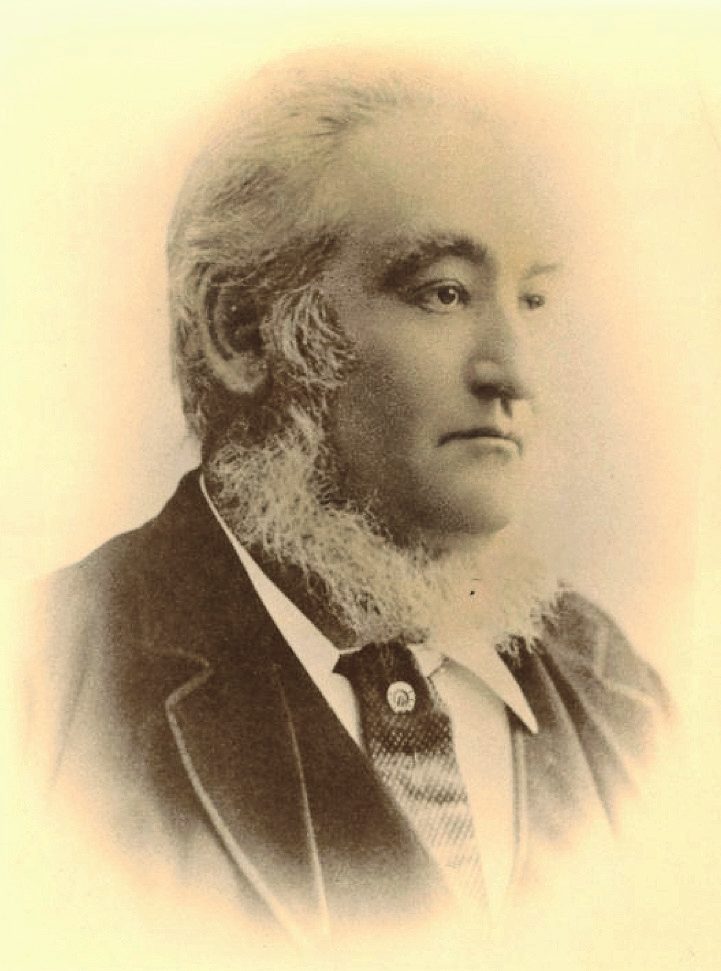
The body of the late Mr. Walter Adams, M.L.A., who died in Sydney on the 15th instant, arrived in Brisbane late on Thursday. Arrangements at that hour indicated conveyance to Bundaberg by a special train, and in addition to publishing this information in their columns, the Brisbane press, in all good faith, it gave free circulation to provincial journals, including Gympie, Maryborough and ourselves. The body was brought forward by the ordinary mail train, which left Brisbane at 8 o’clock on Friday morning, and reached Bundaberg at 6.45 the same evening. Long before the time of arrival the station platform was thronged with an eager crowd eager to pay mute respect to the remains of him who left this town less than three weeks ago, to return no more, but to fall in life’s flight in a southern city and among strangers. Along the upper end of the platform an escort of about forty members of the H.A.C.B. Society was drawn up in line, all wearing regalia, and some bearing in their hands lighted torches, the lurid glare from which imparted a strange impressiveness to the solemnity of the occasion. When the train drew up at the platform the large assemblage mostly gathered round the carriage containing the widow, son and daughter, and other friends of the deceased, including the Rev. Fathers Rossolini and O’Reilly (Maryborough), both of whom had journeyed by the afternoon train to Isis Junction and there joined the train. Kindly hands assisted, Mrs. Adams from the carriage to a conveyance, and it immediately drove to Summerville House. Meanwhile, in front of the covered wagon containing the body, the Hibernians were filed and served to keep back the increased crush that, by this time, had gathered and not without difficulty the coffin was lifted from the zinc lined case in which it had travelled from Sydney. On the shoulders of eight brethren it was then borne to the hearse in waiting. Four torch bearers took positions as an advance guard, followed by the hearse, on either side of which were the other four torch bearers, and immediately behind the hearse we noticed Mr. James Adams and friends of the deceased, the former looking jaded and wearied after the anxious experience and long travelling he had undergone since Monday last. On his arm he carried a massive floral wreath of immortelles from the St. Stephen’s branch of the Hibernian Society Brisbane. At a slow pace the company walked to St. Mary’s Church where a large congregation was already gathered. The altar was suitably draped. The coffin was placed on a raised stand in front of the altar rail, on either side of which were low draped platforms, on which were placed the candles ready for the watchful vigils. Manifesting their fidelity to the last, the Hibernians had resolved to watch by the coffin until the hour of interment. Throughout the night two members wearing, the green emblems of the lodge were present, seated on either side of the coffin. In relays the watch was strictly observed.
The coffin, of light oak with silver mountings was handsome and massive, and while in the church was laden with a number of choice wreaths &c in addition to the one already mentioned there was a massive one from the members of the H.A.C.B. Society “with the sympathy and condolence of the officers and members” and signed by F. P F. Keogh, president, and T. Lawless, District Secretary. The silver medallion plate bore the brief inscription:
WALTER ADAMS
Died 15th May, 1892
THE FUNERAL
When day dawned on Saturday the sky was laden with heavy clouds from which rain was falling in a continuous downpour. The fall during the night had already converted the road into broad patches of mud and water pool and from the bleak aspect that hung over all, together with the coldness and dampness that filled the air, a feeling of depression was the natural consequence. Some slight improvement took place as the day advanced, but about noon the rain descended with even greater force, and continued without cessation until after the funeral and the mourners were on their way back to town. The watch maintained throughout the night by the Hibernians ended at an early hour on Saturday morning, when the Sisters of the Convent entered the Church. Masses were held at 7, 8 and 10 a.m., when the attendance at each was larger than usual. During the day the coffin was bedecked with a great variety of floral wreaths, crosses, immortelles, &c exceedingly choice and tasteful, and an indication of much kindly feeling’s and affectionate remembrance. Among others added on Saturday we noticed floral emblems from the local branch of the Hibernians, M. K. Goodwin, G. Steindl, F. Lillis, Brisbane, G. F. Lyons, M. Duffy, Mrs. K. C. McKay, Mrs. Cook, Mrs. Moncrieff, R. E. Moncrieff, and most prominent of all a heart shaped wreath mounted on a white card with floral border and, in illuminated letters, the following inscription
FROM A LOVING WIFE
and
FOND CHILDREN
As the hour fixed for the funeral drew near numbers gathered in and around the church and in the seats on either side of the centre aisle nearest the altar, were the relatives of the deceased, attired in very deep mourning. Soon after the sorrowing group had, one by one, kissed the coffin for the last time Fathers Rossolini and Mimnagh, standing to the right side of the coffin, and almost under the pulpit presented only a year ago by the deceased, read the usual service prior to the removal of the body. Mid the solemn strains of the Dead March in Saul, played by Mr. J. K. Coombe with subdued expression, six Hibernians stepped forward and, not without difficulty, bore the coffin to the hearse, draped and plumed, the rain falling even heavier than before. By this time the various public bodies, friends and sympathisers, who had expressed a desire to take part in the funeral observation were in appointed position and, at ten minutes past two, headed by the Town Band playing the Dead March, proceeded on the long walk to the Cemetery. The order maintained was as follows:–
The Town Band School Children Hibernians Reverend Fathers in covered buggy Bodyguard Bodyguard of Hibernians of Hibernians Hearse
Deceased’s Buggy and white horse, (led by a coachman) Relatives W. B. O’Connell, M.L.A.
Town Council (headed by the Mayor) Chamber of Commerce (Headed by the President)
Divisional Boards (Woongarra, Mr. J. Cran, Chairman), (Barolin, Mr. W. G. Moore, Chairman), (Gooburrum, Mr. Arthur Young, Chairman) P. A. F. S.
Labour Organization
M. U. I. 0. F.
I. O. O. F. Rechabites Private Friends and the General Public.
As the procession moved off the Convent bell tolled intermittently. In the long list of private friends were representatives of every rank, profession, trade, calling and grade in and around Bundaberg, and many who had come from far upland districts including Avondale, Rosedale, Bingera, Gin Gin, Mount Perry, Isis, Howard, Maryborough, Brisbane, &c. Clergymen of other denominations were present, as were the leading lawyers, doctors, bankers, civil servants, Government officials, planters, farmers, merchants, and business men, together with those in humbler walks in life, some in buggies - of which there were present at least 132 - in hansoms, on horseback and on foot. Hundreds lined the streets through which the procession passed and, even when the band had turned from Woongarra street into Tantitha street, the last of the procession had not then started from the vicinity of St. Mary’s. Entering Bourbon street, at the Club Hotel, hundreds more were in waiting under the verandahs as the hearse passed, heads were uncovered and mute signs of respect displayed on all sides. Business in the streets through which the general cortege progressed was entirely suspended and Bourbon street presented a long array of shuttered windows and closed doors. Nor were the marks of respect less noticeable in private dwellings where the blinds were drawn. A large crowd was gathered at the Metropolitan corner (Mrs. C. M. Adams)*, taking shelter under the verandah from the lashing rainfall, and on the balcony above could be seen more than one tearful eye. Others had taken shelter on the Post Office steps and, at the Telegraph Office door quite a number of public officers, unable to leave official duty, were seen. At the School of Arts, which was closed as a mark of respect towards the deceased, he having been the first President of that institution, a number of lady members were waiting. Small groups were noticeable under the verandahs of the Council Chamber and at the Mail office, who respectively uncovered as the body passed. In Maryborough street, where the condition of the roadway rendered walking a matter of great discomfort and difficulty, it is worthy of note that a somewhat accurate conception of the length of the procession was obtainable. When the band was slowly passing the Wesleyan Church, the last of the funeral train were seen to turn from Tantitha street into Bourbon street, at the Club Hotel**. The rain seemed to descend in its wildest fury as the army of mourners passed Summerville House, the home of the deceased, and neared Adams Bridge. Nothing daunted the cavalcade, with difficulty, maintained its order though general concern was expressed at the continued presence of the school children under such inclement circumstances. Every effort was made to induce the little ones to return home, but determination and perseverance seemed to possess them and rather than return they left the main body, struck through the bush, and by a bye path were the first, to reach the Cemetery. Meanwhile, with but little halt, the Racecourse was reached, and the road bearing to the right entered upon. Little better than a track, the damage done by the prolonged rainfall rendered progress a matter of considerable difficulty. The Cemetery however was entered at 3.30 and immediately a cordon of Hibernians was drawn around the grave. The spot chosen for interment, the Adams’ family burying ground, is situated about 60 yards from the main entrance and about 20 yards to the left of the pathway, where the remains of several members of the family have been buried. The crowd assembled, which could not have numbered less than between 400 and 500, stood uncovered as the coffin was removed from the hearse and placed on the boards across the gaping grave. The scene here was intensely impressive and affecting and, as the solemn service was proceeded with by the Revd. Fathers, bitter sobs were freely heard, while many strove hard to suppress the rising emotion. With rain still falling, with a dark and murky sky over head, with damp, sodden grass underfoot, the company stood in silence and gazed on the eight Hibernians gathered around the grave. As the last solemn words fell from the Revd. Fathers’ lips the body was slowly lowered into the grave.
For a little a hushed and painful silence hung over all broken only by the dull thud on the coffin lid of the clay that fell from the hands of Father Rossolini. Earth had returned to earth, dust had returned to dust. Some of the relatives stepped hesitatingly forward and gazed into the grave, then young Walter Adams, grandson of the deceased, was lifted over the railing round his father’s tomb and with tears streaming down his little face was the last, to look into the narrow confines of him whose name he bears. The grave was then filled and the flowers, emblems &c laid thereon. Overall was laid a unique and cleverly executed floral memento in the design of a harp, with a broken string, a fit emblem of a broken life, tenderly presented by Mrs. R. McKay. Gradually the large assemblage, by far the largest and most representative ever brought together in Bundaberg, dispersed and found their way back to town.
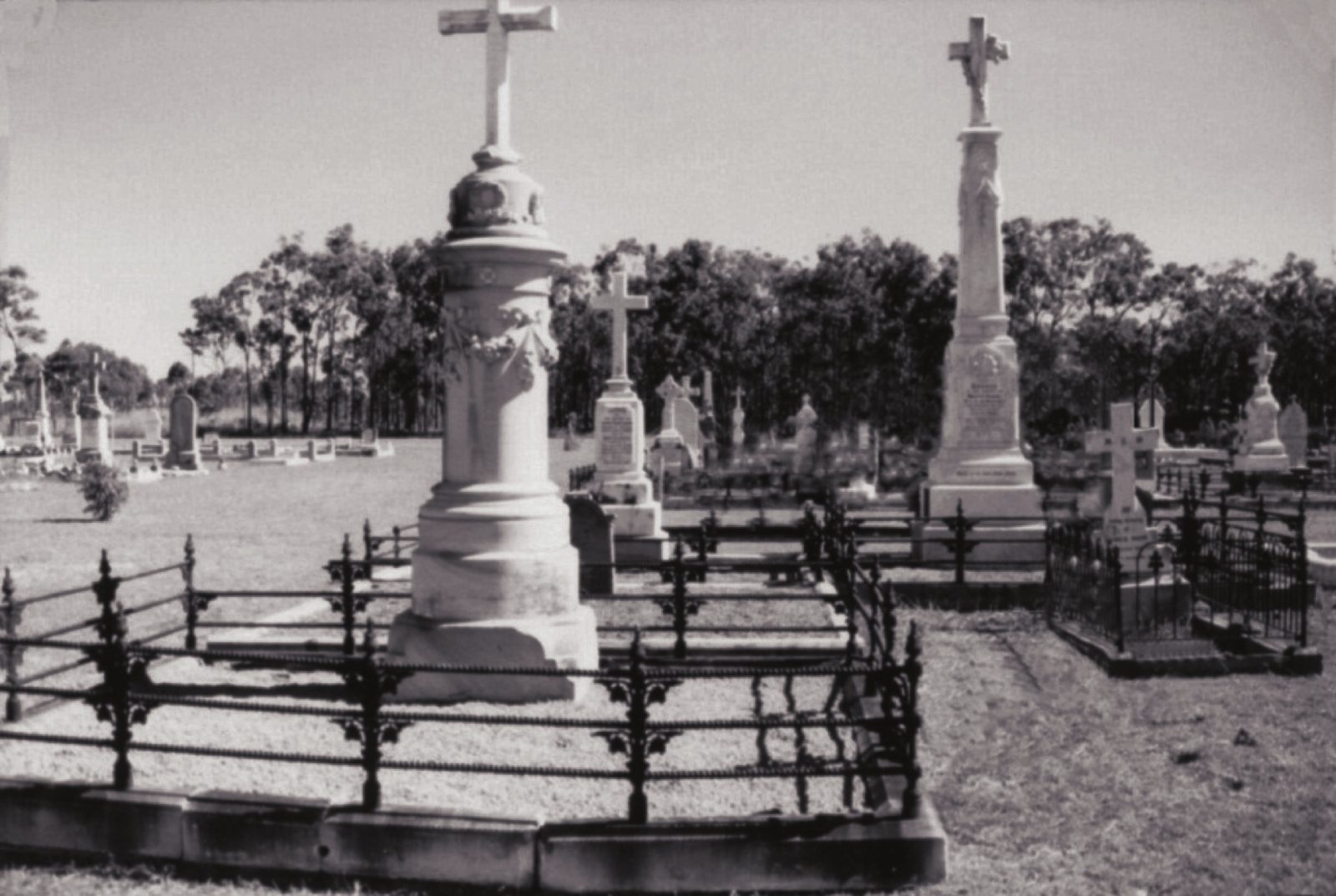
NOTES: *Proprietor; **Approximately four town blocks The Family Graves – Bundaberg Catholic Cemetry
The tallest headstone towards the back marks Walter and Mary’s grave; The smaller headstone to the left marks the grave of their son George and His Wife Cecilia; The Bertheau Family Headstone is in the Foreground.
APPENDIX B2
Michael Joseph Gahan (1841-1919)
At the age of fourteen years Michael arrived in Sydney on the 29th July 1855 from St. Mary’s, Dublin on the ship Mangerton with his widowed mother Honora (nee Bowen - age 41), and siblings Margaret (17), George (12) and Catherine (11). Given the nature of the times it is likely that his father George Gahan had died as a consequence of the famine. The Gahans embarked from the ship all in good health. Every member of the family could both read and write and they were of the Roman Catholic religion. On landing Honora was described as being a housekeeper, Margaret as being a domestic servant and Michael as an agricultural labourer.
On the first of May 1886 Michael married Mary Anne Chappelow the only daughter of Ralph John Chappelow of Arncliffe farm, Kalkie East Bundaberg and Ellen (nee Curtis). Ralph has been variously described as homesteader, selector and farmer. Michael died on the 30th January 1919, and Mary Anne on the 5th February 1944.
The children of Michael and Mary were:
Joseph who was born on the 12th April 1887 and who died while serving with the Australian Imperial Forces on the 26th March 1917;
George who was born on the 3rd July 1889 and who died on the 23rd December 1951 married Maggie Cunningham in 1920;
Mary who was born on the 13th July 1891 married Charles Robert Jelous in July 1912;
Ralph who was born on the 16th July 1893 and who died on the 11th May 1959 married Maria Alice Darlington in 1926;
Lawrence who was born on the 8th August 1896 married Olive Maud Tanner in 1927;
Paul who was born on the 7th June 1899:
Francis who was born and died on the 25th June 1903;
James who was born on the 4th July 1904 and who married Anne Charlotte Midgley in 1935; and
Ellen who was born on the 13th August 1907 and who married Oswald Keith Faulkner in 1930.
APPENDIX B3a
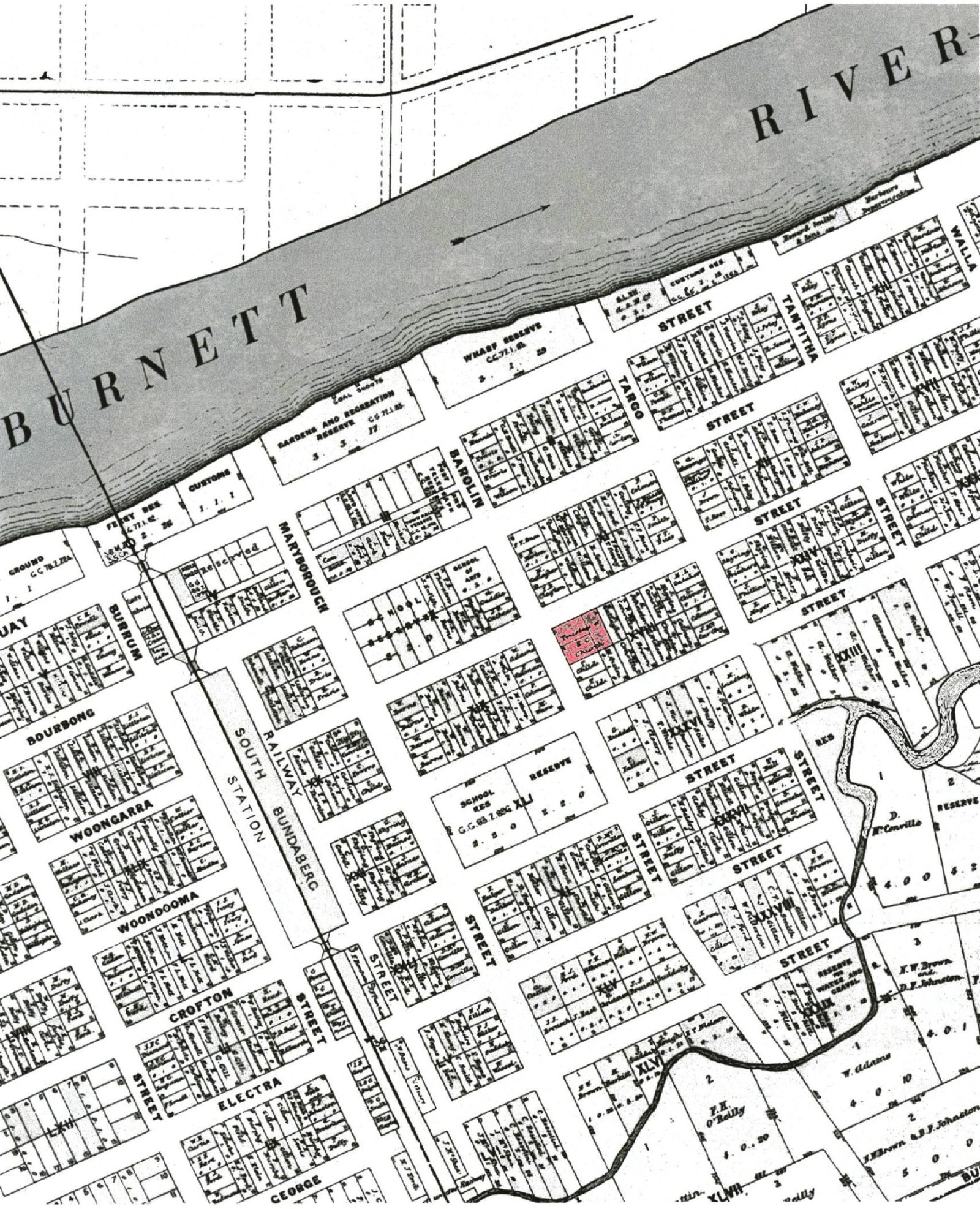
The location of Saint Mary’s Church of the Holy Rosary – corner of Woongarra and Barolin Streets
APPENDIX B3b
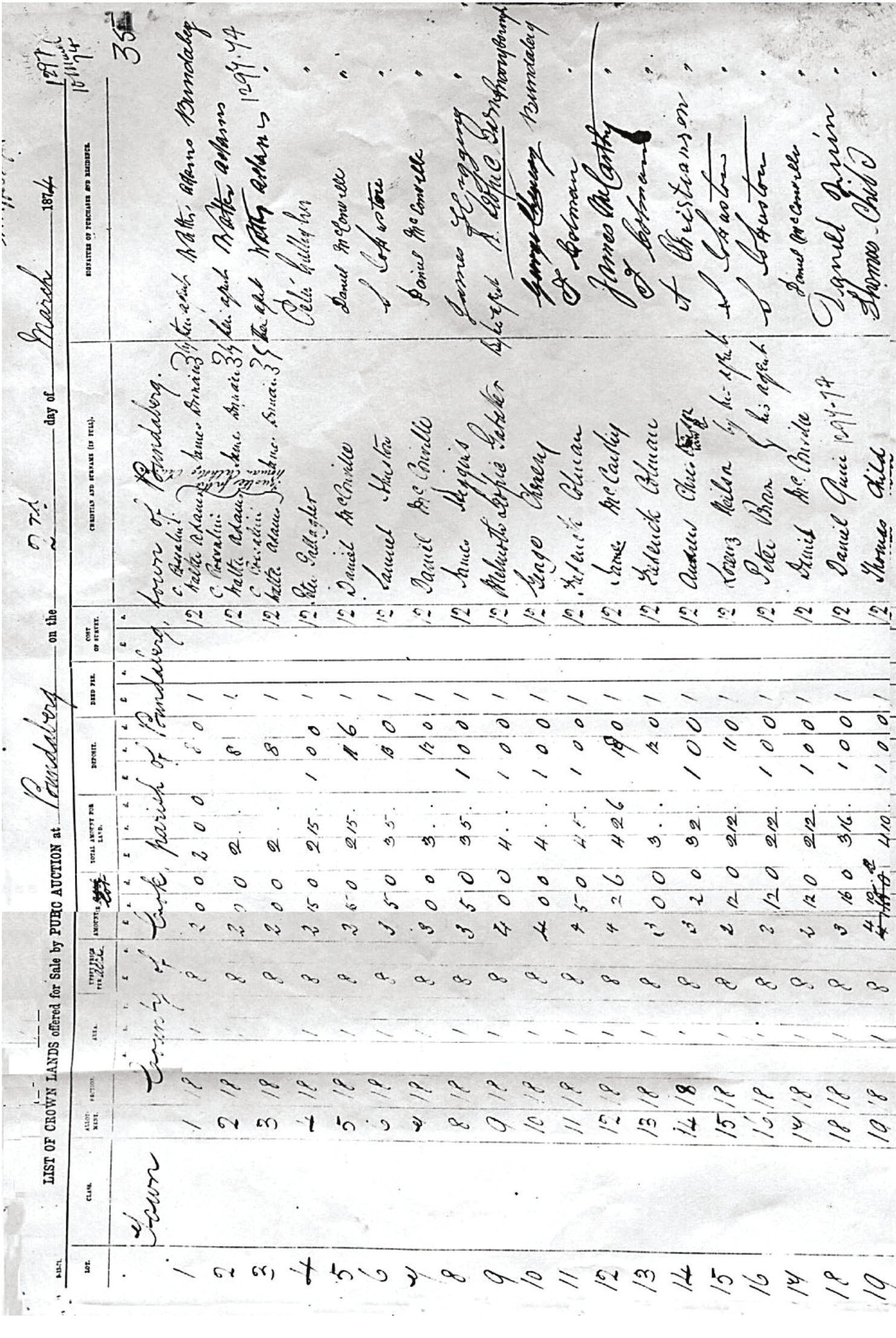
Record of the Holy Rosary Church property’s acquisition at public auction
APPENDIX B4
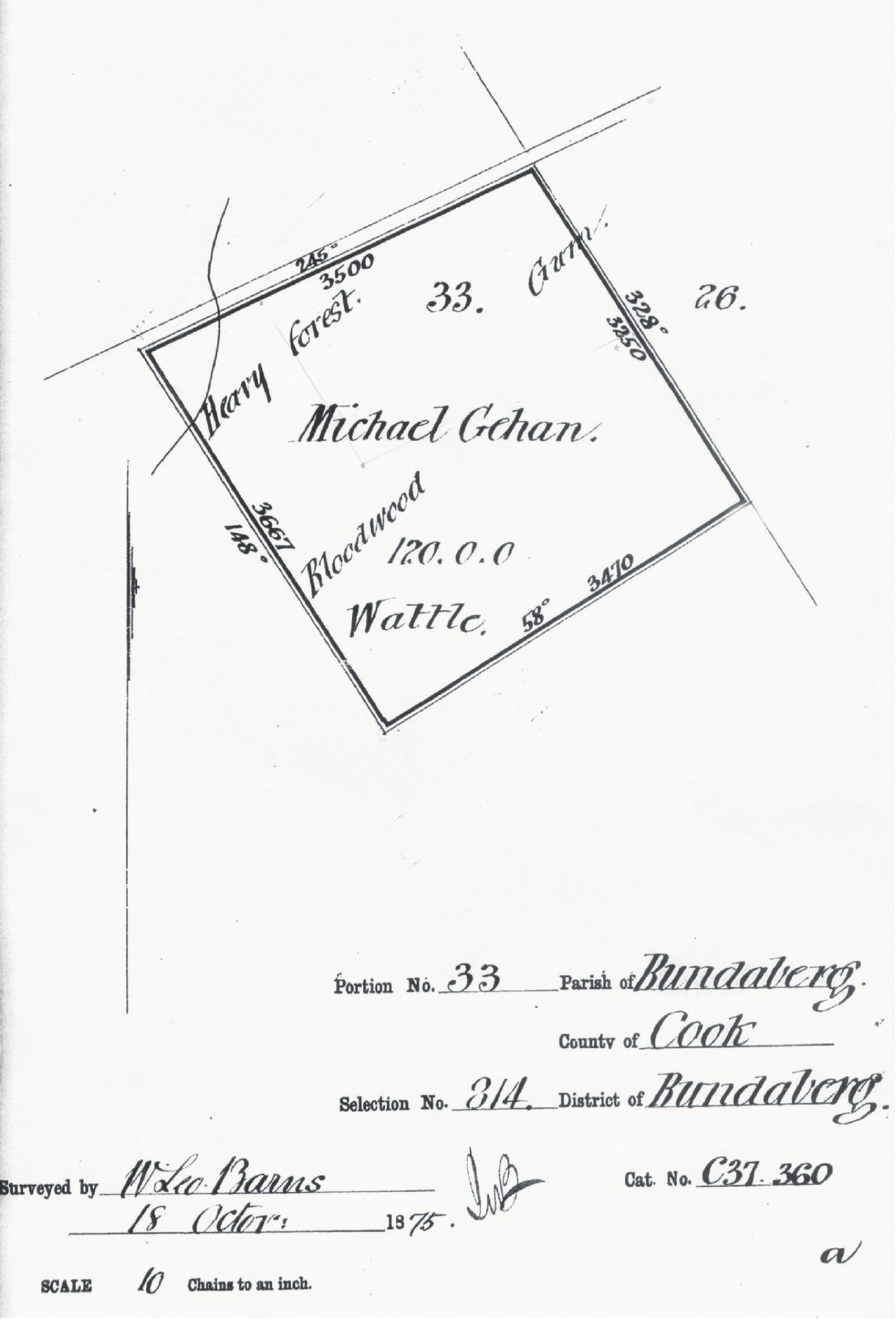
Michael Gahan’s land holding
APPENDIX B5a
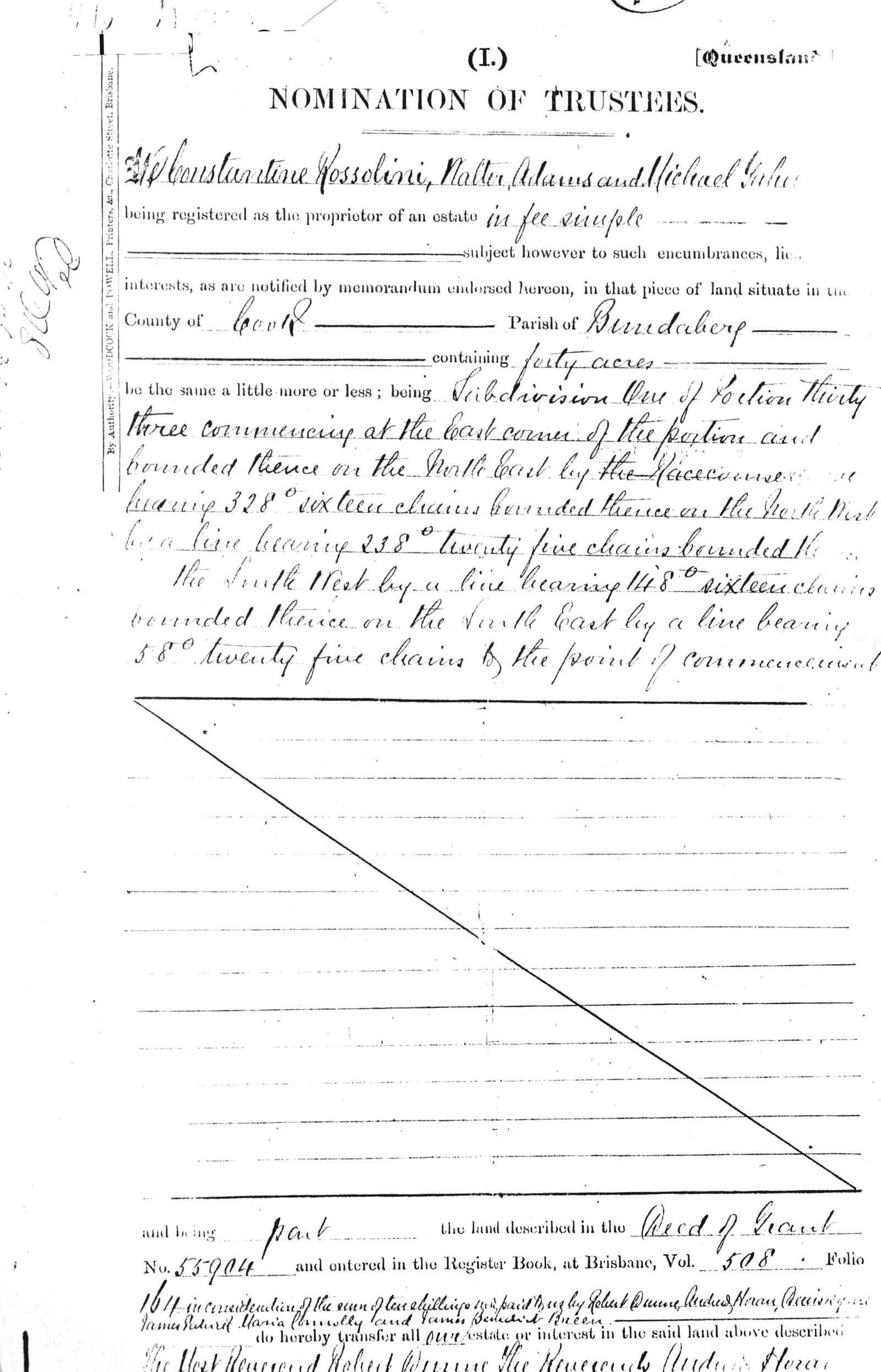
Nomination of trustees land for church purposes
- Page 1
APPENDIX B5b
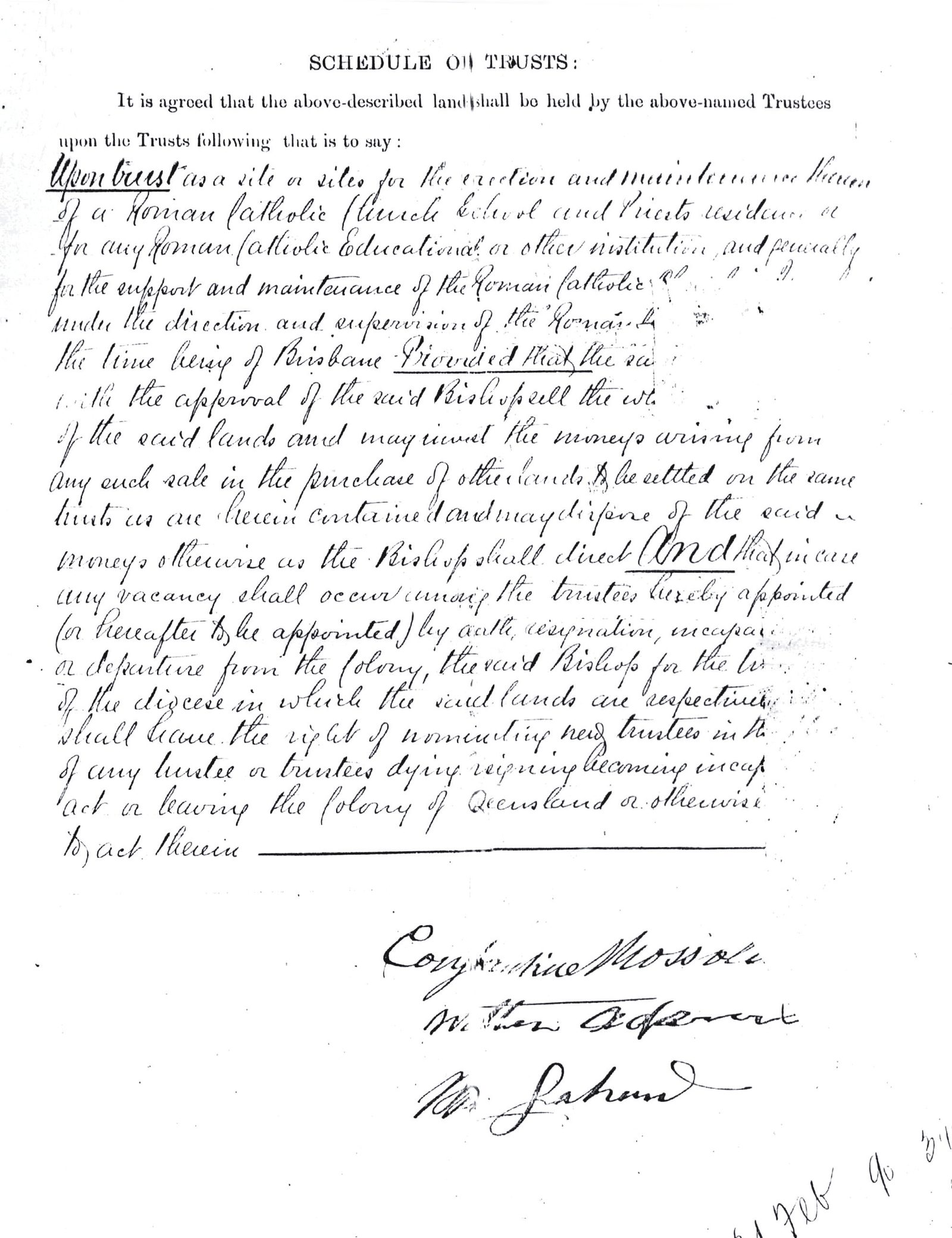
Nomination of trustees – land for church purposes – Page 2
APPENDIX B5c
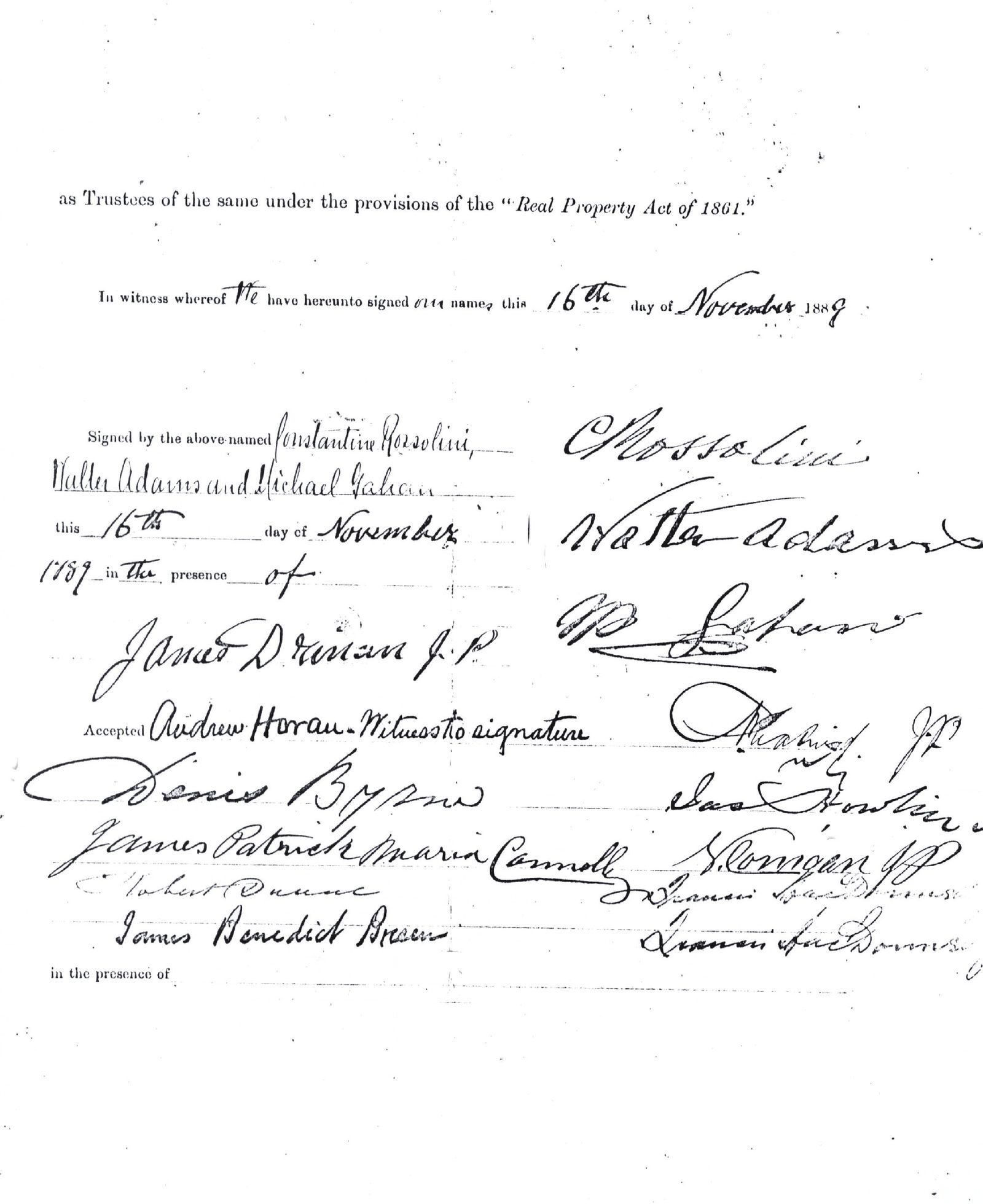
Nomination of trustees land for church purposes
- page 3
APPENDIX B6
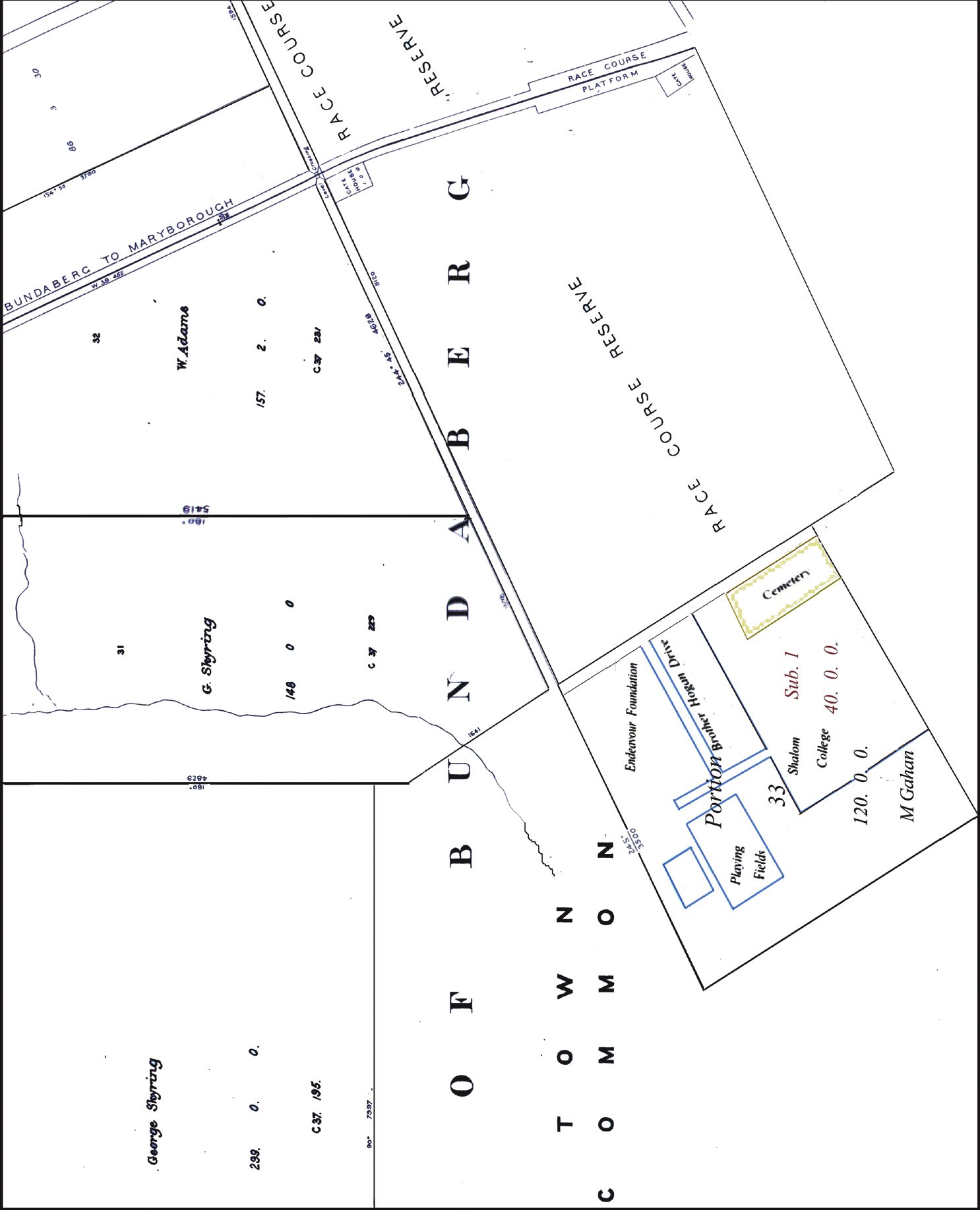
Superimposition of the Catholic Cemetery and School Property boundaries of the year 2004 onto the Gahan Property boundaries
APPENDIX B7
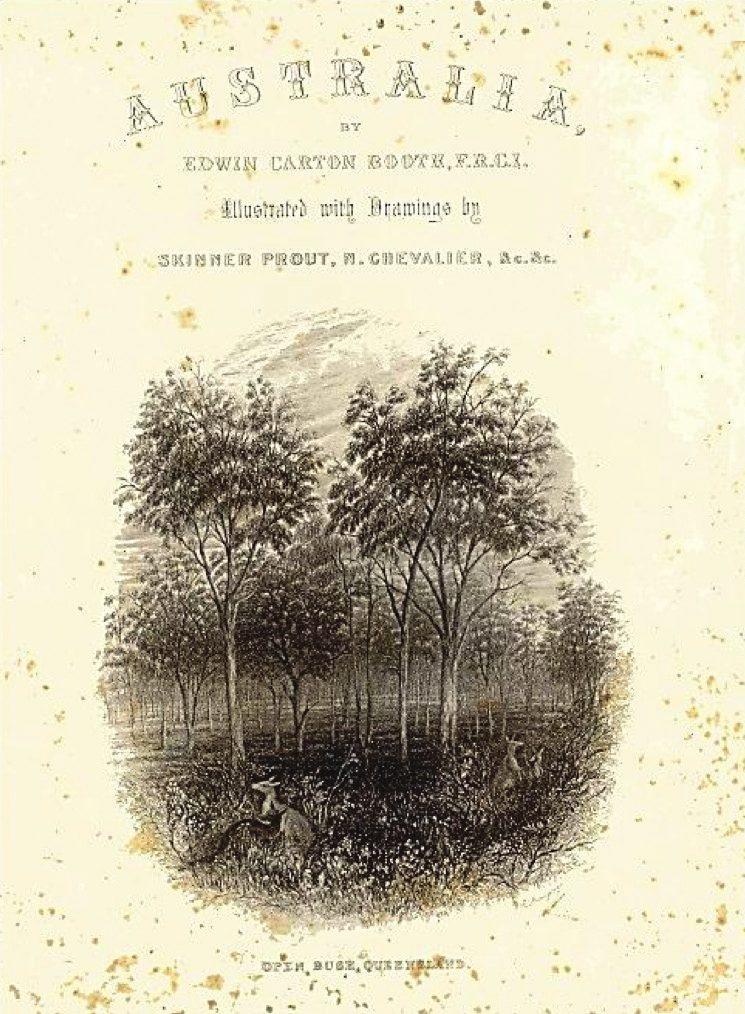
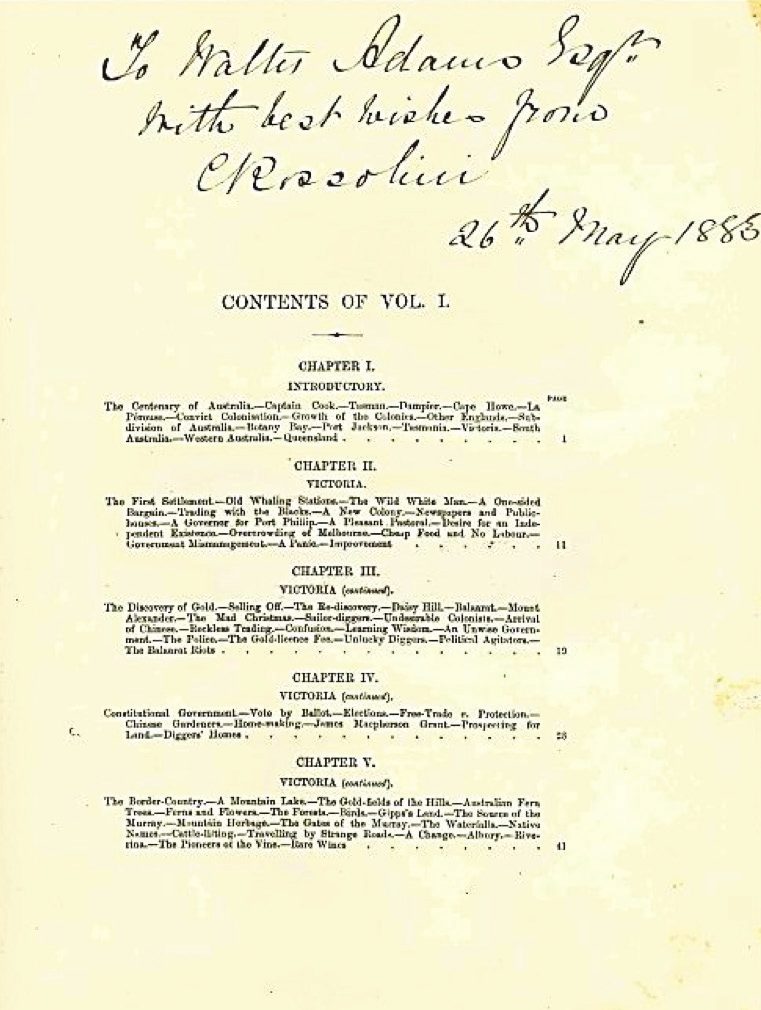
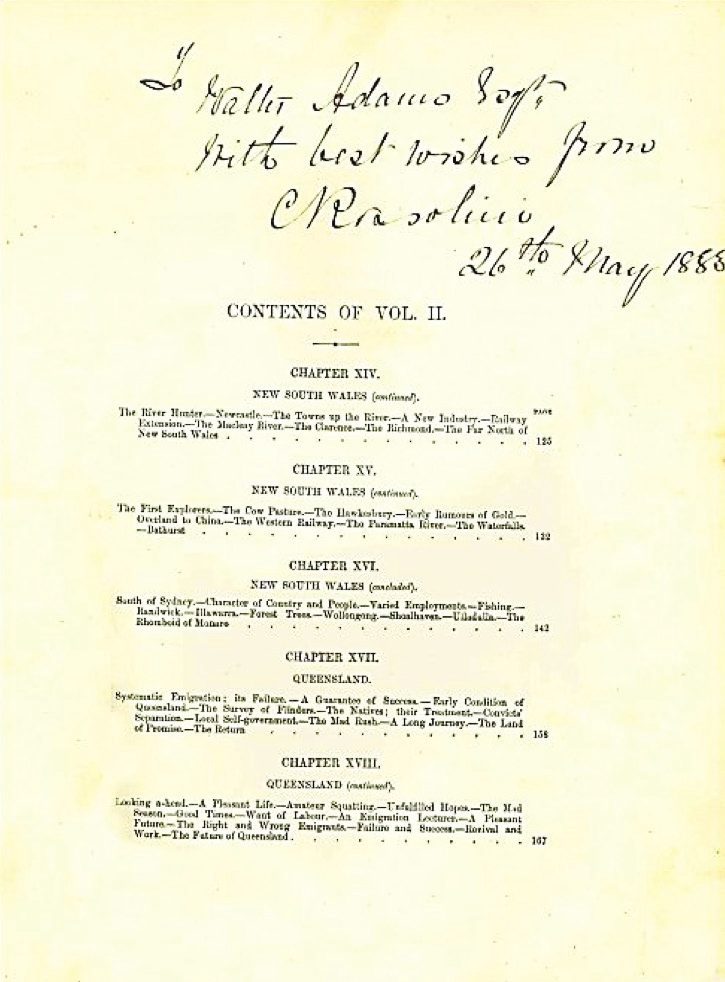
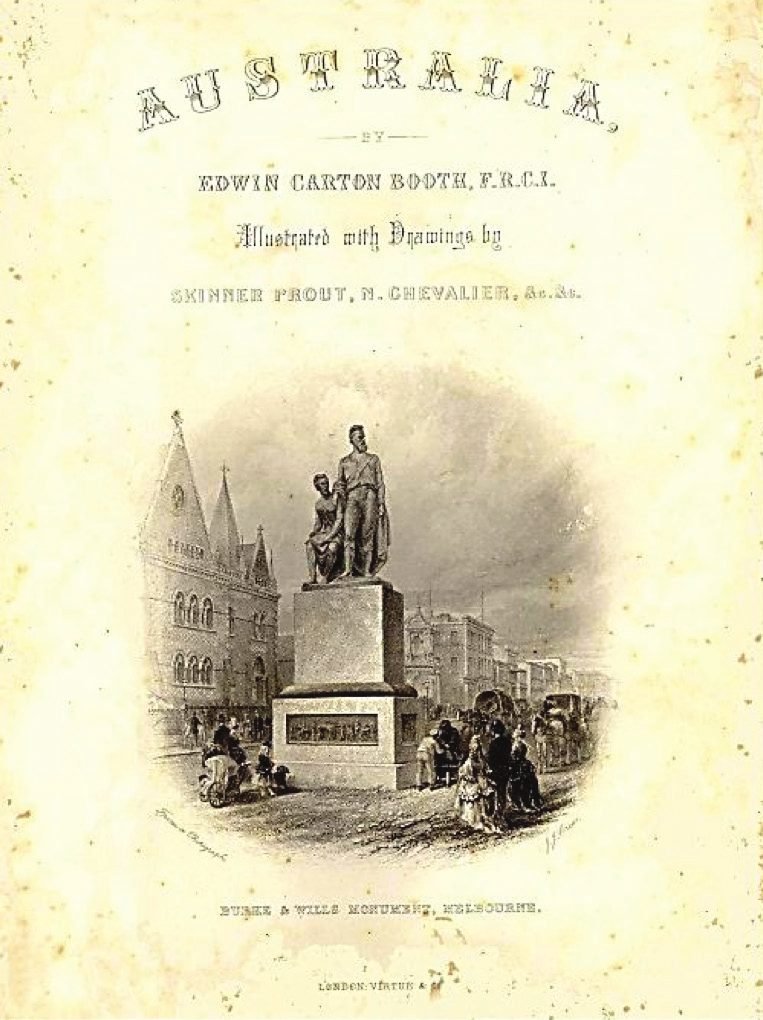
Annotations in Volumes i and ii of, Australia Illustrated – presented to Walter by Father Constantine Rossolini
APPENDIX B8