Chapter Nine
Consolidation and Development
Bundaberg had entered the manufacturing era. On Saturday the 6th of June 1885, the new iron foundry works of Mr. T. O. Child, which had evolved from his father Thomas Child’s original business, were formally opened by the Police Magistrate, Robert A. Johnstone, by tapping the molten iron in the furnace and the initial products of wheels, fire-bars, drain crossings etc. were then cast without a hitch. Following this, Walter Adams took the floor and delivered a speech which contained many recollections from the time when Bundaberg had only one small blacksmith’s shop and he then traced the phenomenal progress of the town since that time. Cheers were given for Mr. T. O. Child, who then briefly expressed his satisfaction and his thanks.
Thomas Obadiah Child’s Bundaberg Foundry was considered a well-found establishment with shoeing sheds, steam lathes, and a powerful screw press. A vertical steam engine worked numerous circular and band saws, nave turning lathes, grindstones, bellows for the forges and smelting furnace blast equipment that had been constructed by T. O. Child himself. It was intended that the foundry would manufacture dredge buckets and many other heavy items of a similar nature. The moulding shop was so contrived as to be capable of enlargement to allow for the setting up of a smithy’s working area.
The transition of the business, from Mr. T. O. Child’s Targo Street foundry to the Bundaberg Foundry Co. Limited occurred in stages. Mr. T. O. Child entered into partnership with, and later sold out his share of the company, to Mr. Evan Roberts in 1886. Following a further transaction, by mid-1887 the company was referred to as Roberts, Coombe and Co. Bundaberg Foundry. In 1888, a new limited liability company was formed, the Bundaberg Foundry Co. Ltd., financed by the issue of 5,000 shares at £5 each. Two fateful decisions were then made regarding the foundry’s operations: the first was to extend the business’s operations into new areas including the casting of large metal components for major industries together with the fabrication of structural members; and the other to undertake a relocation of the works to the north bank of the Burnett River. The implementation of the latter decision would provide direct access to both the transportation facilities of the river and of the rail system, soon to link the north and south of the colony.
This linkage included the imminent construction of the Burnett River rail bridge which was to be implemented close to the company’s proposed new location and which provided an added attraction to the relocation. Were the company to win a contract for the supply of structural components for the bridge’s construction the profits from this major work should do much to alleviate the costs of the foundry’s relocation and of the new, and costly, heavy equipment necessary to undertake the extended operations proposed. To cover the initial cost of the relocation, and of the purchase of the new equipment, a substantial infusion of capital would be required into what was both a capital and labour-intensive industry. To this end, new investors were enlisted with those described as attending the second annual meeting being: Messrs. G. J. Young (appointed Chairman), R. Fleming, A. Gibson, A. Macbeth, F. Kilner, J. Johnson, W. Woolley, F. Buss, F. Gladwell, J. C. Walker, J. Batstone, A. P. Barton, P. Duffy and J. White. Directors re-appointed were Messrs. Angus Gibson and Robert Fleming and Mr. W. G. Lewis was appointed auditor.
By early 1889 the foundry’s operations had been relocated to the bank of the Burnett River in North Bundaberg and the company set about winning the contract for the supply of the structural members for the superstructure of the Burnett River rail bridge. Unfortunately, fate was to intervene and to bring about the near failure of their well-conceived programme. The massive flood of early 1890 was to seriously damage the newly installed pylons of the proposed cross-river bridge, thus deferring the timing for supply of the bridge’s structural superstructure members and was also to inflict serious damage on the newly established, north bank foundry and workshops. The misadventure was to cost the foundry venture £509 00s. 11d. in direct damage and an overall loss of £1,359 07s. 02d. for the year of which an amount of £1,051 15s. 06d. was due to the ‘unforeseen occurrence’. It was obvious that the company was again in serious need of recapitalisation and it was at this point that an outside entity was to intervene.
The Batstone’s plumbing and Buss’s hardware businesses were acquired by the firm of Messrs. Woolley, Bergin and Co. which had been established in 1884 by past employees of the Buss company’s ironmongery business and this company was subsequently converted into a limited liability company, capitalized by the issue of 3,500 shares of £10 each, in 1889. In 1891, Woolley, Bergin and Co. Ltd. purchased what was, by then, referred to as the Bundaberg Foundry Co. Ltd. In 1898, the foundry side of the Woolley, Bergin and Co. Ltd’s business was taken over by a newly formed company, the Bundaberg Foundry Company Limited which had been registered in March, 1898 with a capital of £12,000 to acquire the foundry business of Woolley, Bergin and Co. Ltd. The registered shareholders were: J. B. Atkinson of Gympie, Angus Gibson, George J. Young, John White, J. E. Turner, John Buss, and P. Ridley all of Bundaberg with the directors being Angus Gibson (Chairman), John White, J. B. Atkinson, Peter Neilson and George J. Young. Early managers were Alexander Macbeth, James Fiddes, Andrew Lamb and Alfred Willmott.
Walter Adams’s son-in-law, Richard Walter Adams, joined the engineering section of Woolley, Bergin and Co. Ltd., in 1893, as a secretary/accountant of the foundry and later, in 1910, became General Manager of what had, by then, become the Bundaberg Foundry Co. Ltd. a position that he held until the early1940’s.
William and James Wyper who had originally been employed by Woolley, Bergin and Company in its hardware operations had, by 1901, established their own prosperous Bourbong Street hardware business which was then to fully absorb the remainder of their erstwhile employer’s hardware activities.
The annual meeting of the Hospital Committee took place in July with many ordinary subscribers in attendance. Mr. Hogan, the secretary, read the report and he then congratulated the subscribers upon the financial position of the institution as they had been able to deposit £500, at 5% p.a. interest, in the bank as a six month term deposit. The number of subscribers on the Committee’s books had increased to 212, as against the 162 of the previous year. There were 12 patients who paid in full for their treatment with an additional 115 patients, a few of whom met a portion of their cost. These payments were received as donations. In the Islander Ward, 52 patients were treated. Excluding the 30th of June, a total of 287 patients had been treated and this was taken to be an indicator of the general health of the local population.
The annual report was read to the meeting and then Mr. J. C. Walker vacated the seat of Vice-president to be immediately re-elected. Messrs. Bulpitt and Rooney were appointed scrutineers and the following officers were elected:- As President the Honourable Sir Thomas M’Ilwraith; Vice-presidents - J. C. Walker 123 votes, John Rowland 93 votes and Walter Adams 92 votes, the first two being elected; Committee members R. Kendall 167 votes, H. J. Rodes 162 votes, R. Totten 155 votes, J. Lamb 145 votes, R. Ruddell 145 votes, A. G. Hamilton 124 votes, W. Keyes 119 votes, F. R. Buchbach 93 votes, W. Adams 92 votes, S. Rowe, 85 votes, Mr. Redmond who, with 88 votes, had retired in favour of Mr. Rowe, J. Gee 79 votes and J. Bertwistle 50 votes. The chairman having retired, Mr. Rowland declared the first twelve candidates on the list to have been elected.
The copper market having encountered a severe depression Captain Bennett returned to Mount Perry to give personal attention to his more valuable mineralised holdings in reefs that were thought to be rich in auriferous content. It was rumoured that one reef would return considerably more than an ounce of gold to the ton, and there was a possibility that it could form the basis for the float of a limited liability company. The Caledonian Gold Mining Company had already floated with the manager and men being recruited from Gympie for its Reid’s Creek mine Note 1. At the time, calls on stock payments at two shillings per share had been made but it was rumoured that shares had changed hands at one shilling per share and that there were no further shares available to the market. There was also an unconfirmed report that payable alluvial gold had been found at the Chinamen’s Gardens, Manning Range, with auriferous material being traced for a considerable distance. However, the accuracy of this report was not confirmed by the time of Captain Bennett’s return.
Note 1: Reid’s (now Reid) Creek has its headwaters in the valley just west of Mount Perry and heads south in an approximately straight line (along an old fault line?) to enter the Burnett River just above Gayndah. The Reid’s Creek mine location was in the creek’s upper reaches to the south of the Mount Perry township (See map).
At this time more brick buildings were being erected in Bundaberg. Buss and Company was about to erect a large brick goods store at the back of their existing premises and Mr. O’Brien was about to construct a large brick hotel on the town’s north side. Buchbach’s store in Targo Street was near completion its design complimenting the visual aspect of Mr. Boreham’s Palace Hotel in Bourbon Street.
In July two Chinese workmen, who had been contracted to sink a well on Mr. Kendell’s property to the east of the future Kennedy Bridge’s location, excavated to a depth of about 45 feet and were feeling disheartened at not striking water. They then used a hand auger to drill to an additional depth of three to four feet. At this point the auger’s cutting tip tapped an underlying, sub-artesian aquifer and the water broke through under such pressure that the poor well-diggers had to be rescued, reportedly with some difficulty. By the following morning the water level had risen to within six feet of the surface and the water quality was found to be excellent. The labourers had unwittingly penetrated the extensive aquifer that was, in the future and with the advent of a reticulated electrical supply and borehole pumps, to become the town’s main water supply with water of a high pH and very low total dissolved solids that required a pH correction. Note 1 Walter Adams’s subsequent proposal to sink trial wells at the intersections of the town’s streets, with the intention of locating additional water-supplies to supplement the town reserves, would have produced favourable results over much of the town area. The well in Walter’s own George Street backyard may have encountered this prolific aquifer as it was situated close to a permanent water hole in Saltwater Creek large enough to sustain healthy populations of both eels and lobsters.
Note 1: By the use of aeration to reduce, and limestone filters to neutralize, the dissolved carbon dioxide in the almost mineral free water that was very corrosive to cast-iron or steel pipes and fittings.
At this season’s crushing the cane grown on the Summerville plantation in the Woongarra was producing juice with a measured density of 10.
As previously alluded to, fires in the township had consumed the Targo Street store, originally owned by John Cathcart Note 1, in late 1878 and further fires occurred in the business district in 1879, 1880, 1881 and 1882. These fires culminated in a major disaster on the 22nd of December 1883 which destroyed a large section of the central business district. The nature of the wooden commercial structures, their proximity to each other and the necessary use of flame-based lighting - from candles, lanterns and later gas lights - together with fire reliant cooking and heating appliances created an extreme vulnerability to destructive fires in the commercial buildings. Domestic structures had a lower degree of vulnerability due to their separation but their individual exposure to fire risk was still quite high.
It was impossible to comprehend why Bundaberg citizens would not subscribe to the Bundaberg Fire Brigade which was both a life and property saving institution but one that was experiencing great difficulty in attracting private property owner subscriptions. This problem had also occurred over the preceding three or four years notwithstanding the best efforts of Messrs Walter Adams, J. F. Boreham, D. M’Conville, J. Pollock and many others who had spared neither their time, trouble or expense but had achieved disappointing results even though many businessmen had subscribed handsomely. The purchase price of a 3,000 gallon (13.65 kilolitre) storage tank that was to be erected on the Bourbon Street frontage, just behind Hunter’s store, had already been met by subscriptions from these businessmen.
The Brigade’s management was under the superintendence of Major Godfrey Geary with Assistant Superintendents J. F. Boreham and W. F. Marshall. Both of these townsmen had donated much time and effort into their men’s ongoing training in the maintenance and efficient use of the fire-fighting equipment which included the fire-engine, the firehose and the ladder. The effective conduct of bucket drills was a vital component of this training.
Nevertheless, at the previous Fire Brigade meeting Mr. Shields, the secretary, had to report that he had been unsuccessful in obtaining general subscriptions, and further that he had obtained a subscription from only one insurance company. It was a matter of some bewilderment to the committee that the owners of properties in the back streets were so blind to their own interests as to withhold subscriptions from such a practical institution leaving the straitened Fire Brigade with a financial emergency. This had placed the committee in the unenviable position of having to obtain an overdraft of £100 to protect the lives and properties of those townsmen who had refused to open their pockets towards the provision of any contributions.
In May 1885 the arrival of a fire engine from London that came equipped with a hose reel and hand operated pump improved the town’s fire-fighting capability. This provided an alternative to the previous method of carting water in barrels on drays or wagons from the closest water hole to be delivered to the fire and its surrounds by a chain of bucket handling fire fighters, often referred to as ‘bucket brigades’. This equipment was augmented, in 1886, with a steam-engine driven pressure pump mounted on a horse-drawn wagon. Prior to the introduction of a reticulated water supply, the steam engine driven pump had to rely upon a supply source provided by tanks of 9.1 kilolitre capacity strategically located throughout the central business area.
At a later date, in 1901, a £22,500 government loan was raised to install a more powerful pump downstream of the Baldwin Swamp and to construct a 182 kilolitre capacity elevated steel tank on a masonry brick base 36 metres in height by 8.84 metres diameter adjacent to Sussex Street, East Bundaberg, reputed to be the highest masonry brick tower in Australia.. The basis for the construction of the 10 inch (250 mm.) cast-iron rising main to the elevated tank, the trunk delivery main connected to the town’s distribution lines and of the cast-iron reticulation lines themselves had finally been achieved.
The pumping station was installed off the end of Victoria Street, East Bundaberg, and was protected by a pump house constructed by David R. Jones between December, 1901 and June, 1902. The pump house contained two 25 horsepower Cornish type boilers, each 20 feet (6.1 metres) long by 5 feet 6 inches (1.68 metres) in diameter manufactured by the Bundaberg Foundry Company Limited. These powered two horizontal, direct-acting duplex type pumps each having a maximum delivery capacity of 10,000 gallons per hour (12.6 litres per second) that had been manufactured by the Snow Manufacturing Company and supplied by Smellie and Company. Installation of the boilers and pumps was completed in September 1902. The pump station’s original intake obtained its water directly from a deep waterhole via a suction pipe equipped with a foot-valve and strainer with 2.5-metre-deep submergence.
Note 1: Fredrick Buss, in partnership with his son-in-law William H. Williams, had purchased Mr. Cathcart’s business assets in 1876. Though Mr. Cathcart was a very popular store manager, ever ready to assist the needy, the sale had been necessitated both by his failing health and by his declining finances.
A general meeting of the Agricultural Protection Society, formed in July 1884 to combine planting and farming interests was held in the Oddfellows Hall on a Saturday morning in July 1885 with the President, Mr. F. Nott, chairing the meeting and with about thirty members in attendance. The chairman read the details of the annual report, together with the balance sheet, and moved for its adoption. This was seconded by Mr. Goodwin and carried unanimously. Mr. Greathead then moved, and Mr. Gahan seconded that, as the planters were taking so little interest in the society, it be wound up. Mr. Adams rose to speak to the motion, however, the chairman ruled him out of order. Mr. Adams informed the chairman that he (the chairman) wanted to have everything his own way and, as a consequence, no one could work productively with him and so he (Walter Adams) intended to raise a new society out of the ashes of the old. Mr. Greathead’s motion was carried and the society, under its original structure, was terminated.
By early August the citizens of Bundaberg were very pleased to receive the news that tenders had been accepted for the Howard to Bundaberg railway line extension. The inconvenience of shipboard communication and passenger conveyance between Bundaberg and Maryborough was of such long standing that the newspaper’s notification of the acceptance of tenders was most welcome. The completion of the extension would be of very considerable benefit to the citizens of Maryborough, Bundaberg and the up-country residents.
A meeting that was to have lasting results was held on a Saturday afternoon the 1st of August with Mr. Fredrick Buss in the chair. The meeting was convened to consider the desirability, or otherwise, of establishing a rum distillery in the district. Those present were in favour of the proposition and Mr. Buss, who had been accumulating relevant information on the subject, read out details of his findings to the meeting. Following considerable discussion, it was decided to have the meeting adjourned and to have the matter considered in greater detail at the larger and more representative meeting of sugar planters that, it was anticipated, would take place in the following week. The proposal was of great importance to these planters as it would render their molasses, that was then going to waste, the feedstock of a profitable new industry.
The Maryborough Chronicle in its edition of 17th of August 1885 reported that: “If Mr. Griffith (the Premier) provides for central sugar mills, there is a field then open for the largest refiners in Queensland at the Isis Junction; a dam across the Isis River at this point would give no end of water and coals would be delivered at the lowest cost. --------. The line from Degilbo would bring the best of limestone -------- coal for its use would be supplied from its adjacent coal pits. --------. We are at last to be connected by rail with this magnificent tract of agricultural country, and it is time that the attention of capitalists was drawn to its capabilities and advantages for, if some system of working small plantations by families and the odds and ends of labour that they can pick up is likely to prove beneficial in any part of Queensland where sugar will grow to perfection, it is certainly in such places as the Isis where success can most likely be looked for.”
At this time the sugar industry was producing very low returns as a result of the protracted drought, however, there was some compensation for the planters in the news that the establishment of a new agricultural society, to be named the Mulgrave Agricultural Society, was to take place at a 12th of August meeting. The proposed society was being formed under the auspices of Messrs. Walter Adams, W. H. M’Cann, Richard Ruddell and Andrew M. Goodwin. All of these men were known to be good workers and there was no doubt that, if another agricultural show was ever to be held in Bundaberg, its exhibits and attendance would demonstrate the rapid strides that had been made by agriculture in the Bundaberg district since the holding of the previous event.
The annual meeting of the School of Arts Committee was held in August, with Mr. Rocks as chairman. The annual report was read by Mr. Lewis. The report gave the June 30th financial position as: Balance at bank, £43 7s. 0d.; Cash in hand, £6 l1s. 0d.; Government endowment, £76 3s. 0d.; Estimate of subscriptions paid since 1st of July, £18; Accounts since paid being £25 19s. l0d. with an overall balance of £112 1s. 9d. Following the reading and adoption of the report, the chairman gave high praise to the energy of the secretary who, he was sure, had the welfare of the institution at heart, an opinion shared by everyone present.
Officers selected for the coming year were: for President, Mr. W. E. Curtis, unopposed, for Vice-presidents, Messrs. G. H. Bennett and M. Duffy. Elected committee members - with only seven of the eleven nominated candidates being required - Mr. P. Rocks with 30 votes; J. Lamb with 27 votes; A. M. Goodwin with 26 votes; G. N. B. Geary with 23 votes; J. G. Sterling with 23 votes; J. C. Walker with 19 votes and W. Adams with 16 votes. The remaining candidates were:- G. McKay with 14 votes; W. O’Connor with 9 votes; H. J. Ford with 8 votes and D. Hogan with 7 votes; the auditors being Messrs. Thompson and Manchester. Following votes of thanks to the retiring officers and to the previous year’s auditors the meeting terminated.
In early September a discussion arose from a motion made by Mr. Redmond, pursuant to notice, “That this Council recommend to the Ferry Committee that tenders be called in local and Maryborough papers from persons willing to supply a punt (as per Tooth and Co.’s plan and specification) and work same for a term of four years.” Alderman Adams asked of Mr. Redmond to whom did he intend the punt to belong at the termination of the four years period. Alderman Redmond said he had never considered that aspect but would leave it to the Council. The Mayor pointed out that the nature of the termination provisions could adversely affect the cost of the ferry unless the supplier knew that the Council was willing to take over the ferry ownership at the end of the four-year period. The Ferry Committee adopted the Council’s motion and sent a delegation to Maryborough to pursue the matter. Outside the Council the question was frequently asked “Why have a steam-punt if a bridge is to be built in any reasonable time?”
In August Mr. Thorburn had sold for Mr. C. Powers, a selection of 350 acres, with frontage to the town, Cannon and Bingera Roads and three miles from the wharves at Bundaberg, for the sum of £5,500 to the Kensington Estate Company of Bundaberg Limited, the company’s members being resident in Brisbane, Rockhampton and Maryborough. In the same month he had sold, for Mr. Walter Adams, Portion 32, containing 157 acres 2 roods, located within a mile of the Bundaberg Post Office. This sale of Mr. Adams’s horse paddock, for an amount of £6,300, was to Messrs. Williams, Powers and Buss.
Less than three weeks later he, in conjunction with W. E. Curtis of Bundaberg, resold Portion 32 to a company of Maryborough, Bundaberg, Brisbane, Sydney and Melbourne residents for £9,450, a rate of £60 per acre. The purchasers, the Bourbon Estate Company, expected to make a handsome profit on their purchase.
Subsequently, a strip of land inside and along the eastern boundary of this paddock was resumed by the government to provide right-of-way for the Howard to Bundaberg railway line extension.
Henry C. Thorburn, Land and Estate Agent, and General Auctioneer gave details of this sale in September 16th from his Maryborough business’ location. He reported that, during the previous two months, he had affected several land sales in Maryborough and in Bundaberg, having initiated the purchase of large areas of land in both towns by limited liability companies especially formed to conduct such transactions.
Also, in September Walter Adams announced his intention to build a two-story hotel of bricks and mortar on the site of his existing, single-story wooden establishment utilizing some of the capital obtained from his South Bundaberg horse paddock sale for £6,300. Subsequently the Licensing Board received an application from Mr. Adams asking for permission to relocate his hotel’s bar to a different location on the existing establishment’s allotment during the period over which the erection of his new, two storied brick building was to take place. The permission having been granted it was anticipated that the new building’s construction would be finalised within eight months.
Mr. Patterson, having signed the contract for the Howard to Bundaberg railway line extension, stated that it was his intention to proceed immediately with its construction. This extension would facilitate the opening of a large area of new country for development whilst, at the same time, giving its potential farmers the chance to get perishable produce to market while still fresh. It would also improve the prospect for the sale of the coal from the Howard mine to a variety of commercial interests in Bundaberg. This would increase the profitability of the line and of the Queensland Government’s revenue and, therefore, of the colony’s economy in general. There would be a very considerable increase in the value of the properties under cultivation in the areas through which the railway was to pass and, in addition, it would make large tracts of first-class timber available to the local sawmills. Overall, it was obvious that the extension would provide benefits to a wide variety of customers having significantly different requirements.
By late September the storm season had arrived which was of considerable benefit to the young sugar cane and maize crops and, in addition, the maize farmers had received a financial boost with the price of maize at 4s.0d. per bushel and rising. The improvement in pastures, with its consequent increase in the supply of butter, had reduced the cost of this commodity to the grocery stores’ customers. The rain in the back country, that had resulted in this vigorous pasture growth, was to guarantee the supply of good quality beef from the town’s butcher shops. Mr. O’Connor, of the Telegraph Department, recorded total rainfall for the month of September as 315 points. (80 mm)
The visit by the highly regarded Right Reverend Dunne, the Roman Catholic Bishop of the Diocese, was received with enthusiasm on his arrival at Bundaberg. On Sunday the 27th the bishop officiated at about ninety confirmations and delivered an address to the young of the parish. It was obvious to those in attendance that the church choir had undertaken a great deal of practice for this special event.
A meeting of representatives of the Catholic congregation was then held, with the bishop in the chair, to consider the building of a new brick church at a cost of some thousands of pounds. The bishop seemed to think, as did some others, that the proposition required further consideration as to cost estimates and design, and that funds already collected would best be placed in the bank, and allowed to accumulate interest until a sufficient amount had been collected to meet the cost of the proposed construction. There were not a great many at the meeting, but it set a good example to other denominations as the few who were in attendance subscribed over £700 towards the building fund with further, significant donations expected to follow.
In the afternoon Walter Adams, using his own buggy, transported Bishop Dunne to the Catholic cemetery for its consecration which took place in the presence of a large number of parishioners. On the following afternoon a concert was held in the bishop’s honour in the Victoria Hall. This children’s concert was well attended as the Sisters of St. Joseph had issued invitations to the relations and friends of their students as well as to any others who may have wished to attend to enjoy a pleasant two hours entertainment. On the following day Bishop Dunne visited Barolin and on Thursday he took his departure.
In mid-October Walter Adams, together with his wife Mary and family, passed through Brisbane en route to a four months’ sojourn in Tasmania, the old home of his son George’s wife Lillie. During his Brisbane stop-over he was to announce that he still had a great deal of confidence in Sir Thomas M’Ilwraith’s leadership. He also expressed his complete confidence in Andrew Goodwin’s ability to take care of Bundaberg’s civic affairs during his absence. It was well known in the Bundaberg district that Mr. Goodwin also had a high regard for Walter’s own abilities.
In the latter part of the year 1885 five new storekeepers had commenced business and they all appeared to have experienced a steady increase in trade. Progress in new building construction had been of particular mention with five large, two-storied brick hotels in the process of being erected: The Grand for Mr. F. Coleman, The Palace for Mr. J. F. Boreham, The Melbourne for Mr. W. F. Buchannan, The Metropolitan for Mr. Walter Adams and The Young Australia for Mr. James O’Brien. In their size, finish and provision for the patrons’ general comfort these hotels were, at the time, considered to withstand favourable comparison with any other hotel in the colony and would have been regarded as a credit to any town in Queensland. Mr. Adams’s new hotel (originally the Adams Hotel), at the Barolin Street - Bourbon Street corner, was under construction diagonally opposite the Bundaberg Post Office and not far from the School of Arts.
In Targo Street Mr. Michael Duffy had constructed two large and impressive brick stores both of which displayed elaborate plate glass shop fronts. These structures had been built for Messrs. Grigg and Christensen and featured every facility needed to conduct a large wholesale and retail trade. Mr. Duffy had also erected two brick stores on the opposite side of the street for Messrs. Hill and others while, towards the future Kennedy Bridge’s location, Mr. M’Conville had erected several shops of wooden construction. In Woongarra Street the Roman Catholics were constructing their brick church at a cost approaching £4,000 and another large brick building had recently been erected by the Freemasons.
The progressive subdivision of land in the town for private usage, together with construction upon the resulting sub-divisions, had induced the Government to considerably extend the town boundaries. Another sign of progress was the erection of the 3,000 gallon water supply tank, suitably equipped with a connection for attachment to the town fire-engine. The fire-house building, located near the tank, had been provided with a powerful force-pump complete with a hose attachment of sufficient length to reach the neighbouring premises. This enabling of the brigade to control any fire that was to occur in the tank’s general vicinity had greatly reduced the threat of fire in the area.
The trade in farm produce by Fred Schofield and Company had made great strides during the year and a major expansion of their already extensive Bundaberg premises had created one of the colony’s most comprehensive wholesale warehousing businesses. The establishment of a business of such a nature and magnitude had provided a decided benefit to the local farmers by creating a market for a wide variety of agricultural products. This had enabled the district’s farmers to readily negotiate cash sales for such produce as pumpkins, sweet potatoes, lucerne, hay, maize and other crops.
The following edited version of the original report, as printed in The Brisbane Courier, describes Queensland’s entry in the Indian and Colonial Exhibition that was to open in London in May 1886. For those readers interested in an overview of the activities in industry and commerce, then prevailing over the entire Queensland colony of the mid 1880’s, this may be attained by a perusal of the full listing of exhibits as detailed in Appendix 5. The groups of exhibits that contain items submitted by Bundaberg’s industries or businesses are the only ones included in the text below. To contemporary readers the inclusion of some exhibits listed in the Appendix may seem to have been rather idiosyncratic but it should be remembered that, following the published studies of such English naturalists as Charles Darwin, Alfred Russel Wallace and Joseph Banks, the study of exotic flora and fauna was both intense and fashionable. The inclusion of such items as a formidably large snake (almost certainly a python) would have generated a considerable amount of interest and discussion. The prevalence of minerals in the colony’s display would have been of little remark during the Industrial Revolution and the relevance of building materials to a developing colony is self-evident. The Colony’s presence in the display illustrates the importance of Britain as a source of finance.
In December 1885 preparations were underway for the assembly of the Queensland Court at the Indian and Colonial Exhibition to be opened in London in May 1886. The Queensland display was typical of earlier exhibitions in which the colony had been represented, more a display of raw products than of manufactured items. The space allotted to the Australian colonies occupied a large square covering nearly 80,000 square feet in the centre of the exhibition building. To its front were the Indian Bazaar and the Ceylon, Straits, and New Zealand Courts whilst behind it was the Canadian Court, which had an area commensurate with the size and importance of that Dominion. Flanking the Australian space were the West Indian Court on the righthand side and the South African Court to the left. Of the Australian quadrangle, the righthand half was divided between New South Wales, Queensland and Western Australia, whilst the left was divided between Victoria, South Australia and Tasmania. At each end of the avenue, which divided the block, a small space had been marked off for the display of exhibits common to all the colonies with the two spaces allocated known as the United Australian Courts. New South Wales and Victoria had similar space allocations, with each colony having an allocation of 19,625 square feet located in corresponding blocks ----------. Queensland and South Australia came next in the order of priority with equal allocations of 11,418 square feet and with Queensland allotted the north-east block, and South Australia the north-west block, of the square. The two remaining spaces, each of 5,937 square feet, had been allocated to Western Australia and Tasmania.
In order that Queensland might be properly represented by exhibits, the Government had appointed a commission to order the exhibits, consisting of the Hon. A. C. Gregory, Messrs. P. R. Gordon, J. Fenwick, J. T. Olson, C. W. De Vis, M.A., F. M. Bailey F.L.S., G, Grimes and John Little, with Mr. Courtney Luck as secretary and executive officer. These commissioners had, in turn, sought the assistance of committees located in the principal centres of population, and of other qualified gentlemen. The work of soliciting, receiving and dispatching exhibits took some months. The exhibits sent to London were consigned to the Agent-General, who then had the responsibility of seeing them displayed to their best advantage. The labour entailed in receiving the exhibits in Brisbane and of identifying and re-marking them, so that no mistakes would occur at the London end, was of a difficult and arduous nature but Mr. Luck, with Mr. Hammond as an assistant, managed to provide satisfactory results with greater than 800 cases being catalogued and dispatched.
An examination of the bills of consignment gave some idea of the nature of the items dispatched for inclusion in the Queensland Court. This examination unfortunately indicated that the people of the Queensland colony had not quite risen to the occasion with only a comparatively few exhibitors volunteering specimens of their products or handicrafts. The collection, taken as a whole, was largely a result of the efforts of the commissioners rather than that of the colonists themselves. ---------- . The only specimen of machinery in the display was a quartz-crushing device manufactured for the Queensland Government by Messrs. John Walker and Sons of Maryborough. The intent of its inclusion was to direct attention to the colony’s mineral specimens and to assist in demonstrating to British investors the potential for the development of great mines utilizing still undiscovered resources. -------- .
A large block of coal, about 6½ feet in height, which had been cut to uncover the contained fireclay, was exhibited by Mr. James Robertson of Torbanlea Colliery, Maryborough, while additional specimens of coal had been received for the display from the Walloon Coal Company. Had the commissioners not appointed Mr. A. W. Clarke to visit goldfields Queensland’s mineral display would have been very disappointing. Mr. Clarke, in a limited time, had been very successful with his collection even though, in some areas, it was far from complete. Even in an incomplete form, when supplemented by the private exhibits, it was a prominent feature of the Queensland display. Of all classes represented in the colony’s display the sugar-planters appeared to be most alive to the importance of having Queensland adequately represented at the Exhibition. Despite the many obstacles that they had encountered they had, judging by the number of their exhibits, rallied round the commissioners with praiseworthy zeal. Samples of their products had been forwarded by:
Messrs. Penny and Company, Mr. W. Adams, Messrs. A. H. and E. Young all of Bundaberg; Mr. J. M. M’Bryde, Messrs. Paget Bros., Mr. A. Henderson and Mr. H, M’Creedy, the Melbourne-Mackay Sugar Company and the Mackay Co-operative Company, all of Mackay; Mr. M’Kenzie, of Seaforth; The Hamleigh Sugar Company, Lower Herbert; Mr. A. A. Robinson, of Helensvale, Coomera; The Mourilyan Sugar Company; Messrs. Nolan and Wanliss, of Johnstone River; Messrs. Wood Brothers of Herbert River; The Colonial Sugar Company and the Gairloch Sugar Companies; Messrs. Swallow and Derham of Cairns; The Queensland Sugar Company of Geraldton; Messrs. Cran and Co., of Millaquin, Bundaberg; The Yeppoon Sugar Company of Rockhampton and others. Waste products from sugar mills, suitable for use as cattle food, were provided by Mr. W. K. Witty.
Amongst the other manufactures exhibited were:
Vegetable dyed, coloured wools - Mr. Swan, of Leichhardt Street;
Soaps and candles - Mr. W. Hancock of Ipswich;
Dugong oils, bacon, beef, and hides - Mr. J. Hamilton of Dunwich;
Pepper and coffee - Mr. C. F. Chubb;
Grass-tree gum and kangaroo sinews for surgical use - Mr. G. J. Wickham of Toolburra;
Pickles, jams and similar - Mr. C. Hardy of the Eight-mile Plains;
Golden syrup - the Brisbane Refinery Company;
Soaps by Mr. R. Ruddell; and tanning barks, both from Bundaberg;
Flour by Mr. Jas. Dougall of Allora; and
Canes from Mr. A. Meston of Cairns.
Building stones from the Helidon quarries were shown by Mr. J. A. Pearson and varieties of this material were provided by the Gladstone and Rockhampton Committees. A building stone, similar to that used in the Government Printing Office’s construction, was supplied by the Carroll Brothers of O’Connell Town. Blocks of white marble and of granite were sent by Mr. H. Friend, of Gladstone whilst Campbell and Sons, of Brisbane, and Mr. W, Greaves of Warwick provided building stones and marble. Mr. J. Harrison, of Bundaberg, and Mr. J. Northing of the Beenleigh Brick Works sent specimens of their bricks and clay, while additional bricks and pottery were contributed by the Waterstone Brick Company and by the Dinmore Brick Works.
Wines manufactured in the colony were represented by products from Ipswich, Toowoomba, Warwick and Rosewood. Samples of rum were provided by Beenleigh, Loganholme, Caboolture, Normanby, Milton, the Melbourne-Mackay Sugar Company’s and the Pleystowe Sugar Company’s Distilleries. Ales and stout were provided by the City Brewery Bundaberg and the Townsville Brewery Company. These beverages, together with some spa water and cordials from Helidon, Ipswich and Bundaberg made up the Queensland liquor and cordial list. Mr. D. Clarke of Maryborough and Mr. T. Ingham of Rockhampton provided preparations of medicinal eucalyptus.
The Brisbane Courier on the 10th of November 1885 reported that: “Mr. W. G. Bailey, M.L.A. has sold his farm at Tiaro to a syndicate proposing the erection of a central sugar mill. Mr. William Howard of Isis is in communication with the Colonial Secretary with reference to the acquisition of a central mill in his locality, certainly one of the best places that I know of for a trial of the system.”
On the same date it was also reported that: “At the Burrum, the ceremony of breaking ground for sinking a second shaft at the Queensland Colliery Company’s mine was performed the other day by Miss Rankin, the daughter of the manager. Mr. Rankin’s thorough experience on a large coal property in the Newcastle district is being utilized to such valuable results that great things are expected shortly in the way of an increased coal output.”
The Maryborough Chronicle in its edition of 9th of December 1885 reported that: “A largely attended meeting of farmers residing in the Isis Scrub, and others interested in lands therein, was held in the school building at Abingdon on Saturday last. The meeting was convened by advertisement, under the auspices of the Isis Progress Association, to debate on the proposed sugar mill. --------. Mr. Howard informed the meeting that immediately the loan vote (an allocated loan of £50,000 voted by Parliament to assist settlers with new plantings) was passed he, on behalf of his own interests and the interests of the farmers in the Isis generally, at once wrote to the Premier for £15,000 in the event of the farmers giving the Government the required security. He said that in frequent communication, extending over many years, affecting the well-being of the Burrum and the Isis he had always received courteous replies from whatever Government was in power at the time. But on this occasion – an occasion so fraught with momentous issues to the farming and planting interests of the district – he had merely received a letter from an under-secretary who “had the honour by direction” to inform him that the “letter had been received.”
He thought it was about time that the farmers of the Isis awakened to a proper sense of their position and acted in unison on a matter of the highest importance to themselves. Mr. N. Cocking, Mr. R. Smith, Mr. Horton and several other farmers gave very practical views on the subject and the farmers present unanimously promised to plant sugar on their land if situated within five miles of the mill. A committee of seven was then appointed to act with some agent of the Government (if one is appointed.) to select the best site for the mill; also to draw up a proper statement, to be signed by the farmers, showing the Government exactly what they had pledged themselves to do if the Government intended to let them share in the loan vote at all. Mr. W. Howard was elected as a corresponding secretary and Mr. N. Cocking chairman of the Isis Central Sugar Mill Committee. A vote of thanks to the chairman closed the meeting.”
Also, in December 1885 there were rumours, subsequently proven to be unfounded, of Walter Adams’s impending departure from Bundaberg. These rumours were to have considerable local impact as Walter had been part and parcel of Bundaberg for so long that he had become regarded as a part of its ongoing existence and, in some quarters, he was referred to as being “the father of Bundaberg” though Walter had never sought this appellation for himself. Another and perhaps more likely, contender for this title was Mr. Thomas Watson of Mabbro plantation as Tom was the first person to settle in Bundaberg with a wife and family. Other, strong contenders for the title would be one of the very early settlers of Woondooma, the brothers John and Gavin Steuart who had selected 820 acres at North Bundaberg under the Coffee and Sugar Regulations. However, “the father of Bundaberg.” title or no, Walter Adams may have been comfortable with the description of his Bundaberg connection as ascribed to him by the editor of Queensland Figaro and Punch: “He came there when she was young and struggling; he threw himself into every movement for her progress with a view that was irresistible; and he became her substantial foster-brother, influential and honored.”
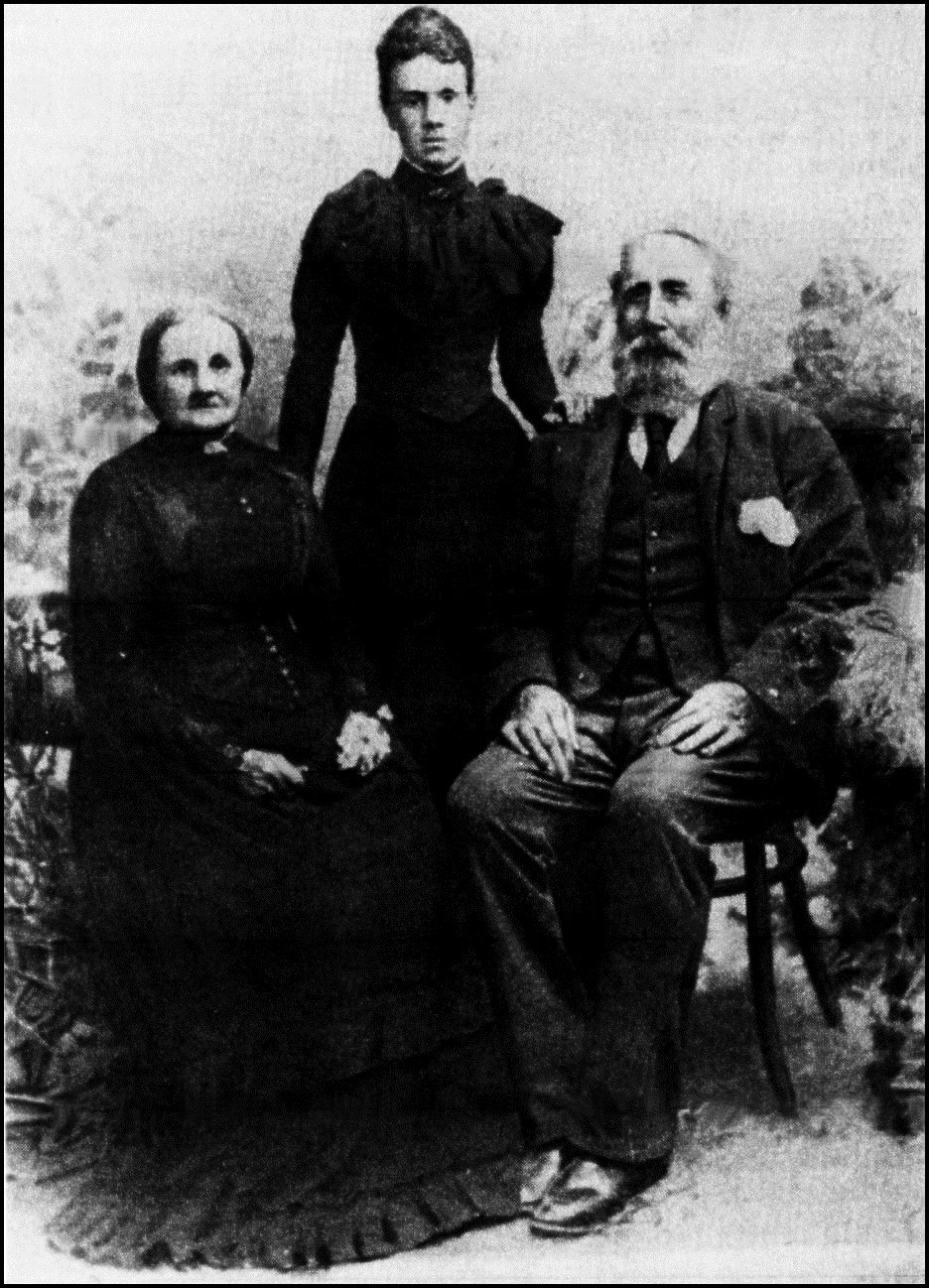
Photograph From: Bundaberg & District Historical Museum