Part Five Around the World in a Rather Short Time
Chapter 18
Scotland
Will ye no come back again
As with the dissertation on Ireland, one has to start somewhere and where better - or worse - than at the Battle of Culloden in 1746. The Jacobite risings, including the first in 1725 that had initiated an early start to the Scottish emigration to the Americas, had also resulted in a series of British government measures to diminish the cohesion of the clans and the supportive social structures of their agricultural communities.
The British government tried the promulgation of a series of acts that were intended to subdue the Highlanders and, when these acts proved to be ineffectual, troops were sent in and a series of forts were constructed to further isolate and control the clans by the limitation of travel and the suppression of news sharing. Perhaps the best known of these fort-garrisons are Fort William in the Great Glen and Fort George at Inverness. Another series of these forts were made accessible to the southern lowlands by Major-General George Wade’s roads. Wade also formed the Black Watch militia to assist in pacifying the turbulent Highlands.
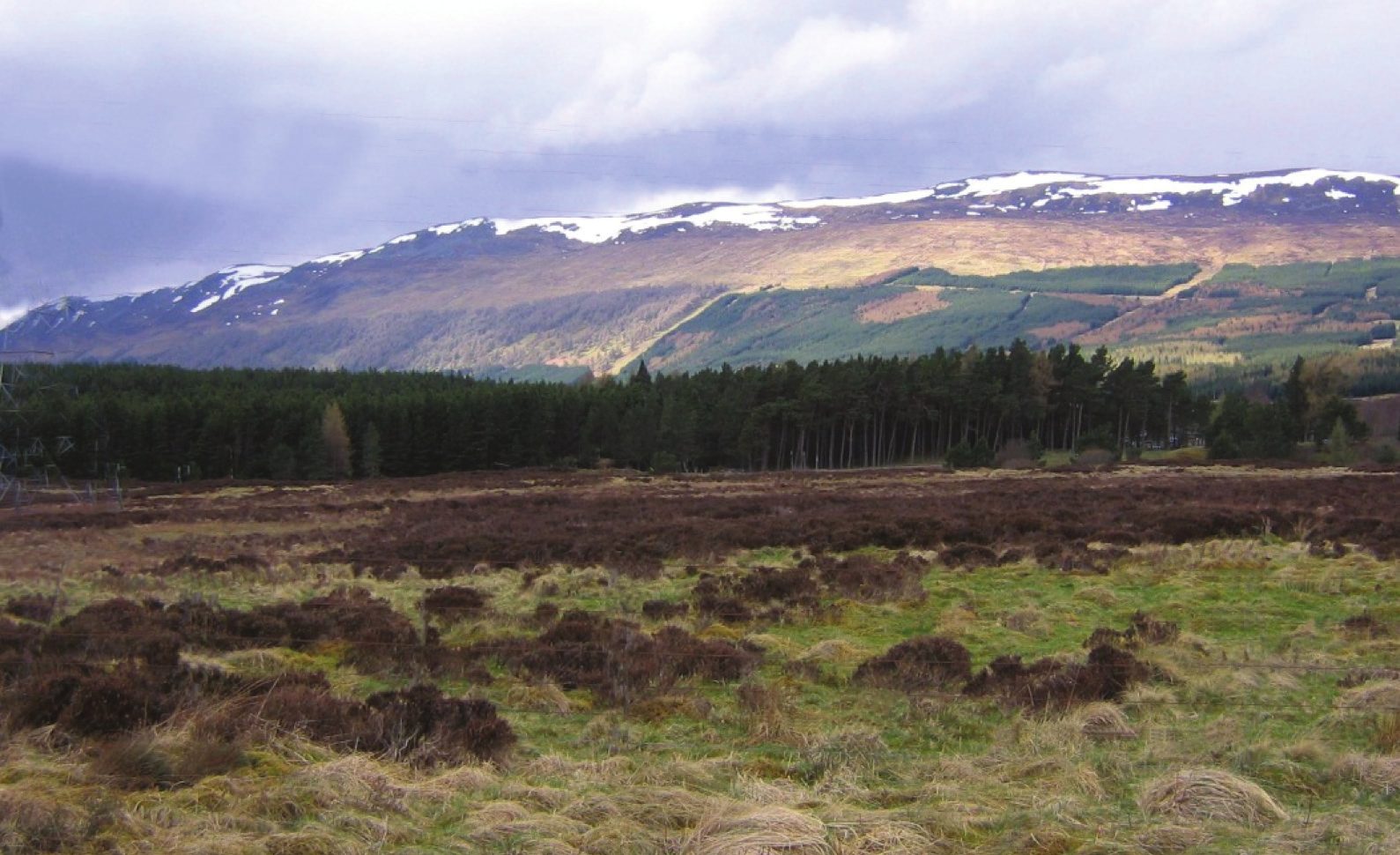
The suppressive measures reached their extreme following the Battle of Culloden where British troops imposed savage reprisals on the Highland population, and when the repressive Act of Proscription required all swords to be surrendered and forbad the wearing of the kilt. A new breed of black-faced sheep had been developed that could survive the rigors of the Highland topography and climate and this, combined with an increasing demand for cattle and sheep products in England, markedly increased the value of the land occupied by crofters to the clan chiefs and landowners. The relevance of clan chief ‘ownership’ can be explained by the consideration of an old, 16th century law that required the chiefs to present themselves to the authorities in Edinburgh on a regular basis for the provision of bonds as to the conduct of the people in their territories. This was to culminate in their regarding themselves as landlords by default. Whilst land ownership brought wealth to the landlords the clan members, forced to exist as crofters on small areas of poor land or to emigrate, naturally became bitter at their lot.
The requirement placed upon the crofters by the landowners to provide free labour and to work long hours in such activities as kelp harvesting and processing for the production of fertilizer/soil conditioner lead to further instability in the still overpopulated Highlands. The lesser ‘gentry’ were able to sustain some wealth creation activity by droving livestock along the drove roads for sale in the Lowlands, an activity familiar to any Australian who has camped along our own dedicated stock routes.
Commencing in Tudor times and with the rate increasing into the period of the industrial revolution, a forced displacement from agricultural areas took place which was referred to in England as the ‘Enclosures’ and in Scotland as the, ‘Highland Clearances’.
In Scotland the clearances commenced after those in England and were particularly brutal owing to the rapid collapse of the clan system, the ruthless application of the eviction process and the lack of legal protection of citizens’ rights under Scottish law. It is also of relevance that occupancy of land was largely based on Celtic tradition and family trust rather than upon documented land titles.
From at least the early part of the 18th century observers were commenting on population problems in the Scottish Highlands. The Highlands do not have the extensive areas of arable soils that are to be found in the Scottish Lowlands, England or Ireland and, at least by Australian standards, Scotland is a very tiny country. The difficulties that would be encountered in attempting to deal with population pressures of this magnitude are daunting. Given the capabilities of the time emigration was one obvious solution. However, as the words of the old song go, “It ain’t what you do it’s the way that you do it.”
The reliance upon the chieftains for protection proved to be trust misplaced as the chieftains realized that an eviction process was to their economic advantage. They engaged factors* with sheep farming expertise acquired in the Lowlands, or even from England, to move the resident populations off potential grazing land (forcibly if necessary), destroy their cottages and introduce and then manage the new industry.
[NOTE: Factors – Prior to Culloden, and after to a lesser extent, clan chiefs leased land to middlemen called tacksmen (tack = lease). The tacksmen in turn sublet portions of this land to the clansmen. They were also responsible for the call up of the clansmen to military service. In the 1740’s a significant number of clan chiefs abandoned the use of tacksmen and instead employed factors acting on commission paid by the chiefs to achieve direct collection of the clansmen’s rents. The role of these factors was to increase following the later Clearances.]
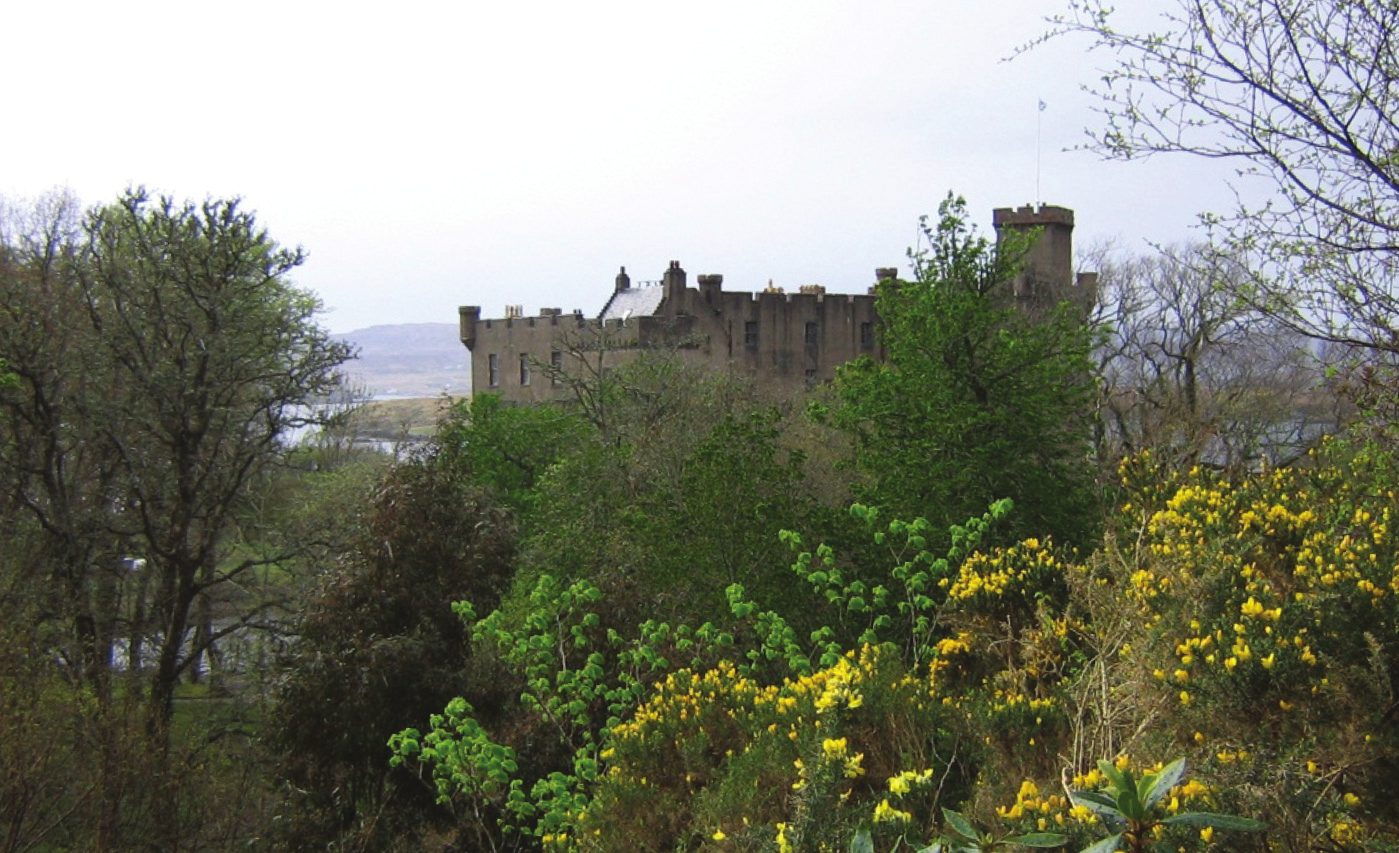
Early innovators in forced migration were considered to be the MacLeod chieftain of Dunvegan Castle on the Isle of Skye, in the 1730’s and Admiral John Ross of Balnagowan Castle, in 1762. However the McLeod chiefs were also to provide shelter in Dunvegan to some of their clansmen giving comfort to these people whilst they constructed new dwellings (crofts). They also provided moneys from their private reserves to improve the lot of any of their distressed clansmen resident on Skye.
The Englishman, George Granville Leveson- Gower, Marquess of Stafford, and his wife Elizabeth Gordon, Countess of Sutherland, became later and, to the Highlanders, infamous advocates of the ‘improvements’. In 1807 they engaged their factors, Patrick Sellar and James Lock, each being regarded as both very efficient and completely ruthless, as agents to promote sheep grazing and to initiate their industrial endeavours such as coal mining, brick and tile manufacturing and herring fishing.
To meet these ends an initial ninety families were forced to leave their crops and lands and move their stock, furniture and building timbers to an open location on the coast where they had then to construct their new dwellings. Many other families were to follow.
In what became known as the, ‘Year of the Sheep’ to the Highlanders, or 1792 by the calendar, another mass emigration took place. Previous migrations had been to the sea coast, the Lowlands, to Ireland or to the American colonies. This new migration was mainly to Nova Scotia (New Scotland), Ontario and to the Carolinas. It would appear that religious considerations influenced the choice of destination in the forced migrations, as many of the people from the Highlands were of the Catholic persuasion and these were consigned mainly to Canadian destinations, Canada having a French Catholic tradition. Presbyterians were mainly directed to North Carolina.
The 1840’s brought further trauma to Scotland as a result of the combination of a cholera outbreak and the Highland Potato Famine. As in Ireland this brought death, starvation and further clearances, sometimes as a consequence of violent evictions, to the Highlands with an estimated one million seven hundred thousand persons forced to emigrate over the period 1846 to 1852. Deaths caused by these clearances were particularly prevalent in the youngest and oldest segments of the population. The industrializing areas of Glasgow, Edinburgh and Dundee in the Lowlands, and Liverpool and Newcastleupon-Tyne in England, were beneficiaries of this migration.
While famine relief was more effective in Scotland than it was in Ireland over the same period, the dependence on the potato as a major portion of the staple diet left the Highlands vulnerable to potato blight, just as it did in Ireland, and for the same reasons. The potato was the only high yielding food crop suitable for the poor soils and small plots available for cultivation by the Scottish crofters
A severe winter occurring in 1847 followed the commencement of the potato blight in Scotland in the previous year. Sir Edward Pine Coffin directed the application of naval vessels to distribute oatmeal rations to the desperate crofters. These rations came at a price as the crofters, in return, were expected to labour eight hours per day for six days a week to construct works such as public roads. The ration quantities provided 680 grams for men, 340 grams per woman and 230 grams per child. As elsewhere in the British Isles the process was extraordinarily bureaucratic and as a consequence it provided employment for legions of clerks.
In Scotland as in Ireland and, under these circumstances, to a lesser extent in England the ubiquitous Corn Laws were to have their unfortunate impact. The seriously deprived crofters were obliged to watch privately owned consignments of grain being exported from their harbours and, as happened in Ireland, troops were required to control the subsequent protests.
The reaction of landlords to the crisis varied, though the net result of their actions on the resident population was probably much the same. In all fairness it should perhaps be remembered that the eviction of non-rent paying tenants was not peculiar to the Scottish Highlands though, under the conditions prevailing at the time, the displaced tenant was faced with only one really viable option
- emigration. In providing a free passage to receptive overseas countries some landlords expected to provide a better lifestyle for their ex tenants; and for the majority of the descendants of the departing crofters this expectation was probably realised.
On the other hand landlords, such as John Gordon of Cluny, attracted much criticism by hiring a fleet of ships to dump his forcibly evicted crofters on to an apparently unsuspecting Canada. In a similar reaction as to the large scale Irish migration of the time, the Scottish diaspora in the recipient countries such as Canada and Australia, and – more latterly – New Zealand was obliged to organize relief measures for the new arrivals.
In the years following 1852, and up to 1857 when the potato crops had reverted to healthy growth, a further sixteen thousand crofters were shipped to Australia and to Canada.