Part Five Around the World in a Rather Short Time
Chapter 17
Ireland
For you must go and I must bide
Superficially the mass exodus from Ireland, and the abnormal and dramatic increase in the death rate amongst its citizens, that occurred in this country in the late 1840’s and early 1850’s was a result of the “Great Famine” caused by the potato blight. However many countries were affected by this blight but only Ireland, and to a lesser extent Scotland, was to experience such catastrophic results. It follows that the genesis of the national disaster culminating in the “Great Famine” must be found in the pre-history of this horrific event. This pre-history consisted of a long sequence of tragic circumstances that cumulatively made Ireland extremely vulnerable to the effects of the blight. The following pages are dedicated to providing a brief coverage of some of the more significant of these circumstances, and of some of the contemporary reactions to their occurrence.
Small scale migration to Ireland, much of which had been initiated by the English Crown, commenced in the 12th century, and resulted in the establishment of a sub-grouping of the Irish population referred to as the ‘Old English’. A later and much larger scale population infusion, known as the ‘Plantations’, consisting mainly of Scottish, Welsh and English settlers began in the reign of Henry VIII with the rate of this infusion being increased under later monarchs. The final official plantations took place under Oliver Cromwell’s Protectorate in the 1650’s. Thousands of the soldiers that he had used to subdue the Celtic, mainly Catholic, clan leadership were settled in Ireland and a consequent mass confiscations of land from the Irish landowners ensued.
The plantations seriously modified the demography of Ireland, and left it with a divided population precariously shared between the remnants of its original Celtic inhabitants and the large, implanted Protestant and/or British communities. The dominance in Irish affairs of this infused population, supported by the English government, resulted in the formation of formal Crown government in Ireland in the 17th century
The preconditions were now set for the holding of such an encounter as the Battle of the Boyne that was to take place in Ireland in the latter part of this century, the year 1690. The rivalry for the English crown that precipitated the eventual battle was between the Catholic (ex – but arguably still constitutional) King James II of England and the Protestant King William III of Orange who had been installed as the English monarch in place of James the previous year.
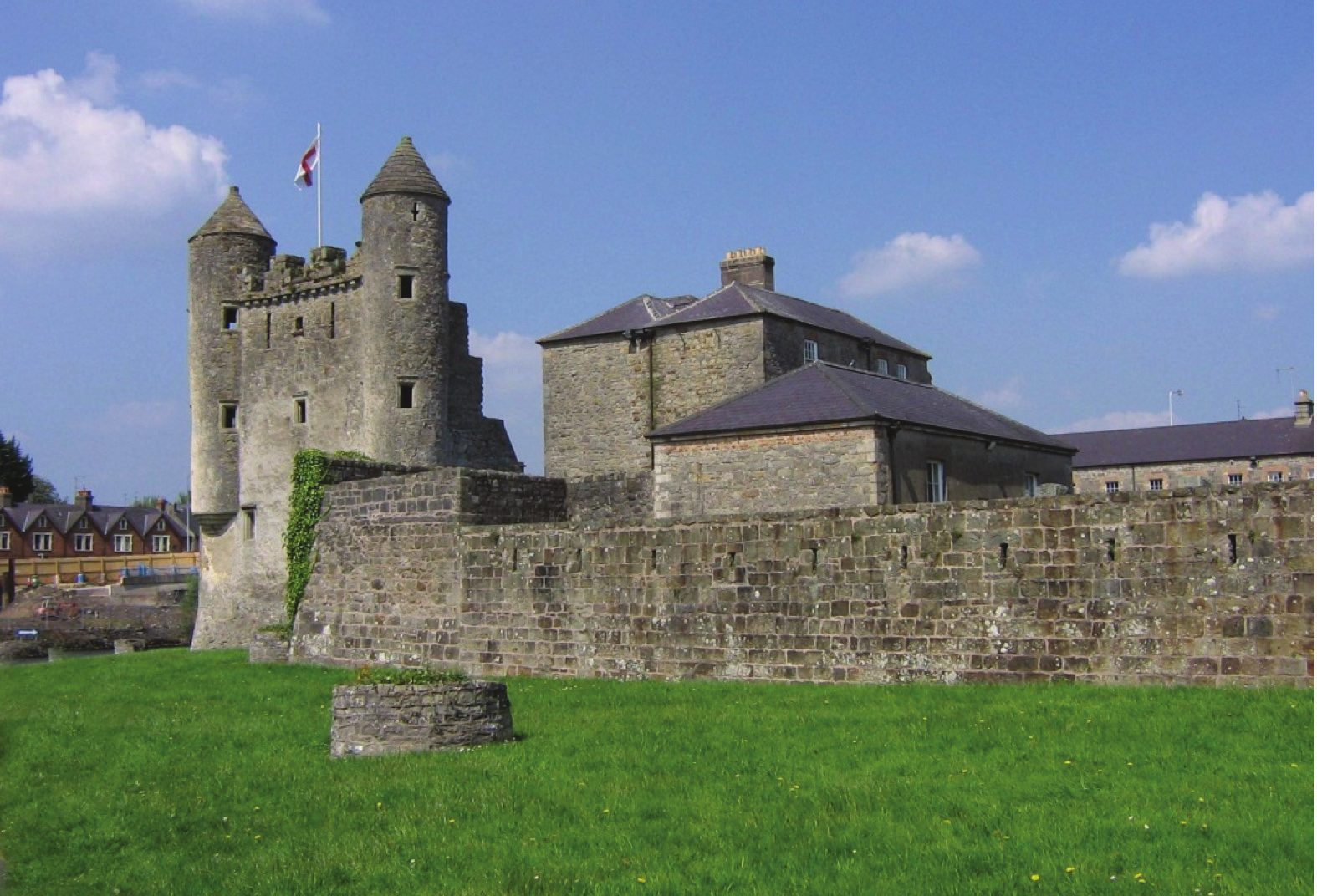
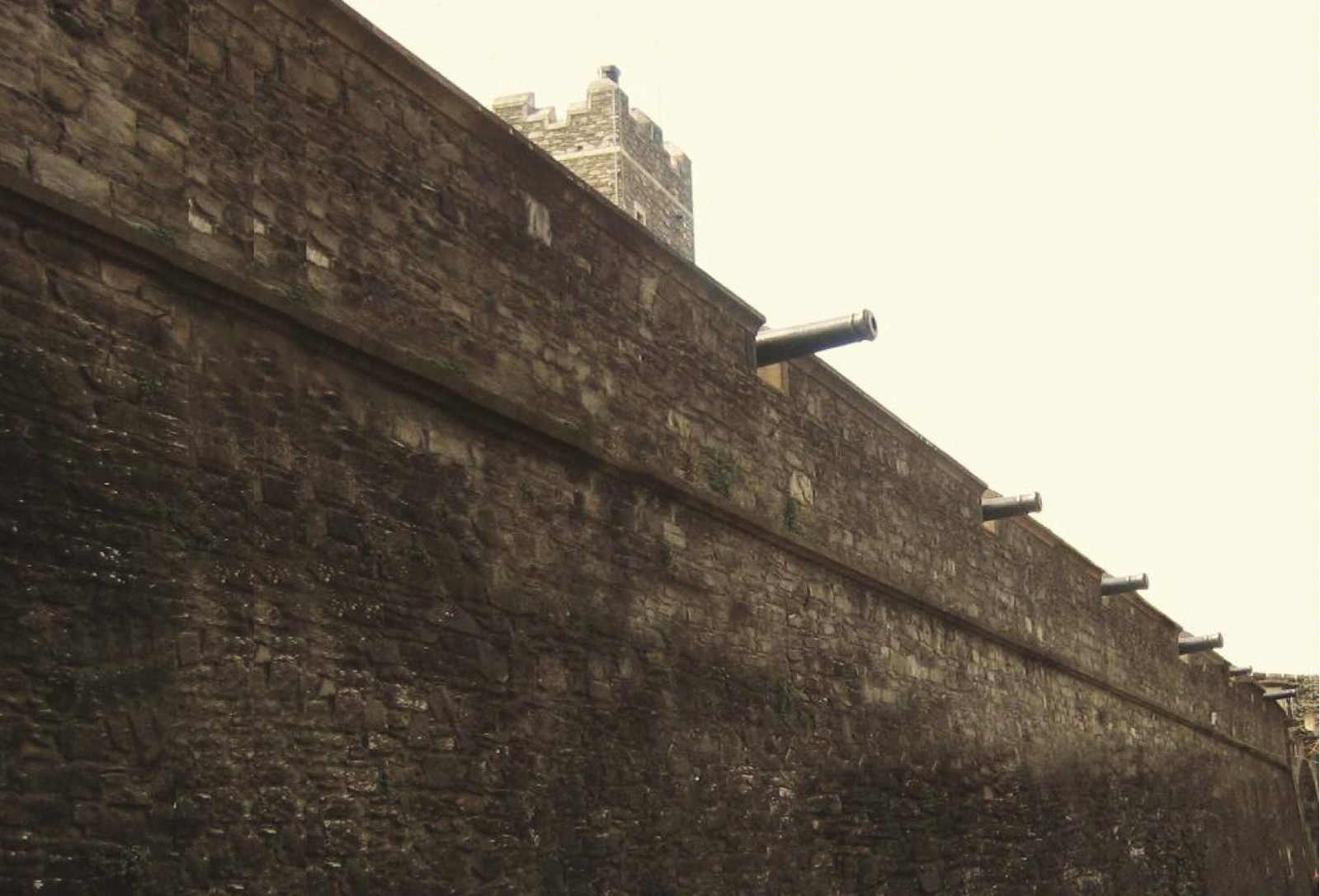
The Ulstermen, being mainly Presbyterians from Scotland, felt a greater affinity with the Protestant William than with the Catholic James despite James’ Scottish ancestry. Prior to the battle the inhabitants of first Londonderry/Derry,* then Enniskillen and lastly most of Ulster itself had revolted against James thus providing William with his stepping-stone into Ireland. James Stuart’s arrival in Ireland, from his exile in France, was via the port of Kinsale.
[NOTE: Londonderry if talking to a Northern Ireland resident; Derry if discussing matters with one from the South]
The impending battle would take place at the River Boyne crossing of Oldbridge near Drogheda, approximately 50 kilometres north of Dublin. James Stuart’s two subordinates for the battle were Richard Talbot, Earl of Tyrconnel, who by 1690 had taken control of the whole of Ireland other than the province of Ulster and the city of Londonderry, and the French general Lauzun. William’s second in command was a 75 year old professional soldier the Duke of Schomberg.
Prior to the main battle Jacobite forces under General Hamilton had mounted an unsuccessful siege on Londonderry in an attempt to take the walled city from William’s supporters. The defenders of Derry were assisted by troops from Enniskillen in the west, these troops being noted both for their ruthlessness and for their skills in warfare. The Enniskilleners engaged any Jacobite forces approaching Derry to prevent them from assisting in the blockade of the town.
Another relevant factor, prior to the Boyne River battle, was the condition of William’s troops under Schomberg’s command, whilst in their winter camp at Dundalk. Due to the combined effects of dysentery and lack of provisions it was estimated that nearly half of the force in the camp were severely incapacitated, with many actually dying. James did not avail himself of the opportunity this presented to attack the camp with his own fresh troops, an attack that would have had a high probability of success. Exhibiting the apparently constitutional indecision of the Stuarts James allowed the opportunity to pass and in doing so helped to set the scene for the defeat of his own forces in the coming battle.
To the Irish of Celtic descent the impending battle presented an opportunity to reverse the consequences of the Irish Confederate Wars, in which Cromwell’s conquests had deprived the original Irish upper classes of their lands and the people of their civil rights. On the other hand the implanted population’s main concern was to retain their rule, and that of the English government, in Ireland. Fearing a repeat of the Irish Rebellion of 1641, in which widespread killing had occurred; they overwhelmingly supported the forces of William.
From William’s point of view the conflict had a wider strategic perspective, as the campaign in Ireland was another element in his confrontation with Louis XIV of France. James had the support of his Catholic cousin Louis who was William’s continental rival. Louis had supplied James with 6,000 of his own troops to provide support in the coming battle. William, who was also Stadtholder of the Netherlands, had under his command troops of Dutch and other nationalities of the League of Augsburg alliance as well as soldiers from England and Scotland.
As a religious conflict the international circumstances were therefore far from being clear cut as Pope Alexander VIII was a supporter of William, under their League of Augsburg alliance, against the threatened dominance of Europe by the French forces of Louis. From the European viewpoint a victory by William in Ireland would result in more nations looking favourably upon the William of Orange/Papal alliance and, as a consequence, would be more willing to join this alliance thus rendering impossible Louis’ ambition to achieve European conquest.
Following the battle on the Boyne nearly one hundred years and a bloody revolution in France were to pass before Napoleon Bonaparte emerged to revive Louis’ ambitions. In furtherance of these ambitions continental Europe, England and Russia were to be subjected to all of the turmoil and death associated with battles on both land and sea, that the wars of Napoleon’s campaign of conquests demanded in order to obtain French dominion, and which finally came to a conclusion at the Battle at Waterloo in 1815.
The nature of the forces to be engaged in the actual Boyne River battle gave William a decided advantage. The Jacobite forces were mainly drawn from the Irish Catholic population and were 23,500 in number of whom the cavalry, which was comprised mainly of disposed Celtic gentry, proved to be of high calibre. There were also several French regiments. The infantry were predominately made up of subsistent farmers who were untrained and poorly equipped, some only with farm implements, and any who carried firearms were equipped with the obsolete matchlock muskets.
On the other hand the Williamite army was comprised of the remainder of the 20,000 troops who had been in Ireland under Schomberg since 1689 augmented by a further 16,000 troops who arrived with William. The soldiers from the Netherlands and from Denmark were well equipped professionals with the latest flintlock rifles. The large contingent of Huguenot troops was also well trained and much better equipped than the Jacobite force.
The Jacobite officers were confident that William’s first move in the battle would be an attempt to gain possession of the river crossing at Slane, and this proved to be the case. However the officers could not convince James of this probability and when the attack eventuated it was too late to defend this ford. During the battle Schomberg was killed during a charge across the river The results of the battle itself could almost be regarded as inconclusive as the casualty numbers were relatively low. They included about 2,000 fatalities, mainly from the Jacobite force, probably due to the fact that they were the withdrawing army, while William’s forces had more wounded. The relatively low casualty count was due to an orderly withdrawal of the Jacobite army protected by the skilful counterattacks of its competent cavalry, thereby eliminating the main cause of fatalities, the unresisted slaughter of a defeated army whilst engaged in disorderly retreat.
The circumstances that determined the ultimate outcome of the battle were largely dependent upon the conduct of James himself. The order to withdraw, and thus concede the battleground to William’s forces, had a demoralizing effect upon the Irish troops and James’ rapid exit from the field combined with his return into permanent exile in France, via Dublin and the port of Kinsale, did little to restore confidence. During his brief stay in Dublin he insulted Lady Tyrconnel by commenting on her husband’s countrymen running away from the battle, to which the good Lady retorted that, “his Majesty had set the example.” ( An Illustrated History of Ireland From A.D. 400 to 1800 by Mary Frances Cusack)
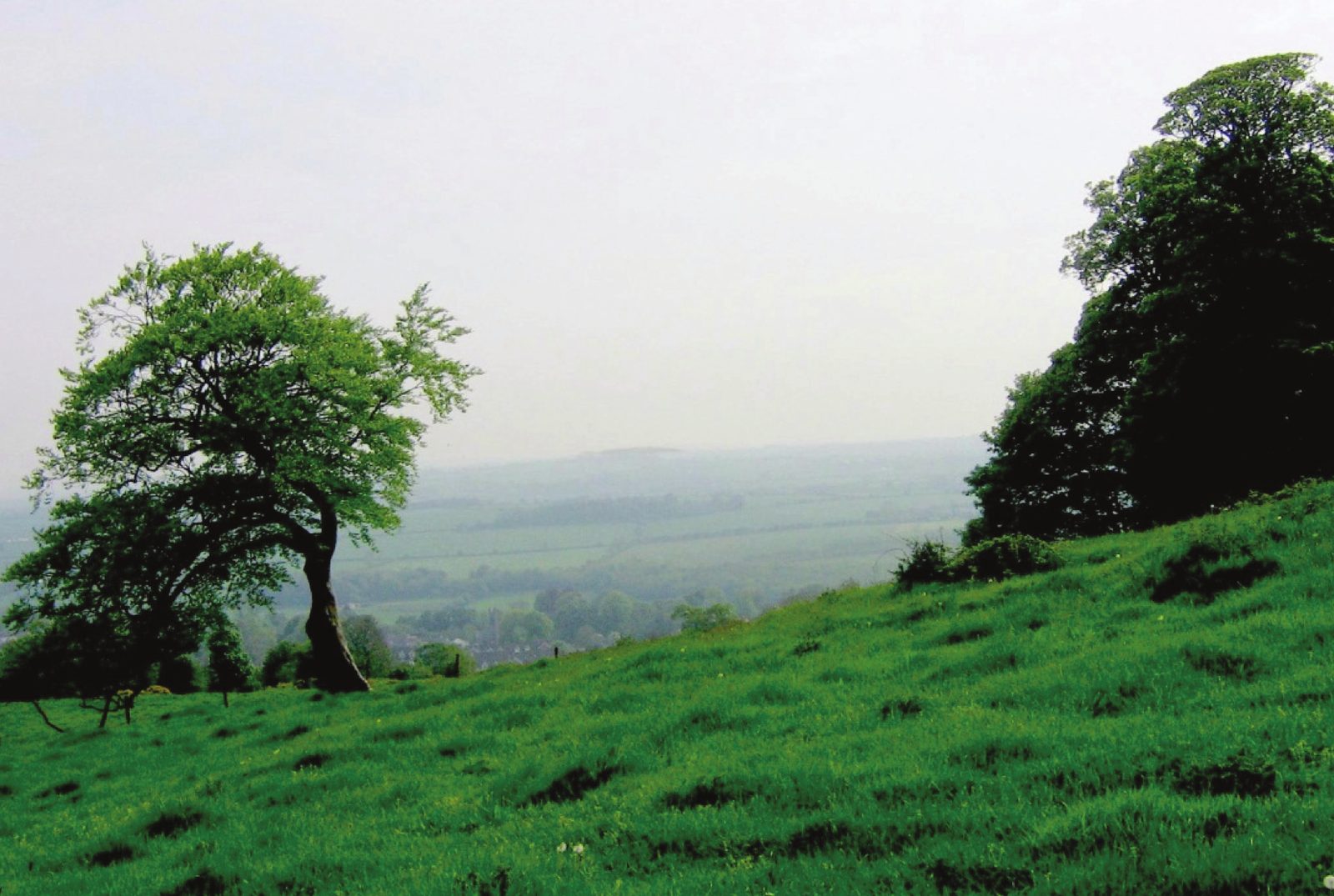
Nevertheless, although William was to have his triumphal march into Dublin two days after the battle, the Irish forces withdrew in good order across the River Shannon to take position in Limerick, where they were subsequently besieged by the Williamite forces. The siege was lifted following the signing of the Treaty of Limerick under which most land owners were allowed to keep their land provided that they swore allegiance to William. There were 52 provisions in the Treaty, some significant provisions being that the members of the Catholic army were to have:
- the free exercise of their religion;
- the right to sit in Parliament;
- the freedom of trade;
- the safety of their estates;
- a general amnesty;
- the honours of war to the troops; and
- the free choice as to their future destinations.
However the English Protestant establishment was displeased with this ‘lenient’ treatment of its former adversaries and as a result, in 1695, there followed an intense campaign of violent, bigotry, more political than religious in nature.
As a consequence penal laws were introduced that prohibited Irish Catholics from:
- the right to sit in Parliament;
- the right to be elected as a member of Parliament;
- the right to vote;
- the right to enter any office of trust;
- the right to enter into any form of remunerative employment;
In addition they were:
- to receive a fine of £60 per month for non-attendance at a Protestant form of worship;
- forbidden to travel more than five miles from their homes, to keep arms, to maintain suits at law, or to be guardians or executors;
- to be subject to the ruling of any four justices of the peace who could, without further trial, banish any man for life if he refused to attend a Protestant service;
- to be subject to the ruling of any two justices of the peace who could call any man over sixteen years of age before them and to bestow his property on his next of kin if he refused to abjure the Catholic religion;
- not be allowed to employ a Catholic schoolmaster to educate their children;
- not be allowed to send any child abroad for education – penalty £100 – and in addition the child would forfeit all right to inherit any property in Ireland or England;
- if a Catholic priest, to be hung on entering the country;
Some of the other provisions were:
- if a Protestant who suspected any other Protestant of holding property in trust for a Catholic, and who filed a bill against the suspected holder in trust, to be awarded the said property;
- if a Protestant were to consider that any Catholic tenant-at-will on a farm was to be earning one third more than his yearly rent that Protestant could enter the farm in question and, by simply swearing to the assumed fact, take possession;
- any Protestant may acquire the horse of a Catholic, regardless of its actual value, for a sum of £5;
- any horses and wagons owned by Catholics could be seized by the militia at any time for the militia’s own use; and
- any Catholic gentleman’s child who became a Protestant could at once take possession of his father’s property.
It is difficult to imagine any provisions so at variance with the spirit of the recently signed treaty or to comprehend, in this day and age, the nature of the mindset that could enact provisions which prohibited the greater part of the population from the owning or leasing of land; the holding of political office or even of voting; the obtaining of an education, the entry into a profession; or of acting in any manner calculated to result in a prosperous life. Nevertheless by the early 1790’s a relative tolerance had returned to civic affairs and by its centennial the siege of Londonderry would appear to have been commemorated by both Catholic and Protestant inhabitants.
As a consequence of the promulgation of the above laws a new system of landlord/tenant relationships was introduced. Although the original Irish population constituted eighty per cent of the total population they now lived under conditions of both poverty and insecurity. It was the English and Anglo-Irish who owned the land and these people now considered Ireland to be a hostile country in which to live so absentee landlords, who engaged the hated middlemen for management, were common and rental income left Ireland to bolster the English, not Irish, economy.
These conditions would not be changed until much later, and then not by a great deal, until the promulgation of the Acts of Emancipation of 1793 and 1829, which acts allowed the Irish (still mainly Protestant) landowners to again sit in the English parliament. In 1791 the Dublin based Catholic Committee joined forces with the Northern Presbyterians to form the United Irishmen and the Protestant Wolfe Tone became the secretary of the Catholic Committee – made possible by the non-sectarian nature of the times, and by 1792 it is probable that both Protestant and Catholic would have preferred union with Britain rather than tolerate the existing, corrupt and self-seeking Dublin administration.
In 1792 Lord Edward FitzGerald was to remark to the House in Dublin, “I do think, sir, that the Lord Lieutenant and the majority of this House are the worst subjects the King has.” In response to the predictable storm in the house, and to the demand for retraction, he then provided to the House the extremely ambiguous, “I am accused of having said that I think the Lord Lieutenant and the majority of this House are the worst subjects the King has. I said so; ‘tis true; and I am sorry for it.” (Cusack)
The dominant problems in the towns and cities of this period were social rather than religious. As the decline in textile industries became more evident the Presbyterian middle class in Belfast and Dublin who, together with the working classes, was reliant for its income on these diminishing industries felt under pressure. The gap between the Presbyterian middle-class and the Anglican ruling class, the Ascendancy, constituted the main social division that prevailed in the urban areas of the time. Unfortunately the period of relative tolerance was about to come under severe stress.
The Relief Acts of 1778 and 1782 permitted Catholics to buy and lease land and to work on equal terms with the remainder of the population. As they had adjusted to a very frugal lifestyle, they could consistently outbid Protestants in their willingness to pay higher rents and to accept lower wages. This increased competition together with population pressures produced friction in the agrarian areas of Ulster. In response to this two opposing parties, both committed to violence, were about to evolve. On the Protestant side the Peep-o’-Day Boys instigated early morning attacks on Catholic farms, and on the Catholic side a reactive organisation, the Defenders, was formed whose initial purpose was to counter these attacks. The Peep-o’-Day Boys were to assume the appellation of the Protestant Boys and these were, in turn, to form the basis of membership in the creation of the Orange Society.
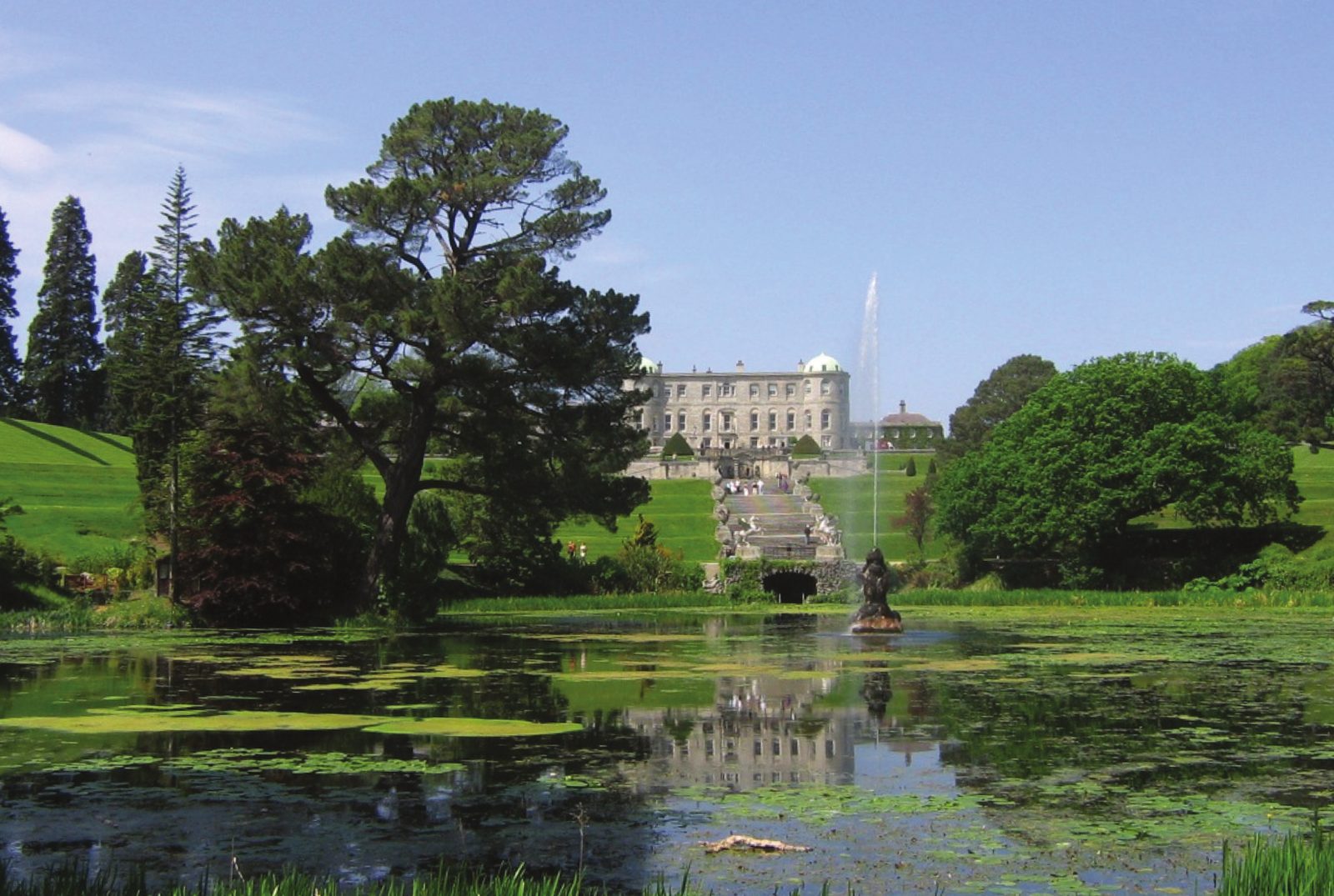
In the County of Armagh, which had at the time roughly equal populations of Catholics and Protestants, religious divisions were also about to emerge. Due to the economic downturn of 1791 to 1793, in combination with reaction to the activities of a tactless government and the loss of initiative by the moderate leaders of the United Ireland Party, this party’s rank-and-file was coming under the influence of the Defender movement.
By 1795 the Orange Order was making its presence felt in Armagh and the menace of its rituals caused several thousand Irish Catholics to flee the county. Heavy handed actions based upon badly informed opinions led to decisions by the authorities that exacerbated the resultant polarization. This increased polarization in turn caused the United Ireland Party itself to evolve into yet another militant organization.
In 1796 the Dublin government introduced the Insurrection Act which resulted in the proclamation of Ulster with its attendant mass arrests, floggings and house burnings. The United Ireland’s organization was infiltrated by government agents and sixteen out of the eighteen of its Leinster committee were arrested. As a consequence of this induced turmoil the moderate, middle class leadership of the movement was swamped by a faction that subscribed to the more violent creed of republicanism. Subsequent decisions by the authorities further isolated the moderates which drove many of them, including Wolfe Tone, into exile. The militants, who now constituted the remnants of the party, went underground.
The nationalist movement, with most of its leaders in goal, exiled or executed, now entered upon activities based on underground action with an Irish Catholic bias. This was a complete reversal of the moderate Protestant/Catholic republican movement that had prevailed less than a decade before. All of this activity by the authorities gave inhabitants the impression that the current Prime Minister, William Pitt, wished to ferment open rebellion, and to use its suppression as a means to make Ireland more dependent on the dictates of the English Parliament.
Following continuing provocation on the part of officialdom, aggravated by the activities of the Orange Order, a partial and fragmented uprising occurred in various localities of Ireland. It was suppressed by a militia upon whose activities Lord Cornwallis described, in the wording of his governmental report to the Duke of Portland, as, “murder was the favourite pastime.” (Cusack) The final act of rebellion occurred in Wexford where a population, initially opposed to the uprising, was provoked by the North Cork militia under Lord Kingsborough. Indiscriminate shooting at the peaceful country inhabitants and torture of their relatives by the militia drove an initially passive population to desperate action. The subsequent uprising was led by Father John Murphy who had previously been active in suppressing the rebellion, but who was to change his stance following the burning of the Catholic Chapel of Boulavogue. The insurgents marched upon and captured Enniscorthy where they set up camp on Vinegar Hill.
The capture of Enniscorthy by the rebels enabled the freeing of some prominent Protestants, who had been imprisoned as a result of their sympathy for the movement, and one of these, a Mr. Bagenal Harvey, took over the leadership of the insurgents. Subsequently Father Murphy was killed during an attack on Carlow and Mr. Harvey resigned his leadership in favour of the Reverend Philip Roche.
The Vinegar Hill camp was besieged by twenty-thousand royalist troops, equipped with a large artillery train, under General Lake. Following one and a half hours of fighting the Irish troops ran low on gunpowder and gave way. The usual slaughter followed and included the burning of the Enniscorthy hospital where the wounded were shot in their beds. Catholic priests and others who had protected the lives or property of any Orangeman or royalist during the uprising were deemed to have influence with the rebels and were also executed.
Wolfe Tone, who had returned to Ireland in the company of a squadron of French troops, the arrival of which was too late to have any effect on the outcome of the uprising, was captured, condemned of treason and died in prison – officially by a self-inflicted cut throat.
By 1801 William Pitt was promoting the concept that emancipation of the Catholic majority was a solution to the Irish problem. However his proposals were decisively blocked by the actions of George III who seemed to be strongly of the opinion that the emancipation of Roman Catholics would result in the destruction of the Church of England, an institution that he had sworn to preserve.
Pitt received no credit for his unsuccessful attempts at emancipation and during the debate on the Catholic Petition, introduced by Charles Fox into the House of Commons of 1805, when speaking of the Irish Catholics and with reference to the Pitt government, Mr. Ponsonby was to remark that, “I know them well; and I know, at the same time, whatever is good in them they owe to themselves; whatever is bad in them, they owe to you, and to your bad government.” (Cusack)
A relatively short time after these events however Ireland’s fortunes were to change as it was to acquire a most effective advocate and representative in the form of Daniel O’Connell. Daniel was born in 1775 and was a descendant of one of the old Celtic families. In a sojourn abroad, while still a young man, he was to observe at first hand the French Revolution and its aftermath. He was accepted to the Dublin bar in 1798 and became a very powerful advocate in the defence of his fellow countrymen.
In the early days of O’Connell’s public life Robert Emmet, the leader of the abortive Irish uprising of 1803, was executed and martial law was enforced until its repeal by the Whigs on their accession to government in 1806.
By 1810 Daniel had come to prominence as the leader of the Catholic Party and was to continue as a leading representative of Ireland over the next forty plus years. It was said that he taught Irishmen that chains did not make the slave, but rather the spirit in which the chains are worn, and that he awoke in the hearts of his countrymen the knowledge that love of freedom is the first step towards obtaining it.
At last, on the 13th April 1829 and largely due to Daniel O’Connell’s efforts, the royal signature was affixed to the Act of Emancipation and Irishmen were no longer considered to be non-citizens simply because they were to follow their own conscience. The first step had been taken on what was to become a long road.
By 1842 a rental income of, £6,000,000 was remitted out of Ireland to English landlords and so the situation continued whereby the English economy received the benefit from this constant drain on Ireland’s finances. The employment of the middlemen as agents relieved the absentee landlords of any responsibility towards their tenants, whilst providing them with this regular rental income.
One way for the middlemen to exploit the Irish cottier was rendered possible by the tendency of landlords to lease large tracts of land to their resident middlemen. This land was then subdivided by the middlemen into progressively smaller parcels of land which were then sublet to the peasant farmers. Tenants could be evicted for non-payment of rent on what was often non-viable land. They could also be evicted if the land was subsequently required for the grazing of sheep or cattle to provide England with mutton or with the beef that was becoming increasingly popular. As a consequence of this repressive system the Irish Catholics lived in dread of the landlords and their agents, and any attempts to create productive enterprises were crushed.
In a speech in 1844 Benjamin Disraeli described Ireland as having, “a starving population, an absentee aristocracy, and an alien Church, and in addition the weakest executive in the world.” From Wikepedia – Great Famine (Ireland .) Over the period 1801 to 1845 one commission or special committee after another was prophesying that Ireland was on the verge of disaster, her population was increasing rapidly, three-quarters of her workforce were unemployed, housing conditions were appalling and the standard of living was unbelievably low
- and all of this in one of the most productive agricultural countries on the planet.
By 1841 the Irish population was just over eight million with two-thirds being involved in profitless agriculture. Instead of receiving payment the tenant’s labour went into the rent necessary to obtain access to the small plot of land required to grow feed for his family. The possession of such land could quite literally be the difference between life and death, but the area of land was so small, and the soil often so poor, that the only way to produce sufficient food was to embrace monoculture - in this case that of the humble potato.
Having been introduced into Ireland in the latter part of the 17th century as a supplementary food for the rich, by the 18th century the potato had evolved into the staple food of the poor, supplanting rather than supplementing the previous diet of dairy and grain products. It was the high productivity of the potato crop, and its capacity for storage, that created the conditions for the establishment of the cottier class system with its cheap work force and low living standards.
By the early 1840’s there were a half million cottiers in Ireland and these, in turn, had an average of three and a half dependents. It is relevant to note that one third of the potato crop that they produced was committed to the provision of fodder for the livestock whose lamb and beef products were dedicated to the English market. It is also relevant that Ireland had experienced previous failures of the potato crop, but these failures were either not universal or did not occur at times when production was so relied upon for the sustenance of the poor.
By virtue of this heavy reliance upon a diet based on monoculture to sustain the general population the preconditions for a disaster had been set in place. At the time however it was hard to see how living conditions could have become much worse for the native Irish population; but in the mid 1840’s they did and in a catastrophic manner, with the coming of ‘The Great Hunger’.
The origin of the 1840’s Potato blight, Phytophthora infestans is unknown but it is possible that it evolved in South America to arrive in Ireland via North America and continental Europe. It is probable the actual time of arrival of the blight in Ireland occurred in 1844. Following its arrival into Europe its spread through Belgium, Holland, the north of France and the south of England was rapid. The Gardeners’ Chronicle in a stop press of the 13th December of the same year reported the blight had ‘unequivocally’ arrived in Ireland.
Following the advent of the blight it is estimated that up to fifty per cent of the crop was lost in 1845 and seventy five per cent in 1846. In 1847 there was virtually no seed potato to plant and in 1848 losses were still of the order of thirty-three per cent. In 1846 the first deaths by starvation were recorded and, as over three million of the population in Ireland were dependent upon the potato as a food source, a national crisis of almost indescribable proportions was about to devastate the country.
Various proposals relevant to the alleviation of the crisis were put to the Lord Lieutenant of Ireland and even to the Queen. Suggestions varied from the proposal for the implementation of public works to construct railways, the opening the ports to foreign corn (don’t forget that the infamous Corn Laws were still in place up to 1846, and its effects would carry on beyond this time) and of stopping the distillation of the grain crops to produce Irish whiskey. Judging by the official reaction to the prevailing situation this latter proposal was the last measure that was likely to be adopted.
The successive government’s responses to the crisis all shared the same characteristic of being too little, too late and too ineffective. In 1846 Prime Minister Robert Peel did finally manage to repeal the Corn Laws ; however the dissention in the Conservative Party caused by this repeal resulted in the fall of the Peel ministry.
Peel’s successor Lord John Russell introduced public works projects which, by the conclusion of 1846, employed a half million Irish labourers. However these projects proved to be impossible to manage. Sir Charles Trevelyan, the official appointed to administer the government’s works program, was also to place limits upon the program as he believed that “the judgment of God sent the calamity to teach the Irish a lesson” (Wikipedia). These work programs were subsequently abandoned and replaced by soup kitchens and workhouses established under the Poor Law .
A provision in the Poor Law , and one that was to exacerbate the disaster prohibited anyone who held a lease to one quarter of an acre or more of land from receiving government relief. It followed that any peasant farmer who held a lease to this area of land and who had no produce remaining after meeting the cost of rent, duties, taxes and rates could receive no relief benefits unless he was to surrender his lease to the landlord. As a result of this clause alone 90,000 tenants had to surrender their lease in 1849, followed by a further 104,000 tenants in 1850.
Shortly prior to Daniel O’Connell’s death in 1847 he was to point out that in Belgium, as a response to the serious matter of the potato failure, legislation had been introduced to ban grain exports but to allow imports. No such measure was to be provided to relieve the citizens of Ireland. Following his death in 1848 a radical group from his erstwhile movement was to secede and to attempt the unsuccessful Young Ireland Rebellion of 1848, an action that would not have been countenanced by their former leader given his experience with the French Revolution.
Lord Clarendon, the Lord Lieutenant of Ireland was to observe in a letter to Lord Russell written in 1849 to request additional relief measures, “I do not think that there is another legislature in Europe that would disregard such suffering as now exists in the west of Ireland, or coldly persist in a policy of extermination.” (Wikipedia)
John Mitchel, a prominent political writer of the time pointed out in 1844 that hunger had been a powerful force towards rebellion at various times; in 1846 he commented upon, “the wretched way in which the famine was being trifled with” and asked of the government whether or not it had any conception that, “millions of human beings in Ireland had nothing to eat”. Shortly thereafter he expressed the view that, while the government may hold differing opinions on the feeding of the Irish people, it would, “agree most cordially in the policy of taxing, prosecuting and ruining them.” (Wikipedia)
Mitchel was to carry on in like vein until, in 1861, he wrote a widely circulated pamphlet on, The Last Conquest of Ireland (Perhaps) one line of which expressed the commonly held view that, “The Almighty, indeed, sent the potato blight, but the English created the famine.” (Wikipedia)
For his trouble Mitchel was charged with sedition. However this charge was subsequently dropped and instead, under the new Treason Felony Act , the jury awarded him free passage to Bermuda for fourteen years at the government’s expense. I cannot recall the name of the actual Irish patriot who, on renting a public hall to deliver a speech that was judged to be seditious was arrested on the spot, hauled off, successfully charged and sent into exile for many years. Following his eventual return to Ireland his first act was to rent the same hall and his opening remark to the assembled audience was, “As I was saying before I was so rudely interrupted … .” This person was probably not Mitchel, but he obviously held very similar views and attitudes.
Charles Gavin Duffy, Irish historian and the eighth premier of colonial Victoria, was to point out that Ireland was part of the richest empire of the time and why could not a remedy, adopted by the rest of Europe of retaining the food produced in the country by its people, be applied to Ireland? This at a time when large quantities of expensive corn (complements of the Corn Laws ), together with an increasing amount of livestock and its by-product of bacon and ham was being dispatched to England from Irish ports under the protection of the army. This caused much additional bitterness towards the English. Unfortunately for the starving population it was the landlords profiting from these exports, and not the general population, who had the ear of the parliament.
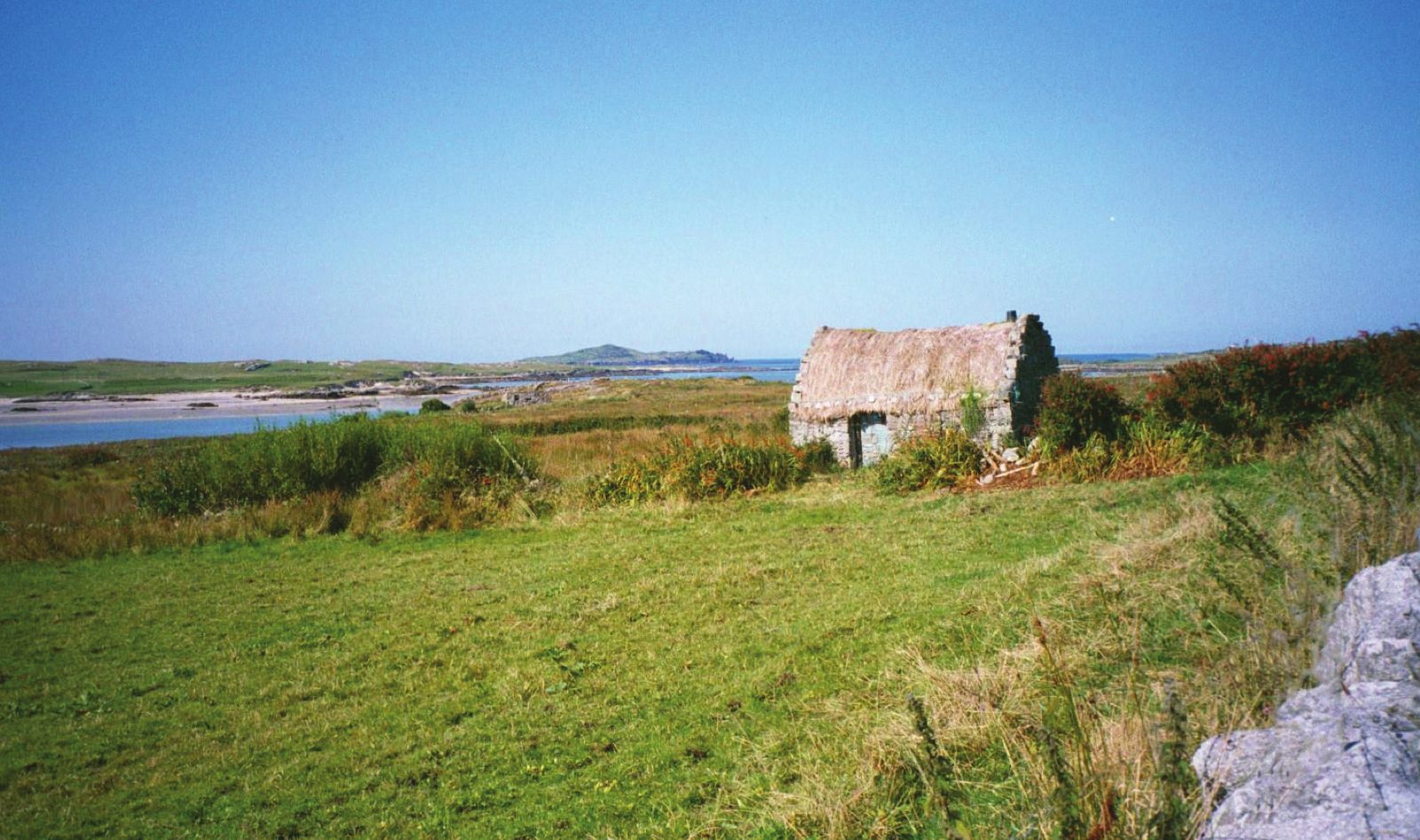
Owing to the middleman landlords’ policy of leasing their land in smaller and smaller lots the middlemen now had many tenants whose rent was less than £4 per year. With rents so low, and under the provisions of newly introduced laws, the local landlords were now faced with the increased expenses incurred in meeting the payment of the rents that had previously been the responsibility of the tenants. Their response to this fresh obligation was to evict the small area tenants and to combine their leased areas into larger holdings, with higher rents, thus avoiding the expenses that would have otherwise been incurred.
The resulting clearances were to start in earnest by 1847 but it was 1849 before the police started to record the number of evictions. Between 1849 and 1854 the number of recorded evictions was 250,000 persons and it is estimated that the total number of evictions between 1846 and 1854 was in excess of 500,000 persons.
This number included people who ‘voluntarily’ left their homes, following the payment of a small sum of money, on the false assurance that they would receive accommodation in the workhouses. The worst areas of eviction were considered to be West Clare and County Mayo.
Despite the requests for action, and the urgings of many responsible citizens, government activity to alleviate the continuing disaster continued to be provided in a reluctant and ineffective manner. While accurate figures as to the actual number of deaths over the period of the famine do not exist it has been estimated that between one and one and a half million people died of disease and starvation, with most deaths being caused by disease.
The diseases that were observed to be causing the greatest mortality were measles, smallpox, diarrhoea, tuberculosis, influenza, whooping cough and other respiratory infections. To increase the misery, if this was at all possible, an epidemic of cholera emanated from the Asian continent, travelled through continental Europe and then Britain and attacked the vulnerable Irish population in 1849.
Conditions peculiar to, or more prevalent in, ‘the Great Famine’ period which greatly increased the susceptibility to disease were the concentration of the starving citizens at soup kitchens and their overcrowding at work houses where such diseases as typhus, typhoid and various fevers could be contracted. Diarrhoea was an inevitable result of the poor hygienic situations resulting from these unsanitary conditions.
Over the period of ‘The Great Famine’ in excess of one million of the Irish migrated to the United States, Canada, Australia and England. In the worst year of the famine alone over a quarter of a million Irish emigrated, with most emigrants coming from the west, from where my own great-grandmother, a young Mary Shannon emigrated from Ennistymon, County Clare in 1851.
Women were just as likely to emigrate as their menfolk, and it was mainly the younger members of the families who left Ireland to find a better life in a new land. Remittances from these emigrants then allowed other family members to migrate.
The trend to migration once established was to continue and from a population of eight million in 1841 Ireland was to have a much reduced population of four million four hundred thousand by 1911.
Perhaps the last words on the subject should be given over to the Irish and to the English themselves. Firstly on behalf of the Irish the aforementioned John Mitchel was to comment in 1860, sometime after the famine, that,
I have called it an artificial famine: that is to say, it was a famine which desolated a rich and fertile island that produced every year abundance and superabundance to sustain all her people and many more. The English, indeed, call the famine a ‘dispensation of Providence’ and ascribe it entirely on the blight on potatoes. But the potatoes failed in like manner all over Europe, yet there was no famine save in Ireland. The British account of the matter, then, is first, a fraud; second, a blasphemy. The Almighty indeed sent the potato blight, but the English created the famine. (Wikipedia)
On England’s account Nassau Senior, an Oxford University economics professor and associate of Malthus* and who was almost certainly speaking with a Malthusian bias, was to observe that the Famine,
would not kill more than one million people, and that would be scarcely enough to do any good. (Wikipedia)
[NOTE: The Reverend Thomas Robert Malthus whose 1798 work, An Essay on the Principle of Population was to influence the development of following scientific works such as Charles Darwin‘s theory on natural selection and on the politics of the time e.g. the introduction, in 1801, of a nation-wide census for England, Scotland and Wales.]