Part One The Early Bundaberg Pioneers and Their Plantations
Chapter 5
Walter Adams
His career as a plantation owner
As there is an amount of family material still available for use as historical reference, and because of earlier, relevant research in this area by my deceased brother John and myself, Walter Adams has been singled out for more detailed coverage.
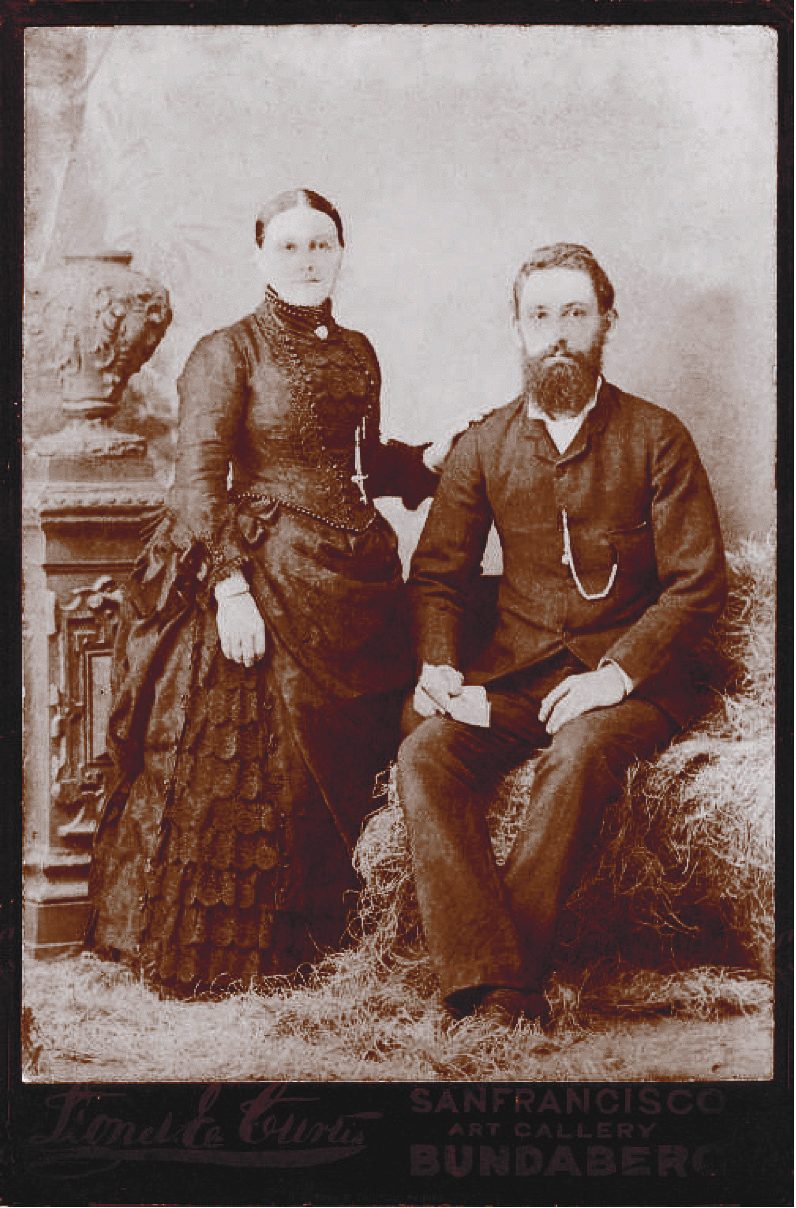
Walter was born in Yeovil, Somersetshire, England in 1830 and educated at Somerton nearby. He arrived in Sydney in 1849, worked for a time with The Australian Agricultural Company in the Hunter Region. In 1853 he relocated to Queensland where he married Mary Shannon in Gayndah in 1854 with the Rev. E. Tanner, who had been admitted to holy orders by the Anglican Bishop of South Australia, officiating at the ceremony. (Appendix A2) Gayndah, which had been settled only a few years prior to this, was then a typical frontier town and held an important role in the overland travel route to the lower Mary and Burnett districts. Walter, with his new wife, moved to Maryborough where his first known experiment with planting occurred. On the 8th October 1860 he purchased three blocks of land totalling 13 acres 2 roods 24 perches (later augmented by an adjacent block of 4 acres 32 perches purchased on 21st December 1869) and commenced farming on land near the town at The Pocket on the flood plain of the Mary River. (Appendix A14b)
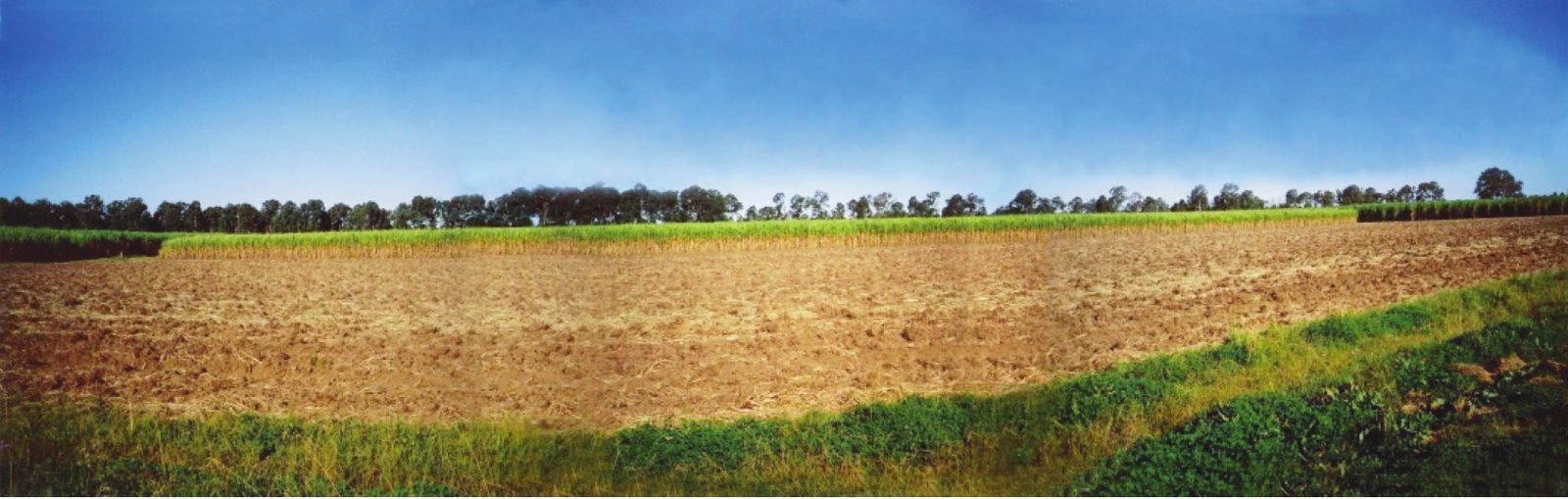
Also in 1860, Mr Edward J. Aldridge, the founder of Maryborough, introduced sugar cane into the Wide Bay district and planted his first crop at a place called Copenhagen near Maryborough. Walter drew on Mr. Aldridge’s seed stock and in 1864 he produced stands of cane which, as described in the Wide Bay and Burnett Directory of 1887 were, “in the jungle near Maryborough, at a place called Somerville considered to be ‘finer than anything … seen in Mauritius’ by an expert Thomy de Keating who arrived at Maryborough from that island in 1865”. It is probable that Walter was referred to Mr. de Keating by a Mr. Sheridan, who held the position of Sub collector of Customs at Maryborough. (Appendix A5)
As there was no machinery for crushing cane anywhere in Queensland, the early crops were fed to cattle (or chewed as a confection). The Sub collector also sent samples of the cane to the Courier , probably the leading paper in those days. A reader of that journal, a Mr. Benke, took a journey to Maryborough, where he induced Messrs Gladwell and Greathead to start central mills, so that the farmers could grow cane. In the great Mary River flood of 1864 Walter’s cane plantings were covered, the water rising four feet up the cane stalks. However the cane was none the worse for its two months drenching, and subsequently grew more vigorously than ever.
In 1871 Walter Adams left his Maryborough contracting business and resigned from his aldermanic duties with the Maryborough Council, including the office of Chairman of the Council’s Works Committee, possibly influenced by the move of Mr. Henry Palmer, the recent Mayor of Maryborough, to take up Bundaberg land. On the 28th January he purchased three allotments in the fledgling town of Bundaberg at an auction held in Maryborough. (Appendix A3) The population of Bundaberg town at the time would have been about two hundred persons, and in the district generally about five hundred.
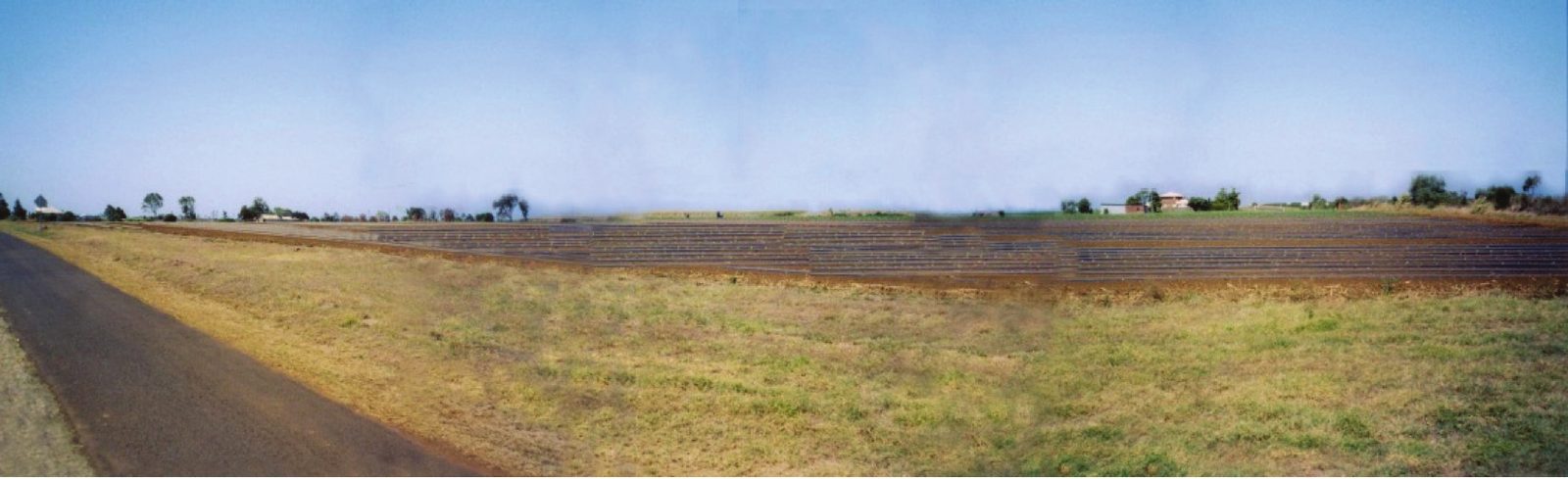
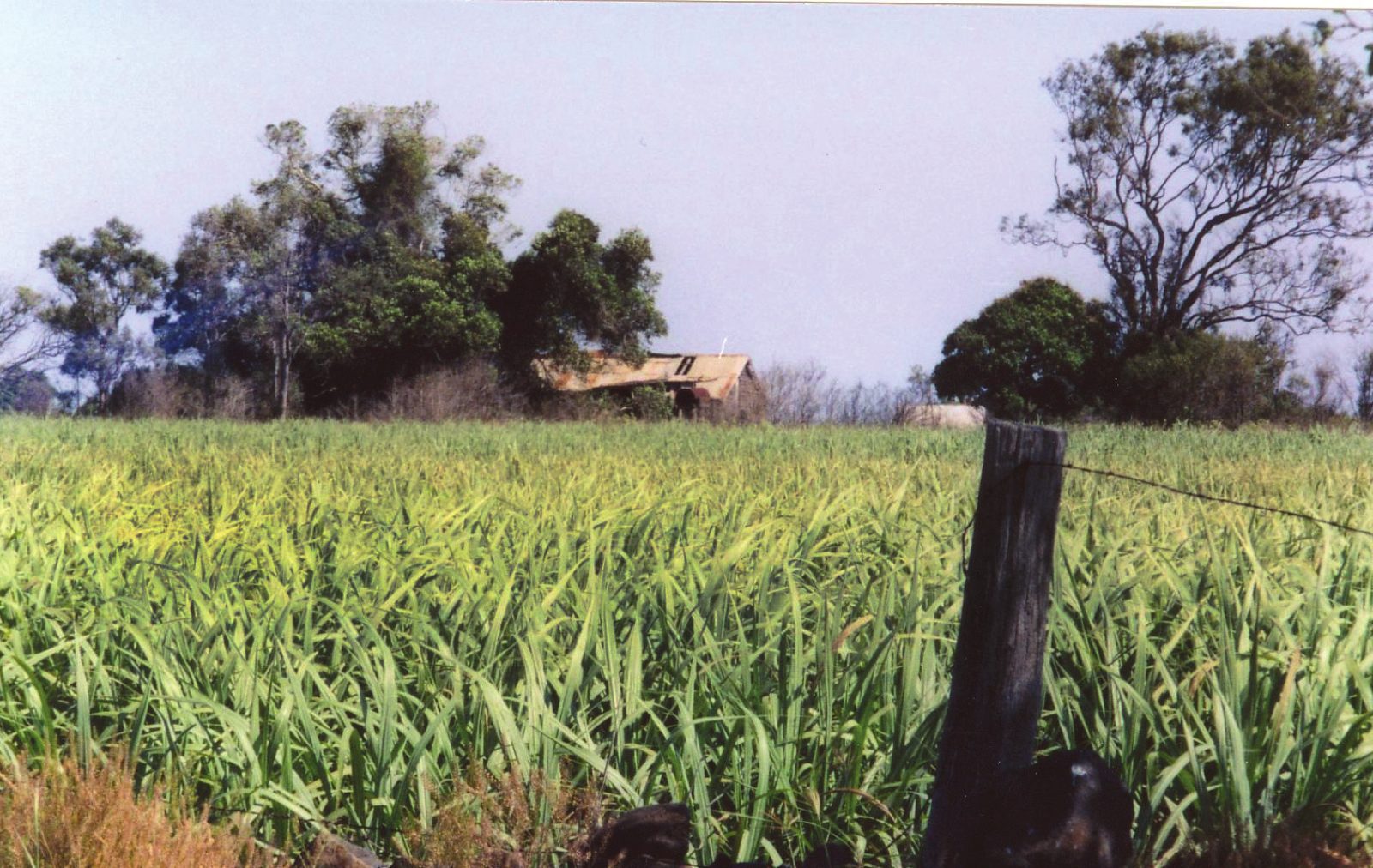
In March 1872 Walter selected a block of 240 acres between the Burnett River and Mon Repos on the edge of the Woongarra Scrub and this became his principal rural holding. In the contemporary records it was variously described as Summerville Plantation, Sommerville Plantation and Somerville Plantation. It was a mixture of agricultural land and second-class pastoral land, with much of the ‘pastoral’ land being ti-tree swamp.
| All 200 acres cleared and under crop 15 acres of scrub fallen About 20 chains of fence, split post, sapling rails 2 piggeries / slabbed 2 water holes 2 log barns, thatched at £10 each 1 Slab and shingle cottage Being a total of | £100-00-00 |
|---|---|
| £37-10-00 | |
| £10-10-00 | |
| £ 6-00-00 | |
| £ 8-00-00 | |
| £20-00-00 | |
| £14-00-00 | |
| £195-00-00 |
Horace Burkitt, Commissioner for Crown Lands at Bundaberg, in his report of May 1876, valued Summerville and its improvements as follows:
- Charles Faulkner and
- George Noakes, both
- of whom had moved
- from Maryborough
- with Walter and who
- had selected adjacent
- blocks, chose higher
- land where virtually
- the total area was
- suitable for cultivation.
- Cost may have been a
- consideration for Walter
- since, not only was the
- purchase price greater
- for agricultural land,
- but also the prime soil
- was covered by scrub
- which cost £10 per acre
- The selection also had 40 acres under
- to clear. The Sommerville land did however
- maize valued at £200. Mr. Burkitt concluded
- have the advantage of closer proximity to river
that, at the time of his visit in June 1875, the transport.
place “had all the appearance of a well worked
It was Walter who was later to shorten and improve the transport route between the Woongarra plantations and Bundaberg Township by constructing (initially at his own expense) the first bridge over the By-Wash. This became known as the “Adams Bridge” and facilitated transport to the town for all of the Woongarra plantation owners. It was later replaced by the by-wash weir and bridge, constructed near Steindl’s Brewery, to separate the fresh by-wash water from the salty river waters.
maize growing farm.” On the 10th June 1876 a Certificate of Fulfilment of Conditions by Selector under the Crown Lands Alienation Act of 1868 was granted.
A condition of selection ownership under the Crown Lands Alienation Act of 1868 was continuous and bona fide occupancy of the selection by a selector or his Bailiff. Walter’s Bailiffs on Sommerville were from:
February to June 1872 – D. Kennen (with the two sons of the selector (George and James) assisting in the clearing);
THE LOCATION OF SOMMERVILLE PLANTATION AND ITS NEIGHBOURS
- June 1872 to August 1873 – Mr. Digby;
- August 1873 to August 1874 – Walter’s elder son George Manus; and
- September 1874 to July 1876 – Thomas Chase. Mr. Chase arrived at Maryborough on the Great Queensland on 9th October 1874 with his wife, Ann, nee Steel, and twelve children who ranged in age from 22 to 3 years. A thirteenth child, Richard Burnett*, was born in 1875. Descendants of the family were to remain in the Bundaberg district.
[Another Richard Burnett was the son-in-law of Walter’s brother Henry, who had a bakery and confectionary business in Singleton N.S.W. One of Richard’s sons, Joseph, was killed in action in the Indian Ocean on 20th November 1941 whilst captain of the H.M.A.S. Sydney . Any direct connection between Thomas Chase and Richard Burnett is unknown at this time.]
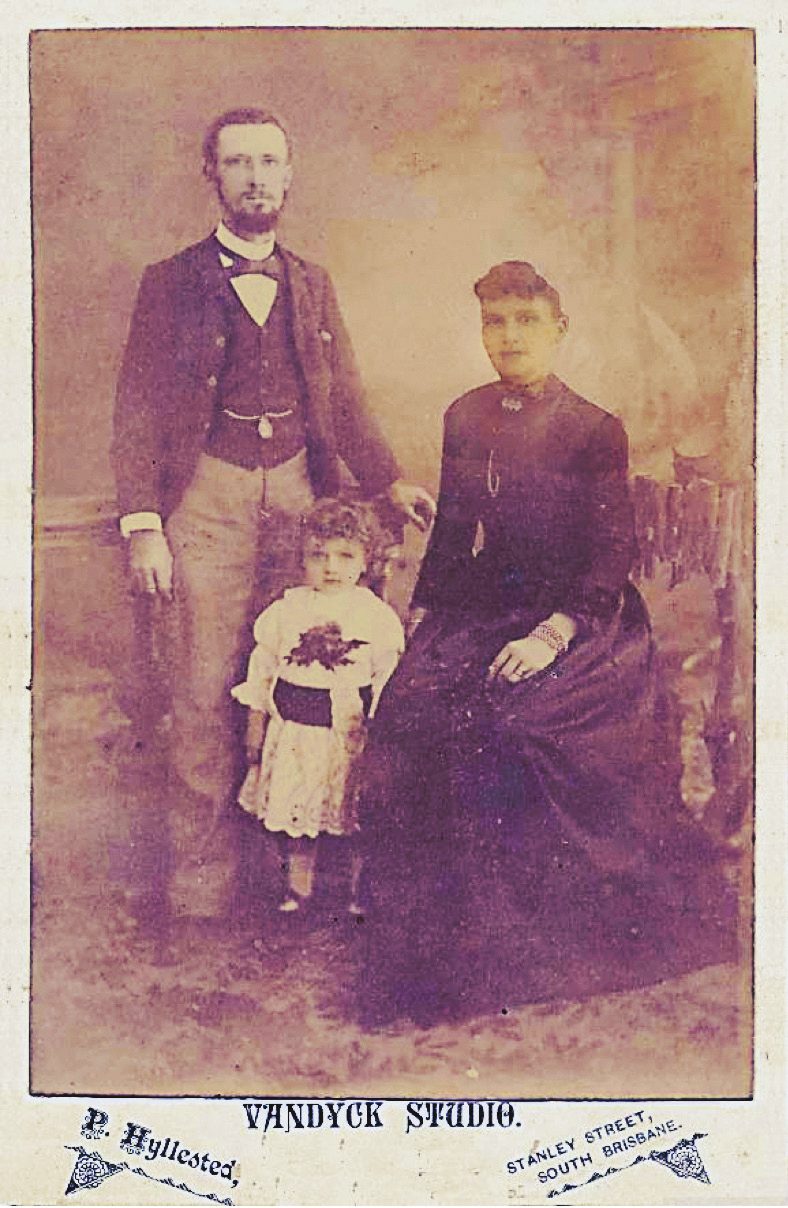
It is likely that John Henry Edma Bertheau became associated with the management of Sommerville Plantation soon after marrying Walter’s daughter Mary Ann in January 1876; however the earliest electoral record to suggest this was in 1884 when his residence was given as the Woongarra Scrub. His close identification with the management of the affairs of Walter and Mary appears to indicate that he was the son-in-law who was to fill the void created by the death, by pneumonia, of George Manus in November 1888. It was John Henry who acted as Sommerville Plantation’s informant to the Royal Commission on the sugar industry published in the Votes and Proceedings of Queensland Parliament in 1889.
The original cash crop of Sommerville Plantation was maize. This was an important crop in the early agricultural days as, where the native tree stumps had not been removed by hand following clearing or where they had not rotted out - a natural process which usually took place over a period of 6 to 7 years - cultivation had to be implemented by hand and hoe. With stumps removed the horse plough could be utilized (no stump-jump plough in those days). Maize (or corn) was, to the farmer of the 1870’s, that which diesel fuel is to the farmer of today as the only source of power then available in the agricultural field was either man-power or Clydesdale horse-power. With ploughed or cultivated fields devoid of grass these horses needed to be fed on grain. The average Clydesdale horse provided the power equivalent required to lift a 550 pound weight one foot in one second i.e. one horse power.
Maize, which had to be grown or purchased – possibly augmented by molasses when available
- would have provided the high energy food needed for these hard working animals during the period of ploughing for cultivation. Some of the larger plantations had up to 100 horses and it is probable that Sommerville had from 12 to 15 working animals. In the off season Walter’s horses grazed in his large horse paddock, located between what is now the Bundaberg high school and the racecourse, far removed from his agricultural land at Sommerville. Daily commuting between the horse paddock and the agricultural land would not have been feasible, and neither the spare daytime necessary for grazing, nor extensive pasture, would have been available to the horses drafted for work on the plantation. Originally the virgin soils gave very high maize yields with two harvests per year, and prices initially were high at 6 to 7 shillings per bushel. In 1876 the crop failed due to weevil attack and the plummeting of prices to as low as 1 shilling per bushel compounded an already serious problem. Diversification was essential so Walter tried both wheat and sugar cane and sent samples of these products to the Paris Exhibition of December 1877.
By 1876-7 the Burnett maize-growers were also suffering from three other principal impediments to their means of living, and the development of their industry. These were high freight charges, irregular shipping accommodation and exorbitant, uncertain commission charges. An example of excessive commission charges was the case of a maize consignment of 472 tons to Cooktown (the extreme northern port of Queensland at that time). The cost of the maize ex Bundaberg plus freight and commission to Cooktown, less the net proceeds, gave a transaction loss of £156 16s 10d.
| Owner Acres under cane Value of Mill and Plantation Value of Rolling Stock and Implements Number of Whites Employed Whites Wages and Rations, p.a. Number of Islanders Employed Islanders Wages, Rations & Return Passages, p.a. | Walter Adams | A. H. & E. Young |
|---|---|---|
| 120 | 1,252 | |
| £10,000 | £75,000 | |
| £402 | £3,966 | |
| 8 (M) - 0 (F) | 47 (M) - 4 (F) | |
| £631 | £5,000 | |
| 27 (M) - 3 (F) | 276 (M) - 0 (F) | |
| £846 | £5,860 |
Additional problems arose due to the avarice, or poverty-driven short-sightedness, of some growers, who tried to ship maize consignments that were unripe, insufficiently dried and imperfectly dressed so as to obtain a premium price for early grain. This gave Bundaberg maize a bad name and it became unsaleable, except by auction. Frequently a few green bags of grain, over-heating in the closely-packed hold of a ship for a few days, destroyed the whole consignment.
Mr. Skyring, who had been a large buyer of maize in the preceding year, convened a farmers’ meeting in January 1877, which was well attended. He had lost nearly £1,000 on his last season’s transactions, owing to his honourable fulfilment of the engagements into which he had entered with the growers, and his integrity had gained the gratitude of the struggling farmers. At the meeting he proposed to establish a local market, to buy only sound maize on the shoot, to allow a limited margin for all charges and to take all subsequent risk of shipment and sale. The proposal commended itself to the farmers who adopted the recommendations. As a consequence, the buyers of local maize returned. A cooperative association of Wide Bay and Burnett maize farmers was subsequently formed for the establishment of local markets, the protection of their special interests, and the sale of their own produce. These circumstances helped to provide the much needed stability to the local maize industry
Sommerville was one of the smaller plantations in the Bundaberg district. The following table compares the 1888 statistics for the Sommerville Plantation, with those of the Bundaberg district’s largest plantation, Fairymead. This comparison is as follows: